Notes on Blindness
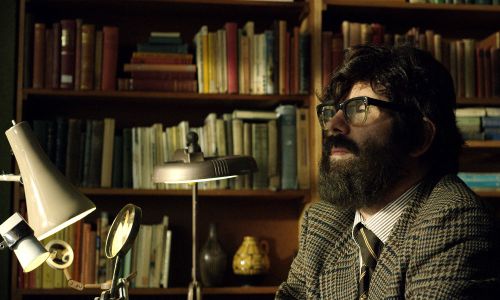 “As one goes deeper into blindness, one begins to live by other interests, other values. One begins to take up residence in another world.” This haunting comment by John Hull gives a snapshot of his achingly poignant true story. In 1983, just days before the birth of his first son, the academic and theologian lost his sight, and in order to make sense of his condition, he began keeping a diary on audiocassette. Directors Pete Middleton and James Spinney (in only their first feature length film), have done a commendable job of adapting John Hull’s tapes to the big screen.
Easily comparable to Julian Schnabel’s masterpiece The Diving Bell and the Butterfly, (which tells the true story of of Elle editor Jean-Dominique Bauby’s experience with Locked In Syndrome), Notes on Blindness cleverly employs the artifice of cinema to encourage the viewer to experience the symptoms of its protagonist. This is phenomenological cinema of the highest regard, eliciting a mindful viewing experience. Hull’s own taped voice comes to life through lip-synched recreations and are cleverly spliced with voiced narration. It is perhaps no surprise that a film about blindness has a heavy emphasis on sound, and here it is woven into a sensitive sound design by accomplished sound editor Joakim Sundström (who also worked on Nick Cave’s superb biopic 20,000 Days on Earth). Although, his unique use of diegetic and non-diegetic sound does bring a level of disorientation that takes some adjustment.
Likewise, the strikingly beautiful and yet claustrophobic cinematography (by Gerry Floyd) brings equal measures of beauty and frustration as the camera struggles for light and focus, never allowing us to simply sit and look. The paradox of a visual medium giving us a pseudo experience of blindness is palpable — a form of mimicry to which Hull voices his own frustrations as “a desperate need to break through this curtain, this veil that surrounded me. To come out into the world of light out there.”
The film presents as insightfully ponderous and occasionally meandering, but its core concern always remains Hull’s conflict between fact and faith, which ultimately collide with interesting results. Notes on Blindness requires a level of effort on the viewer to garner a full appreciation, but it is worth it.
Rating: 4 mindful moments out of 5
You can see the published review here.
 I am always wary when a film of notable scope and pedigree such as Silence is largely ignored during awards season. Either I’m reading too much into its lack of critical chatter, or the film is a dud. I was hoping the former. After all, master director Martin Scorsese has had this film in the oven on slow-cook since the nineties, so my hopes were high.
 Adapting a celebrated Broadway play to the screen without it being considered “stagey” can’t be easy. The award winning play Fences opened for its third run in 2010, and here, the play’s five main actors have reprised their role for its big screen treatment.
 tobywoollaston.com