Wonder Woman
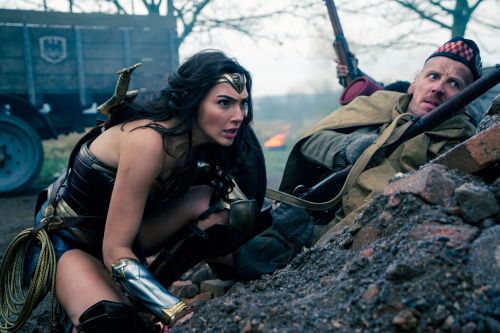 The fact that I remain grumpily unsentimental towards the superhero genre I think is a good thing. If anything, it allows me to offer an unflinching opinion of the film on its own merits. And the merits of DC’s cinematic universe has been fairly uninspiring to date. I was genuinely hoping Wonder Woman might be the exception.
As a kid, I never read the comics, my only memory of Wonder Woman being Linda Carter on the old family black and white box waaaay back in the seventies. Well, this is quite the different beast. Wonder Woman is directed by Patty Jenkins who debuted with the similarly female centric (but different in every other way) Monster. In that film Charlize Theron played the femme fatale who wielded power over men. It was a dark, gritty, brooding, brutal revenge film and in most respects everything Wonder Woman isn’t. However, an investigation into the theme of feminine power (albeit corrupt in Monster) is present in both films and it’s a credit to Jenkins’ ability as director to handle common themes across two wildly different films.
In Wonder Woman, Diana is princess of the Amazons, a trained warrior, and destined to protect mankind from the misguided god of war, Ares. After seeing a plane plunge into the waters of her homeland, Diana (played by Israeli, Gal Gadot) investigates and finds Steve Trevor (Chris Pine), a WWI spy for the British cause. His story of a world at war incites Diana to help end the bloodshed.
Part of the film’s appeal is Jenkins’ attempt to keep things simple and clean. Working with screen writer Allan Heinberg, the film explains the origins of Diana’s character, but unfortunately it doesn’t avoid getting bogged down in the semantics of law and mythology. Abandoning DC’s typically dark and grim style, we are presented with a more lighthearted take on a heroic story in a setting that feels relatively new to DC’s universe. However, the setting is at odds with its fanciful story and the film never feels grounded. A scantily clad woman running through the muddy trenches of war-torn Belgium brandishing a sword and shield borders on the silly (yes, even for a superhero film) and weak attempts at humour only go some way to relieving the absurdity of it all.
Lest we forget that Wonder Woman is still one of the many superhero films that are flooding the market — it is a genre that this decade will be cinematically defined by. I really wanted to report that Jenkins had escaped the gravitational pull of DC’s disappointing back-catalogue and headed into orbit with a superhero film that can be celebrated. I wanted to find an iconic film from the genre that we will fondly look back on in years to come. The search continues.
You can see the published review here.
 Having sold over ten million copies, William P. Young’s best-selling novel, The Shack, has a reader fanbase that unsurprisingly, has now been tapped into by the movie industry. It is an interesting story of one man’s very personal journey through great loss, depression and redemption. But does the film handle this story with the gravity it deserves?
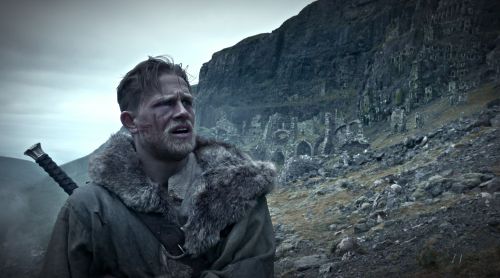 Nothing stirs me less than a film about King Arthur. In the current scape of entertainment the legend plants itself firmly within the fantasy fraternity of Game of Thrones, Lord of the Rings and the like. It’s a well trodden path that offers a bland and dreamy world of kings, wizards, and swords. And the title “King Arthur: Legend of the Sword” really doesn’t do the film any favours. On the flip-side nothing gets me more excited than a film by Guy Ritchie (Lock, Stock and Two Smoking Barrels, Snatch). He successfully breathed life into the Sherlock Holmes franchise with Robert Downey Jr. So, just maybe, Ritchie could do the same here with Charlie Hunnam who plays the titular Arthur.
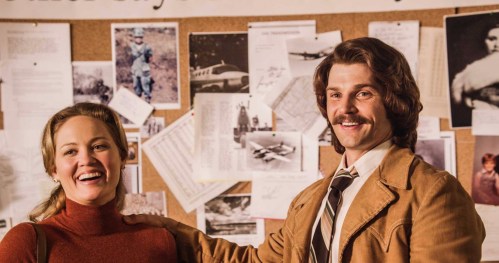 My reticence towards films that champion fundamental Christianity in contemporary society is that they tend to be preachy and often err on the side of sentimentality and over simplification. I’m sure there are exceptions but I’ve yet to see any. The Case for Christ, thankfully, is not one of those films … at least not entirely.
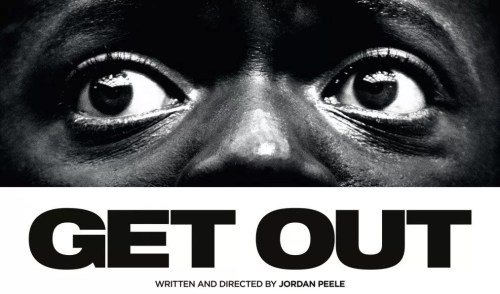 So, what’s your “thang”, Chris? — a question posed to the black protagonist of Get Out. The seemingly innocuous question by his girlfriend’s white dad highlights the reductive stereotypes tackled in Get Out. Jordan Peele has boldly stepped into the director’s chair for the first time and delivered a scathing social critique that is dressed up as a horror film. It’s nothing new for the horror genre to be a vehicle for social commentary — Zombies as metaphor for consumerism, misogyny equating to pathological fear of feminism, yada yada yada. However, it is rare for horror to comment so vehemently on race, as is the case in Get Out. It’s a subtext that the film wears proudly on it sleeve for all to see, in fact it’s barely a subtext at all. It’s so assertive about racism, in comparison it makes American History X feel like a film about cheese making. Forget about your clichéd southern hillbilly racism, this is the benevolent but sinister brand of racism that is firmly ensconced in the underbelly of liberal America.
 tobywoollaston.com