
Dunkirk
 Christopher Nolan’s Dunkirk remains a giant at the international box office despite entering its fourth week of release. What better time than now to offer a belated review and perhaps offer a pearl of insight not observed by the mountain of glowing praise by other critics. Well, I’m afraid to report that I have little to add to what has already been said about Dunkirk. So … sorry if this sounds a bit like a broken record.
It is difficult to find fault in a film such as Dunkirk. Certainly on a technical level the film is flawless and it’s nice to see director Christopher Nolan putting his unique stamp on a film that, from a historical perspective, deserves special treatment. Anyone who is familiar with Nolan’s work will know that he is a master of fractured storytelling. Memento, Interstellar, and Inception all have their timelines and locales carefully woven together, giving a satisfying conclusion to their fragmented beginnings. Dunkirk is no different.
It offers a snapshot of the 1941 evacuation of four hundred thousand allied troops from the titular French beach, having been surrounded by “the enemy” (interestingly, Nolan decided to use this term rather than being more specific). The film avoids broader political or tactical concerns, instead offering (as best as it can) a first hand experience of a small collection of players within a triptych of theatres; air, sea, and land—surely a wink to Churchill’s famous “We shall fight them on the …” speech.
Dunkirk opens with a scant supply of visual cues to orientate us before thrusting us head-first into the fray of white knuckled intensity. With no release valve to relieve the pressure, this film proves to be an exhausting experience. Planes dive bomb like dragons, and the water is rife with torpedoes, while the seconds slip away on imminent help. Nolan’s masterful orchestration of sight and sound offer a visceral experience that hits home the intensity of war. A decision to err on real craft rather than CGI has certainly paid off here.
My only quibble would be its limited character development and back story. Although, the film’s modus operandi relegated such luxuries surplus to requirements. After all, any film that makes Harry Styles appear like a seasoned actor must be doing something right.
You can see my published reviews here.
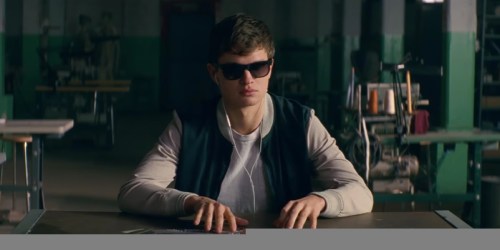 Like all Edgar Wright movies, Baby Driver is a kinetically charged explosion of style. A lively thrill from start to end laced with musical sensibilities. But considering his previous work (Shaun of the Dead and Scott Pilgrim vs. the World, to name a couple) this should come as no surprise. He is a restless director who seemingly enjoys turning simple plot-lines into hyper-jazzed feature length films … and he does it so well.
 He is a man blessed with a wild imagination and great hair (his cranial embellishments second only to his kissing-cousin Jim Jarmusch). An iconic film-maker that has given us enigmatic worlds of fractured logic and narrative ambiguity hearkening back to the surrealists of the early twentieth century (Luis Buñuel, Germaine Dulac, Salvador Dali, et al.). Mulholland Drive, Wild at Heart and Blue Velvet are just a few of his filmic canon that any cinephile should wax lyrical about … but less is known about David Lynch’s formative years as an artist.
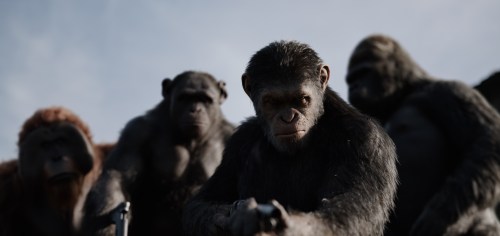 Contents don’t always match what is printed on the tin. War for the Planet of the Apes’ lengthy title (let’s just call it WPA) and marketing material suggest that you’re likely to be be subjected to two and a half hours of bloodshed, courtesy of a certain Wellington digital effects company. But WPA is far more introspective than advertised. Sure, it’s not La La Land, but WPA has a lot less “war” in it than we’re led to believe. Critically, comparisons have been made with Ford Coppola’s Apocalypse Now. Famously, Ford Coppola reworked Joseph Conrad’s novella Heart of Darkness, by expressing its themes of colonialism, self-discovery and the meaninglessness of evil against the backdrop of the Vietnam war. In WPA the astute viewer will pick up on this comparison fairly quickly, but for those not familiar with Coppola’s film, a wall graffiti’d with “Ape-pocalypse Now” is plain for all to see.
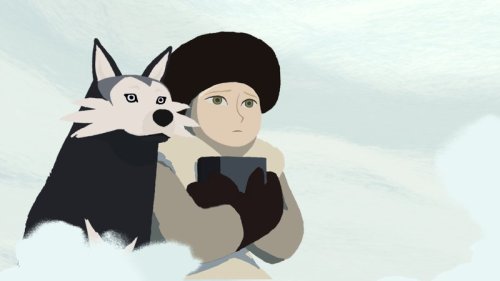 Long Way North has finally made its long way south onto our screens. Having screened as part of last years NZIFF, its theatrical release brings about the welcome return of its low-fi animated appeal. The film is a co-production out of France and Denmark and is Rémi Chayé’s debut feature in the directors chair (or wherever directors plant their bum for an animated feature these days).
 tobywoollaston.com