
Booksmart
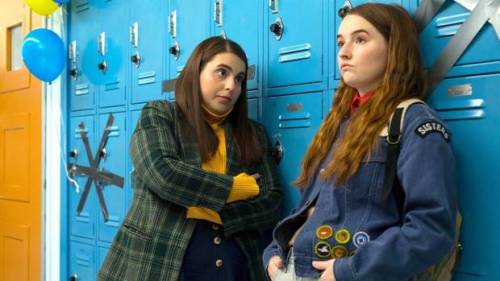 Actress and activist, Olivia Wilde, has kicked off her feature directing career with a trailblazing teen comedy that belies her inexperience as a film-maker. Helped by a stable of female-centric writing talent (including Susanna Fogel: The Spy Who Dumped Me), Booksmart is a production that places young women stories front-and-centre without needlessly drawing undue attention to a “look at me, look at me” political agenda. Rather, it quietly acknowledges the gender-correctives that’ve recently hit the headlines and moves on with a normalising modern-day coming-of-age tale. Despite its many genre cliches Booksmart still feels fresh and honest thanks to Wilde’s inventive direction.
Wilde recently described her film as “the Training Day of high school movies.”—an odd comparison, although parallels can be drawn within Booksmart‘s darker recesses. More-so, Booksmart appears to sit somewhere between the goofy style of Superbad and the feminist smarts of Lady Bird.
Kaitlyn Dever (Short Term 12) and Beanie Feldstein (Lady Bird) play two high-achieving students, Amy and Molly, in their final year of high-school. Putting their social lives on hold in order to get into top Universities, the pair are disgruntled to learn that their hard-partying counterparts have also been accepted into similar institutions. Not ones to miss out on a teenager’s rite-of-passage, they head off to make up for lost time at the end of year party.
It’s not a particularly taxing plot, but what it lacks in brain-stretching complexities it counters with a quick-witted staccato styled humour, some richly fleshed-out characters that are a delight to be around and two leads that radiate an immense amount of chemistry. Amy and Molly crackle and pop with enthusiasm as their giddy level of geeky charisma invites us to plumb the depths of their fomo and then be buoyed by their comical naivety.
Add a menagerie of vibrant characters (including an amusing turn from Wilde’s husband, Jason Sudeikis), along with some very dexterous writing and Wilde’s whip-smart direction and you have a hilarious teen comedy that’s infectiously charming. Well worth getting a hall pass for.
See my reviews for the NZ Herald here and for Witchdoctor here.
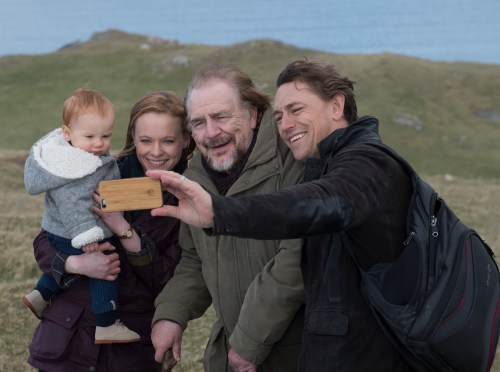 The giant acting talent of Brian Cox (Churchill) tackles the role of a cantankerous old Scotsman, Rory, who is forced from his peaty shores across the pond to seek medical treatment in San Francisco. A preference for rough-hewn edges rather than America’s modern clean lines, Rory also uses the trip to begrudgingly reconnect with his son Ian, after a fifteen-year absence. Ian is a chemist-come-chef whose Heston Blumenthal styled ultra-modern gastronomic creations wow patrons with their smokey bluster and gelatinous wonder—a far cry from Rory’s preference for black pudding and two veg. Unsurprisingly, the two don’t see eye to eye.
 The Irish poet David Whyte once penned “abandon the shoes that had brought you here right at the water’s edge, not because you had given up but because now, you would find a different way to tread”. He was referring to the Camino de Santiago, an 800km walk that finishes at the cathedral of Santiago de Compostela in northwestern Spain. The long trek acts as a spiritual journey for hundreds of thousands of pilgrims a year, and while Whyte’s poem so eloquently expounds upon his niece’s journey through the fabled Spanish hinterland, this documentary focusses on people from our own back-yard.
 In his first feature, Belgian writer/director Lukas Dhont has tightly packed a cinematic masterpiece into a topical powder keg. It’s little wonder that a production about a transgender ballerina has courted so much controversy; the pitfalls of which were well documented by Dhont’s well-meaning, but perhaps naive blind-casting of its lead role, Lara. In the end, he settled on a cis male actor, Victor Polster, to play a teenage girl who was born a male, much to the chagrin of the trans-community who felt it more appropriate that Lara be played by a transgender actor at the very least. There are valid points on both sides of the ledger, and notwithstanding further controversies, it’s a wonder that this hot potato of a film ever got off the ground. I’m glad it did.
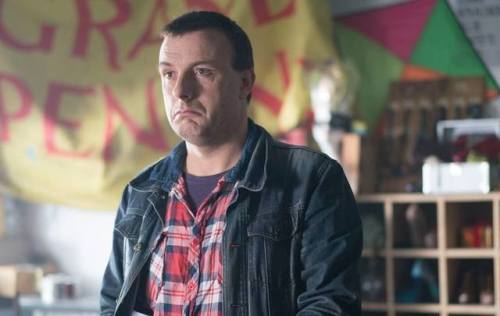 Writer, director, star and chief financier Liam O Mochain crafts a collection of sketches about life in and around an Irish train station. Although billed as a comedy, Lost & Found is very light on laughs, rather this is more an observational film that expounds on the tall-tales you’d expect to overhear at the local pub. No surprise then, that O Mochain’s anecdotal ephemera were indeed inspired by true stories; among them are wedding proposal antics, a Publican’s opening night anguish, a treasure hunting son, funeral wakes, and of course the lost property desk clerk, David (O Mochain), around whom the film loosely centres.
 tobywoollaston.com