
Midsommar
 There is an uneasy tension in the air with Ari Aster’s latest horror. In his follow up to last year’s harrowing and unsettling Hereditary, the brooding filmmaker has extended his cold touch into the warm reaches of a Scandinavian summer.
Midsommar follows a group of American students into the rural Swedish hinterland where a closed-off druidic community has lived for hundreds of years. The community provides Anthropology student Christian (Jack Reynor), the opportunity to study their pagan rites and rituals. But when one ritual turns from an innocuous flower-clad-romp into an insidiously horrific death, the group start to doubt the community’s principles.
Far from a diet of schlocky jump-scares and giggles, Midsommar is a slow burn, a ruminating and sinister film that ratchets tension with a vice-like grip. Aster maintains Hereditary’s grief-stricken psychological brilliance but dispenses with the disappointingly supernatural literalness that plagued its ending. Instead, Midsommar, while flirting with the uncanny, roots itself in the real … and feels more creepy for it.
Florence Pugh (Lady Macbeth) plays the film’s mainstay, Dani. Suffering from a tragic loss in her family she cuts a needy figure desperate for stability and security, something she hopes a trip to Sweden with her boyfriend, Christian, might provide. Pugh’s skill, once again, proves why she is one of the most impressive actors working today, with a nuanced performance that masterfully distills the suffocating effects of anxiety.
It’s an odd but refreshing experience to have horror in the sunshine. Rather than skulking around in the darkness offering opportunities for lazy production design, Aster has quite astutely put Sweden’s perennial summer sunlight to good use. With a prowling camera that keeps the cast at arm’s length, he has employed a bright canvas and ironically daubed darker themes of grief and shame with striking results.
Horror films should never outstay their welcome and if I had one reservation, it would concern the film’s length which becomes one pagan ceremony too many. Yet again, Aster can’t quite nail an ending down and almost overcooks what is otherwise a superbly crafted film.
See my reviews for the NZ Herald here and for Witchdoctor here.
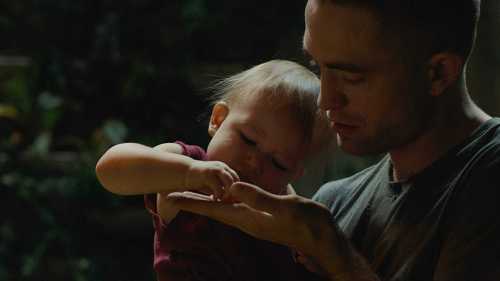 Movies from the enigmatic French director, Claire Denis (Beau Travail), are often described as elliptical in nature—a cinematic version of those three provocative dots at the end of a sentence prompting an “and?” response, where more is denoted by what isn’t said. High Life is one of those films—a smouldering question mark that casts a giant shadow over the film’s other concerns.
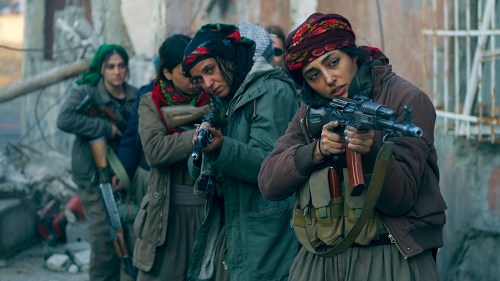 Based on true events, Girls of the Sun is set during the volatile period of Isis expansion into Kurdish territory in northern Iraq. It follows Mathilde, a French war journalist (played by Emmanuelle Bercot) as she documents a group of Kurdish women anti-Isis fighters and their struggle to reclaim their town and the children captive within.
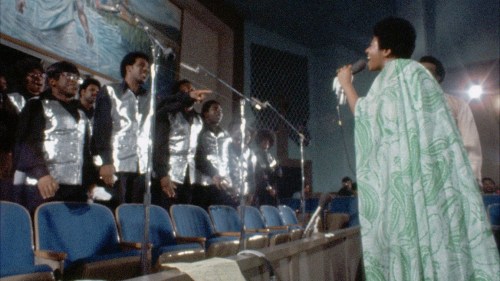 Archival footage documentaries are knocking it out of the park at the moment. And if last week’s release, the technically dazzling Apollo 11, literally took you to the moon and back, then Amazing Grace metaphorically does the same with a cinematically enthralling and spiritually charged presentation of a titanic talent.
 tobywoollaston.com