The Dead Don’t Die
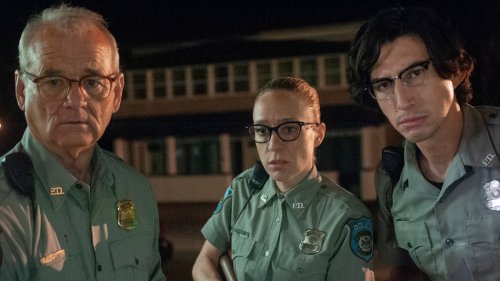 It’s hardly surprising that Jim Jarmusch has finally made a zombie flick. It is a sub-genre that many filmmakers have dabbled in and Jarmusch is certainly not shy of turning his pensively paced films into genre movies (eg. Dead Man as a Western). Certainly, this isn’t his first film about the undead. Notably, he sent two love-struck vampires, Tilda Swinton and Tom Hiddleston, into a poetic haze in Only Lovers Left Alive. But where that film wallowed in its dreamy melancholic fervour, The Dead Don’t Die is a different beast, opting to reside in the comical and schlocky spirit of yesteryear’s zombie flicks. It’s kooky, mildly amusing … and unfortunately, a complete misfire.
Hosting a zombie hoard of Jarmusch regulars, this film’s rotting belly is bursting with talent. Police officers Bill Murray, Adam Driver, and Chloë Sevigny are the mainstays at the sleepy town of Centerville, while Tilda Swinton, Tom Waits, Steve Buscemi and others (too many to name) fill out the bit parts. It appears that Jarmusch gathered his regulars and asked them what their most typecast role might be—and boom, that’s your role. Swinton, for example, occupies the etherial witch-like samurai-sword wielding mortician (Doctor Strange, Suspiria, etc.), while Buscemi is yet another cap-wearing wise-cracking redneck (Fargo, Lean on Pete, etc.). So purposeful are the archetypes, it leaves little left to be interested in. I guess that might be Jarmusch’s point, as he painstakingly paints each character with a one-dimensional brush to highlight our insatiable appetite for cookie-cutter characterisation.
But because of this, I found myself caring less and less about the fate of anyone in the small town of Centerville. The fourth wall breaking and events that “go off script” smacked of desperation to solicit my attention. At times it did feel like a deeper subtext might’ve been at play beyond riffing on the usual zombies-equal-consumerism metaphor. When Adam Driver says “This isn’t gonna end well”, I think I know what he meant.
I love Jarmusch’s films, and I will be first in line at his next one. But this zom-com represents Jarmusch’s first genuine dud. The Dead Don’t Die is life Jim, but not as we know it.
See my reviews for the NZ Herald here and for Witchdoctor here.
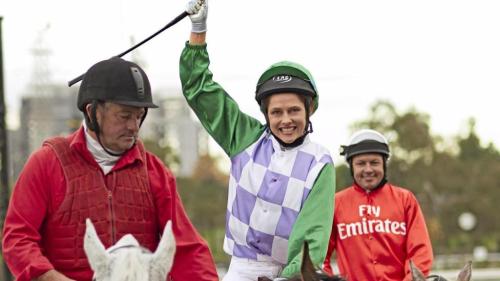 The Melbourne Cup is one of the more glamorous events on the world’s sporting calendar. A sport of small margins, jockeying specifically, requiring a delicate balance of weight management, knowledge, skill, and perhaps most importantly determination—something Michelle Payne, Melbourne Cup’s first female jockey winner, had in spades. However, prior to her win in 2015, she couldn’t seem to catch the eye of the male-dominated horse-racing fraternity. Considering it’s a job that seemingly suits gender parity (arguably even favouring a female’s slighter frame), it’s a travesty that female jockeys had been cast into the margins for so long.
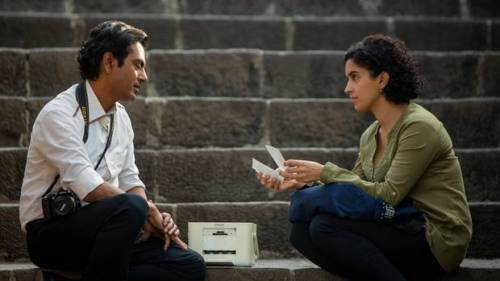 India’s movie industry isn’t really known for subtlety, Bollywood, in particular, has yet to come to grips with the “less is more” method of filmmaking. Thankfully, there are a number of Indian filmmakers who balk at Bollywood’s gaudy style, overuse of archetypes and cookie-cutter stories. Ritesh Batra is one of those directors, his breakout hit The Lunchbox (2013) wooing crowds with a bittersweet romance sensitively draped over a portrait of Mumbai city. However, in his latest feature, Photograph, Batra may have overcooked his response to Bollywood’s bombastic cliches by giving us a film so contemplative and agonisingly restrained that it will try your patience.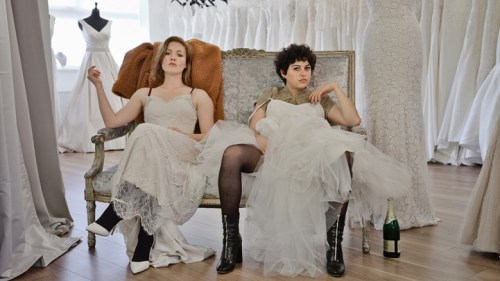
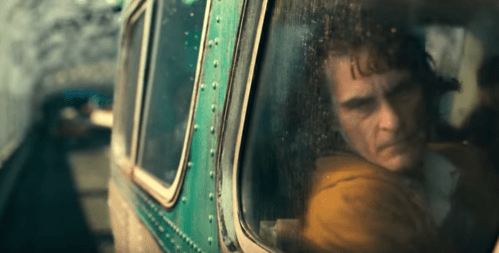 What a luxury to have Joaquin Phoenix, an actor of such immense scope, to hang your film on. Especially when that film is about one of the most iconic (and dare I say it, celebrated) fictional villains in history. His turn as the Clown Prince of Crime will most likely draw comparisons to those who have gone before (Ledger, Nicholson, et al). But it needn’t. This film is a different beast and Phoenix occupies quite a different period in the Joker story.
 tobywoollaston.com