Category: Uncategorized

The Big Sick

Film Review The Big SickGood rom-coms have been a rare commodity of late, so The Big Sick’s critical success at Sundance has been somewhat of a shot in the arm that the genre sorely needed.  Thankfully its critical success is well-founded.

The Big Sick is an autobiographical film (with a few cinematic embellishments) that covers the unusual courtship of script writers Kumail Nanjiani and his real life wife (and co-writer), Emily Gordon. Their non-fictional account may be a spoiler for how the film ends, but thankfully its rewards are firmly planted in the journey rather than the destination.

Tracking the giddy origins of a romantic relationship always provides the biggest payoff for any successful rom-com, and Kumail (who plays himself) and Emily’s (Zoe Kazan) flirty but cautious beginnings are no different. Kumail is a standup comedian by night and an Uber driver by day. During one of his comedy routines he is heckled by a stranger in the crowd—Emily, as it turns out. A couple of post-show drinks and an amorous night kick off a burgeoning romance. However, the future is not so rosy for the couple as they negotiate the treacherous waters of cultural difference … and a coma.

What feels rewardingly fresh are the film’s characters, who are decidedly authentic, flawed and vulnerable, adding to its accessibility and appeal. The couple’s parents are thankfully not pushed into the margins, instead serving to enhance proceedings rather than distract from it. Commanding a significant amount of screen-time, Emily’s folks, Terry (Ray Romano) and Beth (Holly Hunter), offer deliciously lived-in performances, and Kumail’s parents Azmat (Anupam Kher) and Sharmeen (Zenobia Shroff) prickle with a cocktail of rigidity and humour.

Comedically it does mine the oft-used stereotypes of Indo/European cultural difference (the arranged marriages, the terrorism gag, yada yada). But thankfully Nanjiani and Gordon do so with a light touch, never losing sight of its modus operandi of telling an entertaining story ripe with rich characters. Nanjiani and Gordon’s very personal script has delivered a warm-hearted comedy full of emotional texture and pathos that reveals the absurdity of real life.

Read the review on Witchdoctor here.

The Dinner

dinnerThe Dinner combines sophisticated cuisine with a stale burger patty in this adaptation which feels at odds with Herman Koch’s bestseller of the same name.  Having two previous European big-screen treatments — a Dutch film in 2013 and the Italian version in 2014, this American reworking certainly feels like a vegetable side that hasn’t been procured from the chef’s very own garden. 

A dinner is arranged at an exclusive restaurant by congressman Stan Lohman (Richard Gere) to discuss a few “salient” family issues.  Stan and his wife Katelyn (Rebecca Hall) are joined by Stan’s pessimistically difficult brother Paul (Steve Coogan) and his long-suffering wife Claire (Laura Linney). There is an elephant in the room that requires urgent attention—their sons have been implicated in a heinous act of violence resulting in the death of a homeless woman. With careers on the line and family wounds bubbling to the surface, the Lohmans squabble and argue about how far they are prepared to go to protect the children they love.  

It’s a chamber-piece resembling Polanski’s Carnage and a similarly stage-like quality is exemplified by the decision to separate the film into five acts; each represented as a different course lovingly introduced in exquisitely pretentious detail by the waiter, Dylan (Michael Chernus).  It is an interesting structure, but somewhat superfluous to narrative requirements—the culinary subtext being a considerably disparate garnish for the film’s premise.

Director Oren Moverman (Love & Mercy) further complicates matters by explaining the Lohman’s tortured back story with flashbacks inserted throughout the five courses, which only serve to bloat and confuse a film already ripe with complications.

Despite the top-shelf cast The Dinner fails to deliver on the back of a well received novel, and gets bogged down in moral ambiguities rather than the dark satire and cynical focus that the book intended. Koch openly voiced such frustrations after the film’s European premiere in Berlin. The Dinner might rustle up a tasty morsel for some, but its awkward melange of flavours means most will send the meal back to the kitchen.

Read the review here.

Dunkirk

dunkirkChristopher Nolan’s Dunkirk remains a giant at the international box office despite entering its fourth week of release. What better time than now to offer a belated review and perhaps offer a pearl of insight not observed by the mountain of glowing praise by other critics.  Well, I’m afraid to report that I have little to add to what has already been said about Dunkirk.  So … sorry if this sounds a bit like a broken record.
It is difficult to find fault in a film such as Dunkirk.  Certainly on a technical level the film is flawless and it’s nice to see director Christopher Nolan putting his unique stamp on a film that, from a historical perspective, deserves special treatment. Anyone who is familiar with Nolan’s work will know that he is a master of fractured storytelling.  Memento, Interstellar, and Inception all have their timelines and locales carefully woven together, giving a satisfying conclusion to their fragmented beginnings. Dunkirk is no different.

It offers a snapshot of the 1941 evacuation of four hundred thousand allied troops from the titular French beach, having been surrounded by “the enemy” (interestingly, Nolan decided to use this term rather than being more specific). The film avoids broader political or tactical concerns, instead offering (as best as it can) a first hand experience of a small collection of players within a triptych of theatres; air, sea, and land—surely a wink to Churchill’s famous “We shall fight them on the …” speech.

Dunkirk opens with a scant supply of visual cues to orientate us before thrusting us head-first into the fray of white knuckled intensity.  With no release valve to relieve the pressure, this film proves to be an exhausting experience.  Planes dive bomb like dragons, and the water is rife with torpedoes, while the seconds slip away on imminent help.  Nolan’s masterful orchestration of sight and sound offer a visceral experience that hits home the intensity of war. A decision to err on real craft rather than CGI has certainly paid off here.

My only quibble would be its limited character development and back story. Although, the film’s modus operandi relegated such luxuries surplus to requirements. After all, any film that makes Harry Styles appear like a seasoned actor must be doing something right.

You can see my published reviews here.

Baby Driver

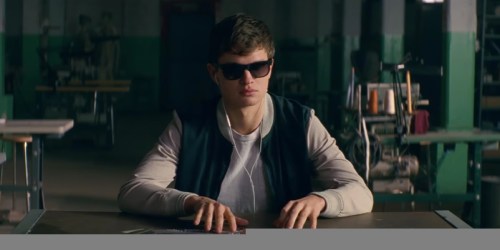
bdLike all Edgar Wright movies, Baby Driver is a kinetically charged explosion of style. A lively thrill from start to end laced with musical sensibilities. But considering his previous work (Shaun of the Dead and Scott Pilgrim vs. the World, to name a couple) this should come as no surprise. He is a restless director who seemingly enjoys turning simple plot-lines into hyper-jazzed feature length films … and he does it so well.

Ansel Elgort is the eponymous Baby. A talented getaway driver forever in debt to a criminal king-pin named Doc (Kevin Spacey).  Baby suffers tinnitus, a “hum in the drum” as the po-faced Kevin Spacey describes, meaning he wears earbuds with a carefully chosen iPod playlist to drown out the constant ringing—a distraction which he finds insufferable. The iPod also provides the soundtrack to his life. He is, in a sense, living in a musical as exemplified in an early scene (that ventures unabashedly into La La Land opening sequence territory) where Baby dances down the street to Bob & Earl’s Harlem Shuffle.

Baby Driver is a fine example of a genre film owing a lot to the crime, heist, and car-chase films of yesteryear.  But its musical sensibilities are what sets it apart in which everything is cut and choreographed very sharply to Baby’s pumping iPod soundtrack. The result provides a modern-retro vibe.  Yes, iPods are now retro (*sigh* … I feel so old).

Elgort’s background in dance is a casting choice that pays off—his sense of movement to the music being vital to the entire movie.  Wright also gets solid (if somewhat predictable) performances from his supporting A-listers. It’s an ensemble cast of pretty big hitters who all seem to be enjoying themselves.  Jon Hamm stands out as a delightfully loathsome Casanova. Fox and Spacey are in fine scenery chewing form, and a twee young-love subplot comes courtesy of Lily James.

By no means perfect, Baby Driver does threaten at times to become an overcooked mess stomping heavily on well-used tropes and pumping out every cliche in the book, but thankfully Wright’s pin-sharp direction keeps things in check. He knows exactly what to do with this material and never loses sight of his audience. Baby Driver is a joy to watch and it’s clear that Wright loves making cinema. This is a pure cinema rush.

You can see my published reviews here.

David Lynch: The Art Life

dlHe is a man blessed with a wild imagination and great hair (his cranial embellishments second only to his kissing-cousin Jim Jarmusch).  An iconic film-maker that has given us enigmatic worlds of fractured logic and narrative ambiguity hearkening back to the surrealists of the early twentieth century (Luis Buñuel, Germaine Dulac, Salvador Dali, et al.).  Mulholland Drive, Wild at Heart and Blue Velvet are just a few of his filmic canon that any cinephile should wax lyrical about … but less is known about David Lynch’s formative years as an artist.
The Art Life acquaints us with the age old conundrum of nurture versus nature, life imitating art or art imitating life, and begins with Lynch declaring; “Every time you do something like a painting, you go with ideas, and sometimes the past can conjure those ideas … even if they’re new ideas the past colours them.”  Documentarian Jon Nguyen uses this assertion as the starting point for his exposé on an artist who belies the dark and sometimes violent nature of his work.

The brooding cinematography of Nguyen’s camera oozes slow tracks and zooms that creep and crawl around Lynch’s tranquil home studio, observing the artist at work, and at times glimpsing the surreal fruits of his labour. We never leave his studio, save for archival footage — it’s a chamber piece that illuminates Lynch’s world of introspection. He explains, “My world was no bigger than a couple of blocks … huge worlds are in those two blocks”. Indeed, for Lynch the devil is in the detail, and here the details are small moments captured with cosmic meaning courtesy of one artist’s solitary mind.

The documentary rummages through the trash of Lynch’s life in a vain effort to find horrific peculiarities and anecdotes that might explain his art’s seemingly dark world.  But in true Lynchian style, conventions and expectations are turned on their head. Instead we are met with stories of house-hold spats, family politics and teenage angst — he is a product of middle America and his upbringing is surprisingly unremarkable. But it presents a striking contrast to his art, and this dichotomy perfectly sums up the enigma that is David Lynch.

Spanning up to where his film career took off, David Lynch: The Art Life is essential viewing for any Lynch fan, but equally rewarding for those simply interested in seeing an iconic artist at work.

You can see my published reviews here.

War for the Planet of the Apes

poaContents don’t always match what is printed on the tin. War for the Planet of the Apes’ lengthy title (let’s just call it WPA) and marketing material suggest that you’re likely to be be subjected to two and a half hours of bloodshed, courtesy of a certain Wellington digital effects company.  But WPA is far more introspective than advertised. Sure, it’s not La La Land, but WPA has a lot less “war” in it than we’re led to believe. Critically, comparisons have been made with Ford Coppola’s Apocalypse Now.  Famously, Ford Coppola reworked Joseph Conrad’s novella Heart of Darkness, by expressing its themes of colonialism, self-discovery and the meaninglessness of evil against the backdrop of the Vietnam war. In WPA the astute viewer will pick up on this comparison fairly quickly, but for those not familiar with Coppola’s film, a wall graffiti’d with “Ape-pocalypse Now” is plain for all to see.
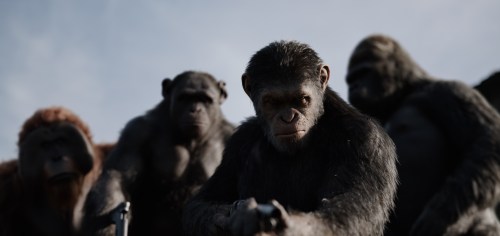
WPA picks up where Dawn of the Planet of the Apes left off. Chief ape Caesar (voiced and motion-captured by Andy Serkis) certainly hasn’t lightened up since his last outing. He’s not the kind of chap you’d invite over to liven up a dinner party, but he wears his pouty face and moody Batman style voice for good reason — his wife and son have been killed by a sadistic human known only as the Colonel (Woody Harrelson). As Caesar and four other riders “head up river” to hunt down the rogue Colonel, they pick up a mute human girl (Amiah Miller) who provides the film with a welcome human counter-balance to the Colonel’s corruption.

WPA begins as a war film, then becomes a western borrowing heavily from the likes of True Grit, and then descends unabashedly into a POW escape caper. Yes, its a mosaic of different genres that somehow blend into a gripping whole.

What is extraordinary is a narrative which focusses on the ape’s world, with human considerations being ushered into the margins. The plausibility of ape protagonists who communicate predominantly in sign language, with the only significant humans being signifiers of evil, or relegated to speechless vessels, must’ve been a hard sell to the studio execs. But WPA presents its ambitions with total confidence and is bursting at the seams with plausible characters who are brought to life with perhaps the most stunningly believable digital effects to date. When the Colonel stares at Caesar and says “My God. Look at your eyes. Almost human”, it is as much a meta-comment on the incredible digital work as it is on human-simian relations.

Its many parts are curiously engaging and despite the misleading marketing, WPA culminates as a compelling block-buster option these school holidays.

You can see my published reviews here.

Long Way North

lwnLong Way North has finally made its long way south onto our screens. Having screened as part of last years NZIFF, its theatrical release brings about the welcome return of its low-fi animated appeal. The film is a co-production out of France and Denmark and is Rémi Chayé’s debut feature in the directors chair (or wherever directors plant their bum for an animated feature these days).  Chayé had previously worked as assistant director on the stunningly beautiful (and Oscar nominated) Secret of Kells.  By contrast, Long Way North dials things back … but in a good way that compliments this charming coming-of-age story.
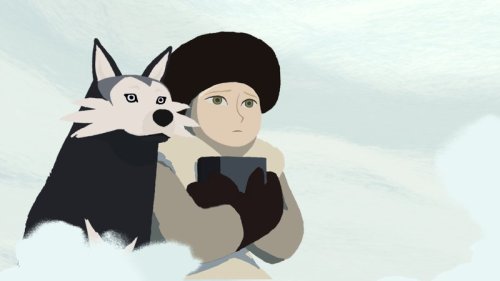
It’s 1882 in St. Petersburg, and the Russian aristocracy is in full swing. When explorer Oloukine disappears after a mission to the North pole, the state puts up a million rubles for the discovery of his boat, the Davai. His granddaughter, Sacha (voiced by Christa Théret), is a strong willed 14-year-old girl who laments her loss but stumbles on evidence that suggests they’ve been looking in the wrong place. Her desperate pleas to send out another search are met with frustration, so Sacha decides to take things into her own hands. Fiercely independent, capable and readily equiped with her dogged determination, she ultimately convinces a group of sailors to help her on an intrepid quest to the polar north to find the Davai.

Sacha is an engaging character and an example of girl-power and focussed independence. Although the plot may be a tad lightweight for some, its lack of complexity only serves to shift focus to the film’s exceptional art style.  An interesting decision was made to abandon (for the most part) the drawn line in favour of simple blocks of colour. Its style is enhanced by well considered framing that wonderfully captures the mood and ambience of the film’s various locations, the result being a picture-book style that evokes art from the era (Chayé cited Russian realist painter Ilya Repin as an influence).

Not without some false steps, Long Way North contains a few forgivable historical inaccuracies and a slightly peculiar sound-track that feels at odds with the period (although to be fair, it suits Sacha’s inexorable progression north).  Nonetheless, Long Way North is a beautiful film and although subtitled, it certainly isn’t taxing. So take your kids … they may just appreciate the break from your standard Hollywood animated fare these school holidays.
 

You can see my published reviews here.

Chocolat

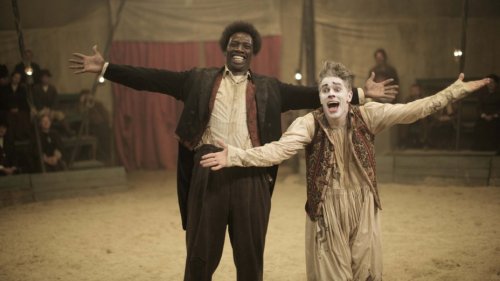
choccy“Your success is an insult to white people. Negroes must know their place.” — It’s a blunt statement from the film Chocolat, but a brutally honest account of the entrenched racism of nineteenth century France which acts as a warning to the viewer that Chocolat isn’t just about the whimsically joyful world of clowns from yesteryear.

Chocolat tells the true story of Rafael Padilla (played by Omar Sy from The Intouchables), a former slave who is employed by a small-time circus in provincial France.  The year is 1897 and his role as the wild eyed “cannibal” baring his teeth scares, delights, and indulges the audience’s prejudices of the time. But when he is discovered by George Footit (actor James Thierrée – grandson of Charlie Chaplin), a struggling clown in desperate need of upping his game, the comedy duo Chocolat and Footit is born. Soon after, the prestigious Parisian Nouveau Cirque gets wind of their act and sends them slap-sticking their way to fame and fortune.

As the saying goes, ignorance is bliss and Rafael appears unconcerned about the broader racial implications of a black man being physically abused for laughs.  The crowd is adoring and he is paid handsomely, even if his white partner, Footit, is paid more. However, during a short stint in jail he meets Victor, a black activist, who enlightens Rafael to the fact that he is only playing someone else’s whipping boy, rather than the artist he sees himself to be.

Meanwhile, the consummate professional, Footit appears to be more colour-blind than those around him, perhaps due to recognising similar struggles of bigotry. The film alludes to his homosexuality but is never explicit about it, suggesting that this film is as much about sexual identity as it is about race.

Nonetheless, the film wears its racial concerns boldly on its sleeve and forces us, the movie going audience, to observe another audience laugh and holler at the racist antics within the circus ring. However, it’s not long before you realise that you’re stifling a few laughs of your own at Chocolat and Footit’s down-right hilarious hijinks. The irony is palpable and you start to question whether you are complicit in your laughter, or whether it is testament to two very funny men whose performance transcends racial boundaries.

Roschdy Zem does an adequate job at directing this solid biopic, but its lavish production values just can’t match the two wonderfully charismatic and convincing performances of Sy and Thierrée. A film worth seeing for their performances alone.

You can see my published reviews here.

This Beautiful Fantastic


tbfWith the darkness of winter imminent and New Zealand gardens well into lock-down, it seems an odd time to release an optimistically colourful film about an English garden.  Perhaps it was a scheduling decision by the studio to make Lions supporters feel more at home.  However, all is not well in an English garden.

Written and directed by Simon Aboud, This Beautiful Fantastic is a light-hearted fable about two warring neighbours: Alfie, an obstinate old-man played by the wonderfully earthy Tom Wilkinson (The Best Exotic Marigold Hotel), and the other an obsessive-compulsive young woman named Bella played by Jessica Brown Findlay (Sybil Crawley in Downton Abbey). Bella’s “criminal neglect” of her back garden is met with Alfie’s ire when he snitches on her landlord. With a month to tidy up her garden, Bella must find some way of growing green fingers. Predictably, walls (both  metaphorical and literal) are broken down as the two learn to gain more understanding of each other.  Alfie’s cook, Vernon (Andrew Scott), acts as the conduit between the two to smooth over their relationship.  Meanwhile, the painfully adorable Billy (Jeremy Irvine) frequents the library where Bella works and waits in the wings to sweep her off her feet.

The film’s whimsically twee style is possibly something of an acquired taste that might be irksome to some but inspiring to others. Its form is reminiscent of Jean-Pierre Jeunet’s Amelie and offers a similar palette that is pleasing on the eyes. Cinematographer Mike Eley (who also shot My Cousin Rachel which is in current release) is given plenty of scope to play with colour and focus. Eley’s camera does a wonderful job of eliciting the film’s modus operandi as a modern day fairytale, and as the film’s title suggests, occasionally ventures into magical realism.

However, like most fairytales the damsel in distress remains a tad too passive and reactive and This Beautiful Fantastic does little to break out of this mould. Here, Bella seems a lost cause without the help of the men around her, and life lessons learnt through the use of garden metaphors seem at times a laboured attempt to disguise her lack of agency.  Nonetheless, This Beautiful Fantastic is an enjoyable, if predictable film of familiar faces, tropes, and environs. Its gentle and warm comedy will go some way to break down the cynics in the audience.


You can see the published review here.

The Mummy

tmmyIt looks like Universal Pictures want some of that lucrative franchise action. In the opening credits to The Mummy we are introduced to the “Dark Universe” logo — a series that is being spearheaded by The Mummy in what appears to be a new world of characters born out of classic horror; The Hunchback, Dr. Jekyll, Frankenstein, and Dracula, to name a few.  Although, if The Mummy is any indication, they’re going to make a monstrous mess of the whole lot.

In The Mummy we get Tom Cruise in all his blockbuster glory. From his quizzical expressions to his dramatic running style, everything here is so familiar, even down to the cookie-cutter template that this action blockbuster has been styled on. Cruise plays Nick Morton, a military recognisance scallywag who likes to steal antiquities and sell them on the black market.  One amorous night he steals a map from Jenny Halsey (Annabelle Wallis) which leads him (and her eventually) to the resting place of a 5000-year-old mummified Egyptian princess named Ahmanet (Sofia Boutella). Ahmanet was fairly miffed over a family spat back in the day … but I wont bore you with the details. Suffice to say that she comes back to life to set things straight and wreaks havoc over old Blighty.

Where do I start with what is wrong with The Mummy? Well, if you are sensitive to gender representation then you will most likely realise it contains a bunch of a negative stereotypes.  Ahmanet being the monstrous feminine seductress that toys with the male mind might’ve been an interesting angle to explore further, but instead we are dialled back to the old-fashioned conventions of a self-centred hero with his abject love interest in tow. And don’t get me started on the age gap between Cruise and Wallis.

But, at the end of the day the film is meant to be taken as a light hearted romp, so I’ll dispense with further heavy-handed complaints.  Even as a light hearted romp though, it’s still a disjointed mishmash. There are some nice set pieces but none of these coalesce into a coherent film. Character development is poor, leaving any vested interest in their cause waning.  Perhaps the most intriguing character is Dr. Henry Jekyll played by Russell Crowe.  The small glimpse of his struggle to contain the monstrous Mr. Hyde looked like a movie I’d want to see.  Or, if we’re lucky we might see Mr. Hyde run on for Crowe’s beloved South Sydney NRL side — certainly would be a more fun than The Mummy.  In the meantime, buckle your seat-belts, because this looks like only the first of many more monstrous turds flung our way.

You can see the published review here.