J.J. Abrams’ Super 8

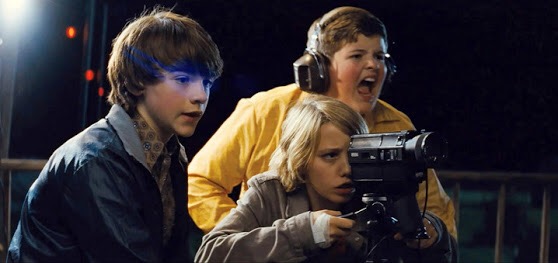
Imagine if modern film equipment was transported back to the golden age of eighties adventure films (think ET, The Goonies, and Close Encounters of the Third Kind), and fell onto the lap of … say, Steven Spielberg. The result wouldn’t be too different from what director J.J. Abrams has delivered here.

Super 8 is a film that doesn’t scream “look at me I’m reprising the eighties”, but instead is a master class in nostalgic adventure. It successfully delivers what the recent misfires from the Indiana Jones and Star Wars franchises didn’t. By no means perfect, Super 8 threatens to become just another misunderstood monster flick … although, weren’t many films in the eighties just that? With nostalgia kicks this good, I am confident that Abrams can deliver the new Star Wars film that every 40+ year old has been yearning for. Roll on December!

IMG_0157
 

John Carter

After the hullabaloo a few years back, I thought it time to finally visit the massive box office bomb that was John Carter. Was it simply a victim of poor marketing? Nope. It’s a bad film. Don’t waste your time. 

Seeing the stars: Interstellar and Now You See Me

Interstellar 

Every so often you see a film that leaves you pondering its haunting premise for days after viewing, and Christopher Nolan’s (Memento, The Prestige, Inception) latest blockbuster is just that kind of film. Nolan appears to be confidently ensconced in this genre and commands a stellar (no pun intended) cast (McConaughey, Hathaway, Chastain, Damon, Caine … I could go on) who deliver predictably solid performances. The necessary technical expositions render it bereft of some soul, however, Interstellar is ultimately a satisfying and thought provoking film.    IMG_0157


Now You See Me

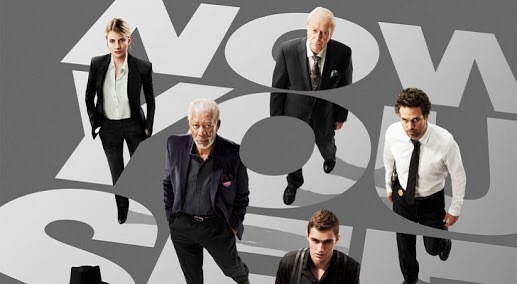
Continuity issues, plot holes, and a laughably unimaginative musical score mar this potentially entertaining heist flick. Director Louis Leterrier (who is perhaps the antithesis of Nolan) appears to have no idea what he is doing. Or perhaps he just doesn’t care, content to throw a few tired formulaic tropes at the screen and see what sticks. Shame, because had this film been handled with more thought and care we might’ve received something special.   20120104-065723.jpg

Inside Out

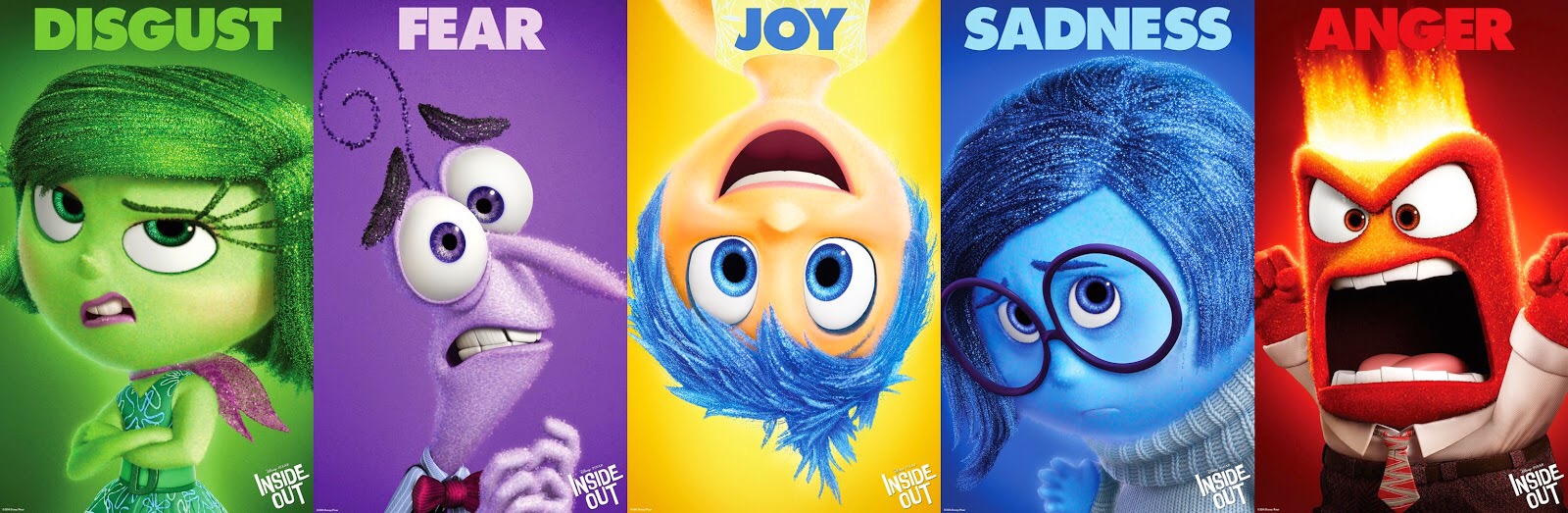
A fascinating look at the inner workings of a young girl’s mind that had me spellbound from start to finish. I applaud the courageous decision by director and writer Pete Docter (director of the excellent Up) to go with a female protagonist in the form of eleven year old Riley (Kaitlyn Dias). Interestingly, the almost entirely female cast has, as its only male characters, a personalisation of Fear (Bill Hader), Anger (Lewis Black), and a childhood imaginary friend called Bing Bong (Richard Kind) … would play well in a Gender Politics class, let alone a Psychology class. 
 20120101-225218.jpg

Some also rans

Shaun the Sheep

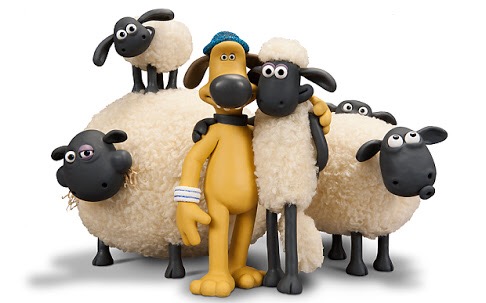
I enjoy Aardman films, but I found this average at best. Boring and not particularly funny.   
20120101-230647.jpg

Exodus: Gods and Kings

Terrible, really. It looks wonderful and has a great cast (ignoring for one moment the film’s “whitewashing “), but all this talent is wasted by a shoddy script.  The film, as a whole, felt rushed and I think it’s time to accept that Ridley Scott has lost his mojo. Shame. 

 20120101-230647.jpg

While We’re Young

On the surface While We’re Young feels like a bit of lighthearted whimsy … and leaving it there would be entertaining enough. However, digging a little deeper has its rewards. Writer and Director Noah Baumbach has a lot to say about authenticity and how it correlates with our every day lives. Baumbach is often referred to as the new generation’s Woody Allen. So if you agree with that accolade (I’m sure some of you cringe at the thought) and add a hint of Jean Paul Sartre, then you’re close to where this film sits. I quite enjoyed it.

 IMG_0157

Ex Machina

First time director Alex Garland explores the sinister side of aritificial intelligence. Yes, it is a path that has been well trodden over the years, so it is good to see some fresh ideas breathed into the genre. Specifically, Garland asks why it is that we feel the need to imbue artificial intellengence with sexuality. His answer proceeds to gouge out the male gaze with a white hot poker of female vengeance … it is an oddly liberating experience. As a thriller Ex Machina stands tall as a well produced and absorbing product of entertainment. But more importantly it is a well considered feminist parable of our times.

Rating: 5 stars.


Into the Woods

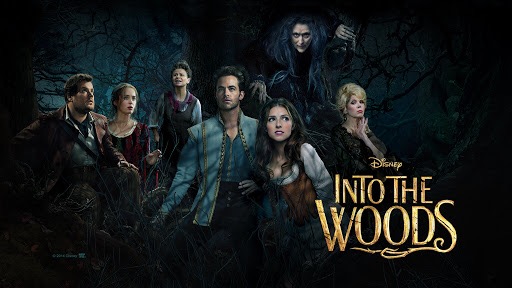
Into the Woods is a mish-mash of uninspiring fairytale characters that meander their way through a seemingly endless list of quests. Biting off way too much, this film sinks under its own weight and rapidly becomes a disjointed mess – even Meryl Streep can’t save it. The musical medley between the two princes (Chris Pine and Billy Magnussen), aptly titled “agony”, is ironically the film’s only redeeming scene, however, it’s title sums up my experience of this film.


Slow West

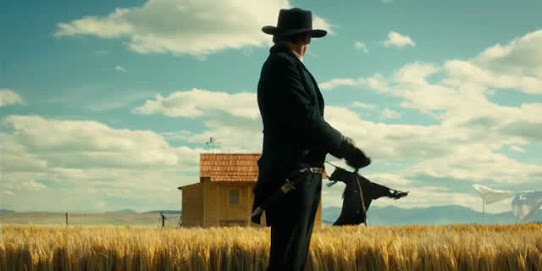
Slow West is a simple love story; Boy meets girl, girl leaves for America, boy follows girl. Despite its very simple plot I found Slow West to be well paced and thoroughly engrossing. The production is a boiling pot of nationalities; directed by a Scotsman (John Maclean), starring a couple of Australians (Kodi Smit-McPhee and Ben Mendelsohn), a South African New Zealander (Caren Pistorius), and an Irish German (Michael Fassbender), shot in New Zealand, but set in America … the result is met with a slew of wonderful ambiguities that place the film rather precariously within the western genre. Special mention goes to the Central Otago landscape which is shot with an almost magical quality by Scottish cinematographer Robbie Ryan (Philomena, The Angel’s Share).  Well worth watching.


Thesis finally complete!

Booyah! My thesis arrived back from the bindery the other day and has now been submitted to Massey University for examination. My work here is done … phew! The last couple of years have been, at times, very difficult and stressful. But it’s done with now and it feels great!
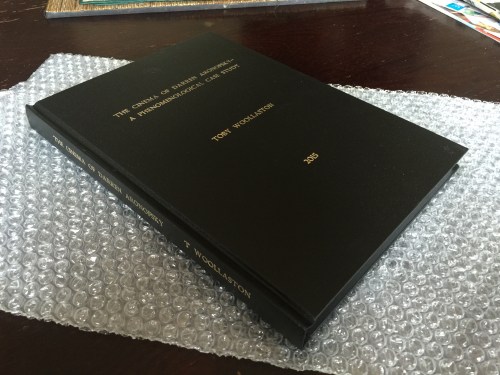
For those who are interested in what exactly I wrote on, here is the abstract:


The Cinema of Aronofsky – A Phenomenological Case Study

This thesis contextualises phenomenology in relation to film, exploring what phenomenology is and how it can be used as a tool to analyse film. Vivian Sobchack’s phenomenological framework (which promotes the embodied experience of the spectator) provides the method of inquiry into the films studied here. This method employs five hermeneutic rules that ask the spectator to first experience a phenomenon and then attempt to analyse it. An analysis of American director Darren Aronofsky’s first five feature films is undertaken using this phenomenological optic. Pi (1998), Requiem for a Dream (2000), The Fountain (2006), The Wrestler (2008), and Black Swan (2010) all elicit embodied responses in the spectator with the intention of using such responses as a vehicle to convey meaning. Theories of non-cognitive processes, such as emotional contagion, non-cognitive affective responses, and mood are presented as an explanatory model for the experience of embodied responses to film by the spectator. This research identifies and analyses four core elements within the structure of Aronofsky’s films that promote these embodied responses, and lead the spectator to identify so intensely with the protagonist. These elements are the musical score, colour complexion, visual composition, and the exposition of body. 

Key findings of this study reveal Aronofsky to be an auteur with existential concerns, akin to the nihilistic outlook described by German phenomenologist Martin Heidegger. This subtext is revealed through the practice of phenomenological viewing and is promoted by the physicality of Aronofsky’s cinema which prompts the spectator’s embodied response, which is then followed by an examination of “self”. Furthermore, this thesis suggests that the practice of phenomenological viewing could be applied to other auteurs’ work in order to expose new meanings and subtexts. The exposure of Aronofsky’s “nihilistic” subtext highlights Sobchack’s phenomenological method of cinematic viewing as a valid way to both experience and analyse cinema.