Midway
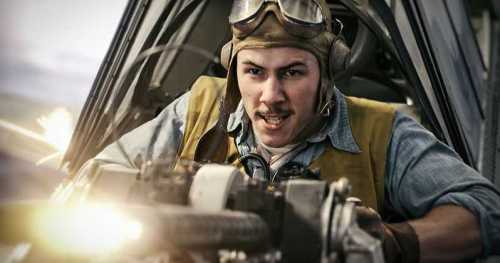 Verdict: An overblown and corny theme-park ride.
If you liked Pearl Harbour, then you’ll love Midway… but that’s not saying much. Pearl Harbour was a posturing leaky barrel of testosterone that overflowed with commercial bluster and was most likely an insult to those who suffered from the real-life event. Midway is more of the same, an unintentional sequel of sorts that focusses on events post Pearl Harbour that led up to the battle of Midway.
Dick Best (don’t ask), the obligatory wise-cracking gum-chewing hero (played by Ed Skrein), leads us into battle. He’s the best Dick around. Yep, a real Top Gum (he doesn’t ever stop chewing), a chiselled jawed Wriggly’s advert who spouts machismos like “Let me put a 500-pound bomb right down their goddam smokestack”. Behind him all the way is, of course, his dutiful wife (Mandy Moore), Woody Harrelson’s silver wigged Admiral Nimitz and a supporting slew of military archetypes who head off to save the Pacific and the Free World.
It’s writer Wes Tooke’s first crack at a feature film. It shows. His screenplay would make a Baz Luhrmann film feel wooden, with a robotic script that brims with needless exposition. There is so much “tell and also show” going on, that Tooke has seemingly dropped his own 500-pound word bomb down the goddam smokestack of this film. Fool of a Tooke!
To be fair, this heaving special effects-laden extravaganza is everything you’d expect from a director such as Roland Emmerich. He’s the one responsible for patriotically gouging our brains out with Independence Day and White House Down among other “God Bless America” middle-of-the-road block-busters. Midway is all that and more, and you’d be fairly naive if you went in expecting anything else. In fact, Emmerich’s bombastic eye-candy may indeed be the perfect foil for Tooke’s mechanical script—it’s almost admirable how the duo have achieved peak-brain-dead-commercial-crap. It’s a “himbo” of a film; handsome to look at but not much above deck. Unfortunately, Midway treats its audience similarly.
See my reviews for the NZ Herald here and for Witchdoctor here.
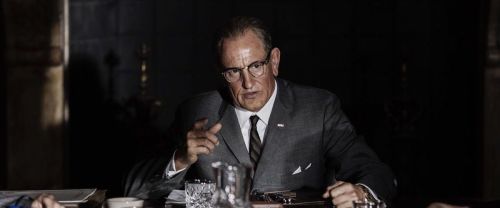 Hot on the heels of Chappaquiddick comes another American political drama that wades neck-deep into the complex machinations of America in the sixties. This time it retells the story of Lyndon B. Johnson’s untimely rise to power as a result of John F. Kennedy’s assassination.
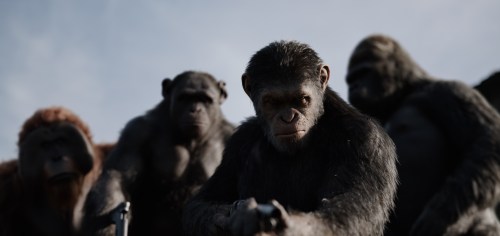 Contents don’t always match what is printed on the tin. War for the Planet of the Apes’ lengthy title (let’s just call it WPA) and marketing material suggest that you’re likely to be be subjected to two and a half hours of bloodshed, courtesy of a certain Wellington digital effects company. But WPA is far more introspective than advertised. Sure, it’s not La La Land, but WPA has a lot less “war” in it than we’re led to believe. Critically, comparisons have been made with Ford Coppola’s Apocalypse Now. Famously, Ford Coppola reworked Joseph Conrad’s novella Heart of Darkness, by expressing its themes of colonialism, self-discovery and the meaninglessness of evil against the backdrop of the Vietnam war. In WPA the astute viewer will pick up on this comparison fairly quickly, but for those not familiar with Coppola’s film, a wall graffiti’d with “Ape-pocalypse Now” is plain for all to see.
 tobywoollaston.com