Spitfire
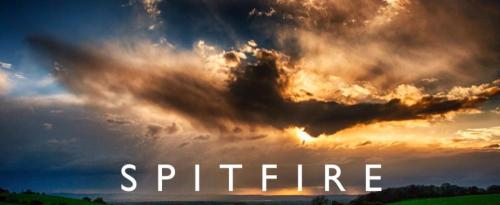 “The aura surrounding the Spitfire is more a post-war phenomenon than a war-time thing. It was just an instrument of war then”—a softly spoken sentiment shared by one of the few remaining RAF Spitfire pilots still alive. As this documentary makes crystal clear, the iconic WW2 fighter, which has since been idolised and romanticised, was a design of practicality made to do a job. But it was a design of such influence that it most likely turned the tide on history. Certainly a sobering thought.
The film traverses the Spitfire’s history from its pre-war design and introduction to its evolution and final retirement. But rather than roll out a bland history of sequential events, documentarians David Fairhead and Ant Palmer have mixed up the Spitfire’s tale with a plethora of anecdotal stories from the people who made, delivered, and flew the craft. A lively marriage of archival and modern-day footage spurs proceedings as it covers the Spitfire’s crucial use in the Battle of Britain. Sparsely narrated by the very recognisable voice of Charles Dance (Game of Thrones), his resonant timbre and clipped British accent provide the kind of regal gravitas to match the iconic plane’s Rolls-Royce Merlin engines that growl throughout.
It’s the kind of documentary that doesn’t require an interest in the subject to make it worth your while. Certainly, the intoxicating imagery is both sad and thrilling, but it’s the fascinating personal accounts that resonate most. Worthy of note is its examination into the role that women played; whose skills were not only employed in the manufacture and design of the aircraft, but also their piloting prowess in delivering the 22,000 Spitfires to the airfields.
Like their subject, Fairhead and Palmer have delivered an elegant documentary. And although the emotive musical score is perhaps a little too fawning, it does soften the film’s British stiff upper lip. Appropriately, Spitfire doesn’t side-step the awful loss, finishing on a personal note that pays homage to those who lost their lives. As one ex-pilot implores “In all conscience, this world needs a change from all this hostility and warfare. The world needs a change.” Indeed it does.
See my reviews for the NZ Herald here and for Witchdoctor here.
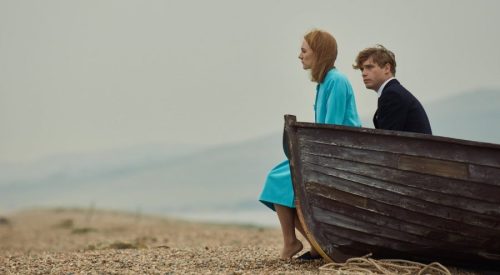 Wedding night nuptials have never felt this awkward. Ian McEwan’s (Atonement) adaptation of his own Booker-nominated novella, On Chesil Beach, opens with a sweet young couple walking hand-in-hand along the titular beach. Their honeymoon suite awaits.
 Cinderella meets Singapore tourism promotional video in this modern fairytale of love and family fallouts. Employing every cliched Hollywood trick in the book, Crazy Rich Asians is a tale that taps into implausible but archetypal characters and familiar narrative arcs … it’s wonderfully vibrant and wafer thin.
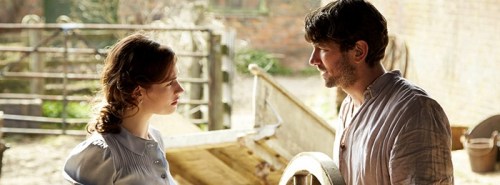 The Guernsey Literary and Potato Peel Pie Society; with a title that long, it was always going to spark curiosity. As cast member Matthew Goode quips in his clipped British accent “Crikey, that’s quite a mouthful”. Add to that the burgeoning career of its star, Lily James, and a handful other recognisable faces, many from Downton Abbey and you’ve got a hit on your hands.
 In his directorial debut, Bill Holderman (who wrote A Walk in the Woods) has delivered a conservative package of feel-good twee and whimsy that straddles that awkward line between amusing and irksome.
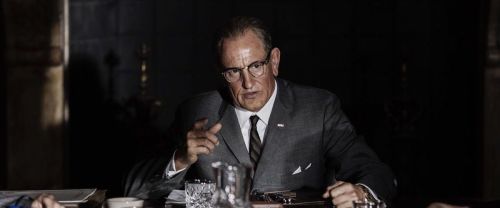 Hot on the heels of Chappaquiddick comes another American political drama that wades neck-deep into the complex machinations of America in the sixties. This time it retells the story of Lyndon B. Johnson’s untimely rise to power as a result of John F. Kennedy’s assassination.
 Behind every great man, there is an even greater woman pissed off she’s not getting the recognition she deserves; which in a nutshell sums up Meg Wolitzer’s provocative novel. Adapted for the screen by Jane Anderson (Olive Kitteridge), The Wife pits the forces of traditional marital dynamics against a lop-sided distribution of talent.
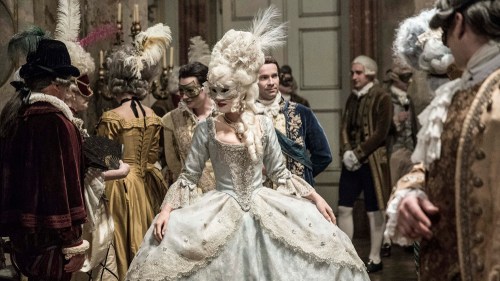 With all its pomp, ceremony, feathers and wigs, Interlude in Prague encourages movie poster quoting descriptors such as “lavish”, “exquisite” or “sumptuous”. Indeed the classical period, in which this tale is set, is an era that cinema has shown its fair share of adoration for.
 tobywoollaston.com