Fighting with My Family
 Saraya “Paige” Knight competes as part of a wrestling mad family from Norwich, who run a local wrestling gig out the back of a van. This is the “pro” brand of wrestling, complete with fake punches, body slams and dramatic leaps off the top rope onto some poor sucker waiting to take the fall—the kind of wrestling that spawned the likes of Hulk Hogan and (yes) Dwayne “The Rock” Johnson. For Saraya (the excellent Florence Pugh) and her brother Zac (Jack Lowden), the dream of making it to the glitz and glamour of America’s WWE hits a snag when the inseparable siblings have to split their tag-team … she got selected to trial, he didn’t.
This simple but true story is Saraya’s after all—it’s a classic rags-to-riches tale, a kind of Rocky story built on sweaty training montages and more eye-rolling cliches than a wrestler’s verbal retort.
Of course, no film about wrestling would be complete without an appearance from the aforementioned mountain of machismo himself. The Rock’s planetary sized screen presence orbits his goofy charismatic charm, sucking your attention with tractor-beam-like command—that’s no moon, it’s The Rock. So it’s unfortunate then, that he only makes two brief appearances (despite promo material suggesting otherwise). But hey, that’s one for each bicep, so you take what you can get.
However, as is so often the case, the film’s heart and soul rest with its writer/director. Here, Stephen Merchant (The Office) proves that he can pen some heartwarming moments and very funny gags for the big screen. Sadly, his directorial efforts don’t fare so well—he’s on autopilot and although hanging on tightly to his inflatable pen, he seems to be drowning in a sea of predictability. Nick Frost (Shaun of the Dead) delivers a rib-tickling performance as Saraya’s dad, lacing this film with plenty of feel-good vibes as he vicariously lives through his daughter’s fortunes. Beyond that, Fighting with My Family remains an entertaining but lightweight affair of humorously choreographed muscle.
See my reviews for the NZ Herald here and for Witchdoctor here.
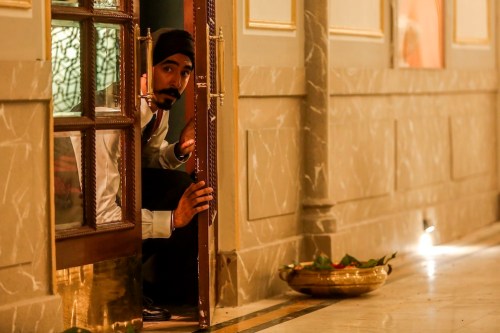 Dev Patel and Armie Hammer lead an ensemble cast in a film about the 2008 Mumbai terrorist attacks. There were a series of twelve coordinated attacks across the city that would last four days leaving over 160 people dead and hundreds more injured.
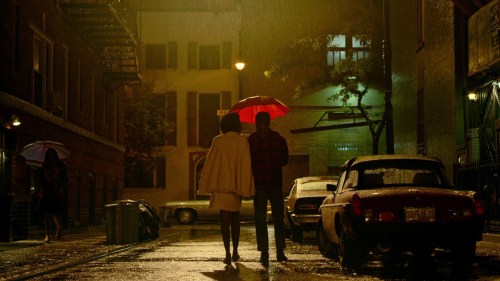 Barry Jenkins (Moonlight) has hit another out of the park. Beautiful and woozily sensual, If Beale Street Could Talk is essential viewing.
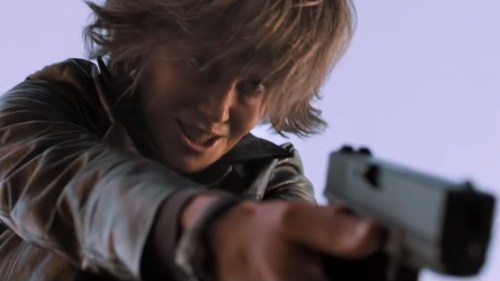 Lost in the shuffle of award season comes a police procedural so hard-boiled it could break your teeth.
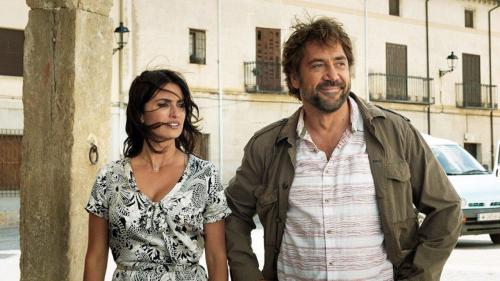 Iranian writer/director Asghar Farhadi, maker of quiet but piercing human mysteries (A Separation, The Salesman), has gone once more to the well, yet again painting a portrait of a family under the suffocating chokehold of dark secrets. However, the skill with which he has crafted his latest feature, Everybody Knows, suggests that for Farhadi the well has not yet run dry.
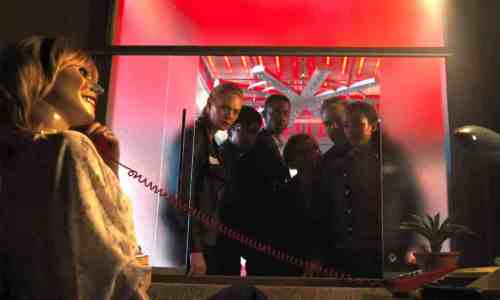 Many of us have experienced the tension of being locked in a confined space with only an hour to escape. No, I’m not referring to tackling Auckland’s traffic, but rather the current fad of escape rooms that seem to be everywhere at the moment.
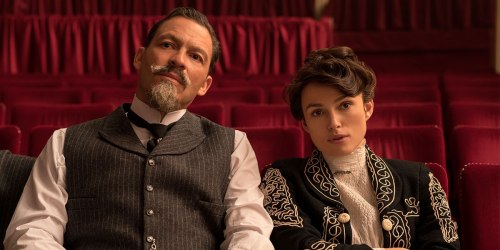 Part way through Colette, our lead says to her husband “I can read you like the top line of an optician’s chart.” It is an amusing but biting line signaling the refreshing winds of change that sweep through this proto-feminist period drama.
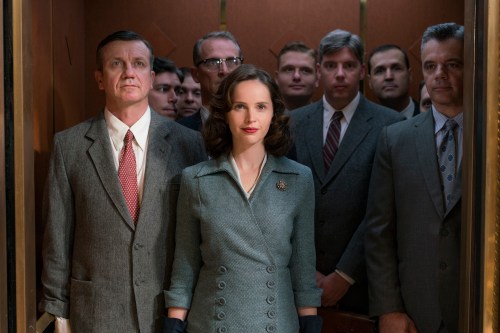 You might have noticed the meme “Notorious RBG” bandied about recently; a humorous meld of Ruth Bader Ginsburg—a demure Jewish lawyer—and American rap artist Notorious BIG who is anything but. As this film neatly illustrates, Ginsburg’s dogged drive and determination for shaking up the establishment show that there is more truth to the meme’s apparent oxymoron than meets the eye. She’s diminutive in stature but a giant in the fight for gender equality.
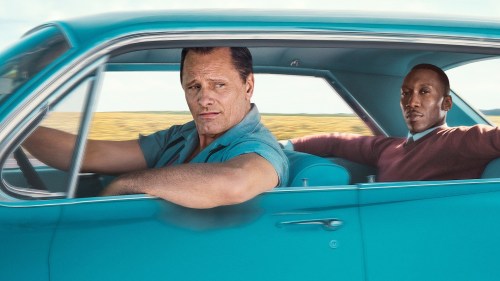 One half of the Farrelly directing duo, Peter Farrelly, has departed from the couple’s proclivity for comedy to deliver a heartfelt account of an unlikely friendship in the face of racial adversity.
 American writer/director Bo Burnham brings his indie sensibilities to a coming of age tale that feels both wonderfully charming and fiercely honest. His ode to teenage angst has somehow avoided Hollywood’s habit of cleansing and repackaging the prickly topics in our lives for easy consumption. Instead, Burnham’s astute observations of a thirteen-year-old’s anguish captures that limbo period; a time in life when you’re trapped for a few tortuous years between the joy of childhood and the reality of being an adult.
 tobywoollaston.com