Searching
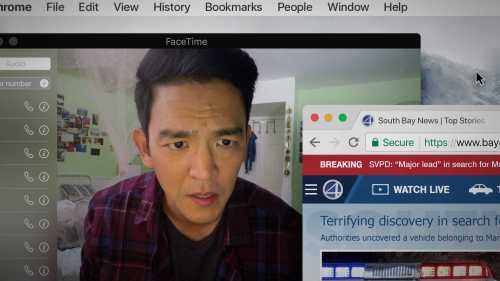 The secret world of a teenager’s digital life is explored in this engaging desktop thriller. It is a Hitchcockian Rear Window for the modern generation, with the action taking place entirely within the confines of an electronic screen.
Helming his first feature film, writer/director Aneesh Chaganty has dipped his digital toes into the growing pool of Bekmambetov styled desktop thrillers. It’s a bold move for the fledgeling director, who almost pulls it off.
John Cho (Star Trek) plays David, a recent widower who is managing to keep it together as a solo dad. But when his teenage daughter fails to return home one night, things begin to unravel. Her disappearance is as much a mystery to the case Detective Vick (played by Debra Messing) as it is to David. His desperate investigations into her whereabouts traverse a dizzying scape of social media and streaming sites which lead him down a warren of false-turns, dead-ends, and red-herrings. The bulk of the film is essentially David getting to know his daughter without actually spending any time with her.
It’s engaging stuff and the format offers fertile ground to garner insights from its characters as it flits between various online services. A momentary mouse pause over an icon or word deleted during a message speak volumes for what is going through David’s mind, and here it is used to full dramatic effect.
Unfortunately, when the action is required further afield, things begin to derail. Beholden to its modus operandi, the enforced confines of the digital screen are stretched to breaking point and when David is required to visit other locations the film can’t quite maintain a sense of plausibility. It begins relying on tropes such as streaming news-casts to elucidate proceedings beyond what they would normally do. And despite director Chaganty’s noble efforts, the action begins to feel awkward and slightly gimmicky.
That said, it is just this gimmick that elevates Searching above what would’ve otherwise been a bog-standard crime thriller. So, “like” to that at least.
See my reviews for the NZ Herald here and for Witchdoctor here.
 Perhaps stymied by the calibre of great documentaries currently showing, Wayne, a film about Australia’s celebrated two-wheeled maestro, doesn’t quite achieve pole position.
 Some might reserve their benefit pay for vices such as cigarettes or alcohol, but in the early days of British fashion designer Alexander McQueen, his dole money was spent on textiles. His literal rags-to-riches tale is a familiar one; a tortured artist driven by his passion to the point of self-destruction.
 “The aura surrounding the Spitfire is more a post-war phenomenon than a war-time thing. It was just an instrument of war then”—a softly spoken sentiment shared by one of the few remaining RAF Spitfire pilots still alive.
 Wedding night nuptials have never felt this awkward. Ian McEwan’s (Atonement) adaptation of his own Booker-nominated novella, On Chesil Beach, opens with a sweet young couple walking hand-in-hand along the titular beach. Their honeymoon suite awaits.
 Cinderella meets Singapore tourism promotional video in this modern fairytale of love and family fallouts. Employing every cliched Hollywood trick in the book, Crazy Rich Asians is a tale that taps into implausible but archetypal characters and familiar narrative arcs … it’s wonderfully vibrant and wafer thin.
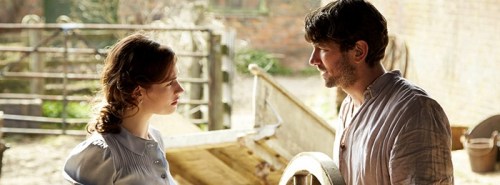 The Guernsey Literary and Potato Peel Pie Society; with a title that long, it was always going to spark curiosity. As cast member Matthew Goode quips in his clipped British accent “Crikey, that’s quite a mouthful”. Add to that the burgeoning career of its star, Lily James, and a handful other recognisable faces, many from Downton Abbey and you’ve got a hit on your hands.
 In his directorial debut, Bill Holderman (who wrote A Walk in the Woods) has delivered a conservative package of feel-good twee and whimsy that straddles that awkward line between amusing and irksome.
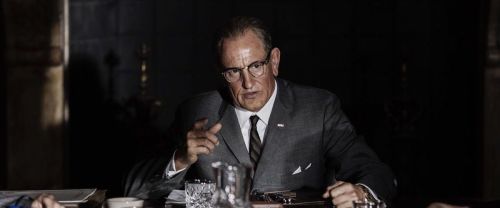 Hot on the heels of Chappaquiddick comes another American political drama that wades neck-deep into the complex machinations of America in the sixties. This time it retells the story of Lyndon B. Johnson’s untimely rise to power as a result of John F. Kennedy’s assassination.
 Behind every great man, there is an even greater woman pissed off she’s not getting the recognition she deserves; which in a nutshell sums up Meg Wolitzer’s provocative novel. Adapted for the screen by Jane Anderson (Olive Kitteridge), The Wife pits the forces of traditional marital dynamics against a lop-sided distribution of talent.
 tobywoollaston.com