Category: Uncategorized

Borg vs. McEnroe

bvmSeldom do sports dramas work. They tend to be clunky efforts at condensing hours of sporting action into a few minutes whilst explaining the rules of engagement for those unfamiliar … oh, and leaving enough room to tell an engaging story.   Although Borg vs. McEnroe suffers from these problems, it packs just enough narrative punch to elevate itself from the pack.

Swedish Director Janus Mets has a background in documentaries, so it’s little wonder that he has gravitated towards telling a story “inspired by true events”. The intense rivalry between the two tennis greats, Björn Borg and John McEnroe, is no secret, nor is the result of the Wimbledon final around which the film focusses. But where the film covers new ground is in telling the background of the two.

The film examines two wildly different sporting philosophies—the brash expressive American versus the cool focussed Swede. However, it was interesting to learn that both had similar temperaments in their adolescent years, often succumbing to wild outbursts and unsavoury on-court antics. Although, Borg was taught at a young age by his coach, Lennart Bergelin (played by the evergreen Stellan Skarsgård) to channel his anger through his stroke play. McEnroe, as many know, did quite the opposite, emptying his anger all over the court, the crowd, and the umpire. Part of the film’s success is due to the casting of Shia LaBeouf in the role of McEnroe.  His brattish off-screen persona bleeds so well into the on-screen tennis rascal and when he famously berates the umpire’s “seriousness”, it’s a genuine pleasure to watch. By contrast, the very Hiddlestonesque looking Sverrir Gudnason plays an ice cool Borg holding it all in.

Unfortunately, the complexities of serving up a sports drama proves one rally too many and the film overcooks its own melodramatic remedies; lots of contemplative stares into mirrors, anguish on the training run, torment in the post-run shower, and other yearning moments become a tad overbearing. Like a number one player, this tennis film is better than the rest but still doesn’t feel good enough.


You can see my published reviews here.

The Killing of a Sacred Deer

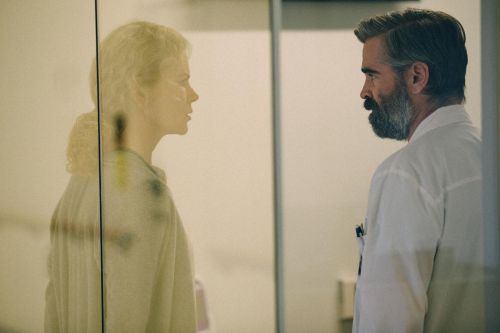
tkoasd“Our children are dying, but yes, I can make you mashed potatoes.”—it is a line that typifies the strange world of Greek director Yorgos Lanthimos. His films are clinically measured without an ounce of extra fat and feel like they sit somewhere on the autistic spectrum of film-making, if there was such a thing. His previous outing, The Lobster, with its blunt and robotic dialogue, was as peculiar as it was amusing and The Killing of a Sacred Deer is tonally much the same, if perhaps a little more disturbing.

The Killing of a Sacred Deer is a seemingly emotionless film, detached and devoid of any warmth. You’d think it has little to offer, but its world of odd characters and absurd situations offer a rewarding mix of dark comedy and painful catharsis.  Steven (Colin Farrell), a renowned cardiovascular surgeon, and his wife Anna (Nicole Kidman), an ophthalmologist, are happily married with two children. When a patient dies on Steven’s operating table he feels duty-bound to take the dead patient’s son, Martin (Barry Keoghan), under his wing. However, when Steven’s own children begin suffering a clinically unexplainable condition things begin to unravel. Steven’s relationship with Martin takes a peculiar and sinister turn when Martin offers Steven a horrific solution to their problem.

Farrell and Kidman offer typically measured performances, but the real surprise is Barry Keoghan (Dunkirk), whose portrayal as Martin feels like watching a toddler with his hand on the proverbial nuclear button. It is a tour de force of uneasy acting that delivers the perfect balance of ambivalence and malevolent intention—his character taking on an almost biblical role (suggestive of the binding of Isaac) that is central to the film’s exploration of what it means to atone for our transgressions.

The Killing of a Sacred Deer will no doubt divide its audience. The awkward mix of unconventional storytelling and inaccessible characters might be too impenetrable for some. For others (myself included), The Killing of a Sacred Deer remains a macabre psychological satire told in a very unique and refreshing way.
   

You can see my published reviews here.

Wonder

wonderIn a family friendly version of David Lynch’s The Elephant Man, director Stephen Chbosky has negotiated the foggy area between trite and truth in this engaging tale of triumph over adversity. It’s been a while between films for Chbosky who gave us the surprisingly good The Perks of Being a Wallflower back in 2012.  His latest outing is an adaptation of R.J. Palacio’s best selling novel Wonder—if you haven’t heard of it, your kids probably have.

Wonder tells the story of August Pullman, a ten-year-old boy deformed from birth due to a genetic disorder.  Having been shielded from the cruel taunts of the school playground, his homeschooling parents (played by Owen Wilson and Julia Roberts) feel it time to integrate Auggie into public school life.  The film is rife with harsh realities and tender moments as Auggie (and the people around him) adjust to the change.  Jacob Tremblay (Room) does a commendable job of playing the lead and presents a broad range of emotions despite the difficulties of dealing with a ton of facial prosthetic makeup.

Although Auggie provides the film with its narrative momentum, Wonder’s strength lies in how his circumstances affect, and ultimately inspire others; his sister dealing with being the forgotten sibling, the classmates who learn to accept him and others who reject him—they all learn important lessons brought about through self-examination.

Other than a chaptered structure which introduces the main players and their point-of-view, and a dusting of magical realism throughout, Wonder prudently avoids getting too caught up in the artifice of film, electing instead to tell its story simply and cleanly.

Wonder is not without a few false steps—Auggie’s dad (Owen Wilson) is relegated to a comic relief role which misses a unique opportunity to examine a father-son relationship, and moments throughout the film are prone to being too maudlin. Despite this, Wonder’s emotive qualities caught me off guard, and try as a might, I couldn’t keep a dry eye … some chilli-flakes must’ve fallen into my popcorn.


You can see my published reviews here.

The Disaster Artist

disaster“I did not hit her! I did naaht! Oh, hai Mark.”—a line immortalised by Tommy Wiseau, arguably the worst director ever to helm a multi-million dollar film. The Disaster Artist tells the true story of the making of his film, The Room, which has been lauded by “fans” as the greatest bad movie ever made.  The result is like watching a clown getting shot—an uneasy mix of tragedy and comedy and if there was a bastard-child of Tim Burton’s Ed Wood biopic and Kirk Lazarus (Robert Downey Jr.) from Tropic Thunder, then this’d be it.

James Franco (127 Hours) has boldly stepped into the shoes of the enigmatic Tommy Wiseau and in an ironically comedic take on method acting (he apparently kept in character throughout the directorial process) has directed and starred in his own film about a person who directs and stars in his own film … don’t dwell on the meta too hard, just go with it.

The film focusses on the relationship between Wiseau and actor Greg Sestero (played by James’ brother, Dave Franco), spanning from their first meeting to The Room’s climactic premiere. Backed by a seemingly bottomless bank account, Wiseau develops, produces, directs and stars in The Room (NOT to be confused with the Abrahamson’s masterpiece, Room), despite having little knowledge of filmmaking. The ensuing train-wreck is a dexterous melange of humour and humiliation that is funny, sharp, and spiteful when it needs to be.

Much of the film’s success hinges on James Franco’s performance as Tommy Wiseau, and thankfully he delivers a convincing portrayal. When Wiseau’s antics begin to stretch beyond the unbelievable the film is clever enough to ground itself through the reactions of Wiseau’s cast and crew—all who respond to Wiseau’s many WTF moments with what we, the audience, are all thinking … is this guy for real? Yes folks, he is and The Disaster Artist might just usher in the golden era of Tommy Wiseau. Naaht a bad film at all.

Read the full review for the NZ Herald here.

The Stolen

thestolenEnglish writer/director Niall Johnson has assembled a multi-national cast for a film that’s an awkward mix of True Grit and Gone Baby Gone. Unfortunately, it lacks the spunk and gravity of either.

Set at the time of Otago’s gold-rush, The Stolen tells a story of prosperity and loss against the backdrop of New Zealand’s wild and beautiful frontier. Charlotte (Alice Eve) and her husband are a wealthy couple fresh off the boat from Oxfordshire, looking to make a new life for themselves in New Zealand.  When her husband is killed and her baby is kidnapped after a botched robbery, Charlotte takes the law into her own hands and sets out to find her missing child. The film presents itself as a bold and punchy tale set among the grime and dirt of prostitutes and gold diggers. However, the tame treatment renders it quite the opposite and it lacks the unbridled confidence to get down-and-dirty with its subject matter. Charlotte’s desperation becomes a poorly drawn “don’t get between a mother bear and her cub” trope and it’ll have you wondering if the robbers stole the script along with the baby.

The relatively talented cast can’t rise above the many cliches which are slathered liberally on a stale loaf of archetypal characters. And while the film takes great pains to make the most of New Zealand’s cinematic landscape, which is, yet again, quite stunning, it struggles to impress in areas that matter. Even the multi-talented Stan Walker’s small part has the unsavoury whiff of tokenism and does little more than offer cultural flavour and plot convenience.

The Stolen tries hard and credit must be given to the noble attempt at creating a female lead with a strong presence in a male-dominated land. But ultimately you’ll leave the theatre feeling that plenty more should have been made of its promising setup. 

Read the full review for the NZ Herald here.

Human Traces

ht

In only his first feature, New Zealand writer and Director Nic Gorman has crafted an impeccably paced thriller that sits well within New Zealand’s own “cinema of unease”. Starring local talent Sophie Henderson, Mark Mitchinson and Vinnie Bennett, Human Traces is a chamber piece of isolation and paranoia played out among the heaving shores and bitter winds of a remote outpost.

Sarah (Henderson) and Glen (Mitchinson) are a married couple who work for the Department of Conservation and have been posted on a remote Sub-Antarctic research station.  It’s a barren windswept environment and not for the faint-hearted. When their co-worker finishes her allotted six-month stint, she is replaced by Riki (Bennett), a young lad whose tentative demeanour raises suspicions. As can be expected, all is not as it seems on the island and the film takes great delight in teasing out all its secrets.

The familiar setup might suggest “Dead-Calm-on-an-island” but there is a whole lot more going on in this distinctively Kiwi thriller. Told in three chapters, the film explains the same story from the perspective of each of its three characters, raising questions about whose truth is the “real truth”. It’s a giddy cocktail of intrigue and disclosure which is aided by some deft editing, sound design, and choice of score. 

The decision to opt for a hand-held camera for much of the action wonderfully captures the island’s windswept scape as we are jostled and buffeted among the tundra and its three inhabitants. 

As the title suggests, Human Traces has at its heart an environmentally conscious subtext with humans cast as a blight on the natural order of things; as one character expresses, we are an uneasy mixture of nature and creation. And although it misses opportunities at times to explore this subtext with more vigour, Human Traces remains a surprisingly strong contender for Kiwi film of the year.

Read my full review for the NZ Herald here.

Lets talk about race.

deeeetr

Has 2017 signalled a shift in whose stories are being told in the cinema? 

Having just attended a media screener for Kathryn Bigelow’s latest film, Detroit, a film about a group of black youths in the 1967 race riots, it struck me that perhaps the cinematic world is beginning to grow up, resulting in a minor groundswell of films which are telling the stories of “ethnic minorities”.  Perhaps it’s a temporary blip, but a welcome blip nonetheless.

So, who is telling these stories? Some argue that the power brokers are history’s writers. And as the argument goes, Kathryn Bigelow (a white American) has no right to tell the stories of black people.  Certainly Pulitzer Prize winner August Wilson subscribes to this point of view.  His play, Fences, is about a disgruntled father carrying the baggage of his neglected upbringing, and bitterness over missing a shot at big-time baseball due to the racist selection policy of the fifties. His adaptation for the big screen was posthumously helmed by Denzel Washington. Wilson, who died in 2005, insisted that the film version of his play be directed by an African-American.

Raoul Peck’s documentary, I Am Not Your Negro, is in lockstep with Fences. This film unapologetically meets America’s racist past head-on. “The future of the negro in this country, is precisely as bright or as dark as the future of the country”—this provocative statement from the film by black activist James Baldwin may on the surface sound reductive but his stance is unflinching and he unapologetically uses black lives as the benchmark of America’s success as a nation … and in Baldwin’s words “it is not a pretty story.” In 1979 Baldwin penned the beginnings of a manuscript that was to be his next project, called “Remember this House”. Haitian born Director, Raoul Peck, took these pages and created a documentary that is a stimulating rendition of Baldwin’s seminal work.

I Am Not Your Negro and Fences are important films, not just as a document of America’s checkered racial history but also as a warning to the world about the fragility of racial difference. They shrewdly illustrate the historical treatment of America’s black community in order to access deeper fundamental problems within America, and indeed the Western civilisation. Just as Al Gore has used climate change to illustrate our problems with materialism, similarly James Baldwin and August Wilson use a racist America to illustrate our fundamental inability as human beings to embrace ethnic difference and commonality. Baldwin posits “It’s not a question of what happens to the negro here, to the black man here … but the real question is what’s going to happen with this country.” He argues that America’s problems that created “the nigger” still exist today and is a “formula for a nation or kingdom decline”.  With a finger firmly pointed at Western civilisation (although it is difficult to think of any civilisation, past or present, where cultural difference has been harmoniously embraced) the film at its core seems to wrestle with the age-old conundrum of humanity’s inability to grasp power.

Both Fences and I Am Not Your Negro (Roschdy Zem’s Chocolat being another) are fine examples of black activism, as penned by their own people, spreading its wings on the silver screen. But is there room for ethnic minority stories to be told by people from a different ethnic background?  

There have been some affective examples this year—such as the aforementioned Detroit directed by Kathryn Bigelow. Set to the backdrop of the Detroit race riots, the film begins by explaining that the pointy end of the maligned racist stick is the result of historically deep-seated problems.  Certainly, Detroit and I Am Not Your Negro would make the perfect double bill. However, despite Detroit’s good intentions, it just does not have the unbridled confidence to ascribe fault with white power that I Am Not Your Negro does, and rightly or wrongly steps back from this responsibility. The film paints a black community in utter fear of a predominantly white police force, although it stops short of being a complete diatribe against white authority—its main antagonist, Krauss (Will Poulter), portrayed as an unhinged policeman drunk on power rather than being representative of white motivations. 

Similarly, Wind River, directed by Taylor Sheridan, also dances its way around the treatment of native Americans. It is a perfectly serviceable thriller in its own right, but its racial ideals fall well short of a films responsibility to go beyond the call of mere entertainment when dealing with sensitive topics such as race and gender. The film clearly rendering a story fit for white consumption with its protagonist, Lambert (Jeremy Renner), becoming the great white saviour, applying the mop to an impotent cultural minority unable to deal with their own problems.

On the other hand, Jeff Nichols’ Loving is a good example of a story that champions black agency, despite opportunities to do otherwise. Set in 1958, prior to America’s civil rights revolution, Loving is based on a true story about an unlawful interracial marriage between white-American Richard Loving (Joel Edgerton), and African-American Mildred Jeter (Ruth Negga) in Washington DC, where interracial marriages were legal.  However, on their return home to Virginia where interracial marriages were not permitted, they were met with legal roadblocks as the state saw to throw them out under threat of imprisonment. Years of legal and social tumult saw their case taken all the way to the Supreme Court, where the couple’s relationship finally prompted the overturning of those laws nationwide.

Loving is a film that is surprisingly non-belligerent in tone, despite the outrageous injustice of its subject matter. Instead, it calmly states its case and proceeds to leave the histrionics to the viewer. It is a slow burn that is satisfyingly sure of itself. What is remarkable is the bold move to not only explore the boundaries of racial segregation but also comment on gender politics. Typically the husband is seen as the enduring pillar of strength, fighting the good fight, while the wife plays a passively supportive role. Here, it is increasingly apparent that the real hero of Loving is Mildred as she begins to take control of their situation herself. Nichols masterfully presents this visually, as Mildred becomes more and more centred in the film’s frame and Edgerton is gently ushered to the margins. The diminutive Negga returns the favour by giving a wonderfully authentic performance that no doubt draws from her own experience as a child of mixed race (being of Ethiopian and Irish descent).

So, it seems this year has thrown up a mixed bag of films about America’s dubious racial history, but at least their stories are being told. 2017 has also allowed us to compare retrospective examinations with current stories. Standout films, such as Get Out and Moonlight, take a more introspective approach and highlight that America hasn’t exactly become a beacon of racial tolerance.

Jordan Peele’s film, Get Out, has delivered a scathing social critique that is dressed up as a horror film.  It’s nothing new for the horror genre to be a vehicle for social commentary — Zombies as a metaphor for consumerism, misogyny equating to a pathological fear of feminism, yada yada yada.  However, it is rare for horror to comment so vehemently on race, as is the case in Get Out. It’s a subtext that the film wears proudly on it sleeve for all to see, in fact it’s barely a subtext at all.  It’s so assertive about racism, in comparison it makes American History X feel like a film about cheese making.  Forget about your clichéd southern hillbilly racism, this is the benevolent but sinister brand of racism that is firmly ensconced in the underbelly of liberal America.

Barry Jenkins’ Moonlight, however, dials thing back. The film is presented in three acts spanning the formative years of Chiron, an African-American, from childhood through adolescence to adulthood. Growing up in a rough neighbourhood, his journey of self-discovery deals with universal themes of identity, sexuality, family, and most of all, masculinity. He discovers from an early age that certain feelings have no place in the hostile environment he lives in, and finds himself constantly on the outer. Chiron struggles to come to terms with his sexuality and his place in the world, all the while managing his drug-addled mother (played by Naomie Harris).  Indeed, Moonlight is a story about being black in America but is also a heartfelt examination of what it is like being black and gay. 

As such, Moonlight signals an appropriate juncture to change tack. My next article will examine some of the notable films of 2017 through the context of gender and sexuality.
Ingrid Goes West

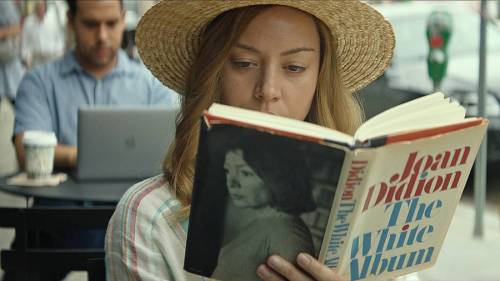
ingridIt’s always a sobering experience when a film knowingly holds a mirror to modern society.  Director, Matt Spicer, has done just that with his first feature film, crafting a modern tale that is astute, cynical, and very self-aware—a cinematic selfie of our social media woes, so to speak.
Ingrid Goes West jumps boldly out of the starting gate with an opening montage of self-indulgent Instagramming, hash-tagging, duck-face selfies, foodie pics, emojis, the kind of stuff we all roll our eyes at despite ringing true for many of us. It then paints the titular Ingrid as an emotionally frail slave to the intoxicating lure of this social media landscape. It is a post-satire comedy where its characters’ outlandish behaviour is both abhorrent and yet completely believable.

Ingrid, played by Aubrey Plaza (Safety Not Guaranteed), is always on the outer and desperately craves the attention of those who are popular on social media. Unfortunately, her sociopathic tendencies hamper her ability to gauge social norms and it’s not long before she finds herself in trouble. After burning her bridges with her old friends she develops an unhealthy social media crush on Taylor Sloane (Elizabeth Olsen). Taylor, a socialite with many Instagram followers, is popular and everything Ingrid wants to be, but Ingrid finds it increasingly difficult to maintain her “perfect” life which is perpetuated by her appetite for social media.

Ingrid Goes West is nothing short of a damning comment on the ills of pretending to be someone you’re not and presents a world where perceived popularity is measured by your number of followers. As Taylor’s husband says, “it’s exhausting”.

The film descends into some fairly dark places but its exploration into the murkier waters of social media and mental illness is unfortunately met with a noncommittal ending that doesn’t do either topic justice.  Nonetheless, Ingrid Goes West confidently struts a fine line between twee and brooding and still manages to expose the dark underbelly of social media with a few chuckles along the way. #stillworthseeing.

You can see my published reviews here.


Murder on the Orient Express

motoe.jpgHaving seen Albert Finney’s rendition of Agatha Christie’s famous detective in 1974’s Murder on the Orient Express, it is one of the few times I was thankful for my shocking memory—I couldn’t remember “whodunnit”. 
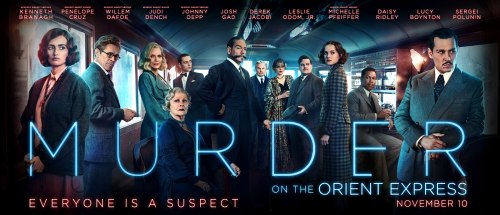
This time around a very moustachioed version of Hercule Poirot is played (and directed) by Kenneth Branagh.  He is a Belgian detective, world famous for finding solutions to the most complicated criminal mysteries and, as the title suggests, there’s been a murder! The slightly less moustachioed Ratchet (Johnny Depp) is the unfortunate recipient and doesn’t last the whole train ride I’m afraid. It’s no surprise, then, that all the remaining first class passengers on board the Orient Express have a motive for murder … Ratchet, it turns out, was not such a nice fellow, having blood on his own hands from a prior indiscretion.  Thankfully, Poirot is onboard to piece together what becomes a complicated puzzle.

Branagh does an adequate job as the obsessive compulsive genius, although in comparison to the slightly unhinged charisma of previous Poirots (Finney, Ustinov, and Suchet), Branagh’s version is found somewhat lacking. Despite this minor quibble, the remaining ensemble is perfectly cast. Depp deliciously slides in to a role that feels perfect for him (yes, I mean the pre-death version). Daisy Ridley and Leslie Odom Jr. do commendable jobs while Judy Dench, Michelle Pfeiffer, Josh Gad, Penélope Cruz, Derek Jacobi, and Willem Dafoe all chip in with archetypal roles dripping with as much intrigue as their screen-times allow. 

Michael Green’s (Blade Runner 2049, Logan) screenplay handles some fairly weighty exposition without a gratuitous use of flashbacks—and thus keeping the film’s action onboard the titular locomotive. Green’s watertight (if somewhat wordy) script keeps things tantalisingly just out of arms reach.  Although, I’d like to have seen each of its many characters fleshed out a little more—perhaps an impossible task for a two-hour film.

Nonetheless, Branagh has directed a thrilling ride through the mountainous snowscapes contrasted with some murderous machinations in tow, making this first class ticket as opulent as it is chilling. And despite a few missteps, this train is still worth jumping aboard.

Read my full review for the NZ Herald here.

Detroit

detroitThe link between racism and unlawful police brutality never seems to leave the headlines, and this makes Kathryn Bigelow’s latest film, the true story of the murder of three black men in 1967, a relevant topic today.  The fact that Detroit is set fifty years ago only serves to illustrate how little America has moved on with regard to race relations. 

Set to the backdrop of the Detroit race riots, the film begins by explaining that the pointy end of the maligned racist stick is the result of historically deep-seated problems.  Certainly, Detroit and Raoul Peck’s recently released I Am Not Your Negro would make the perfect double bill.

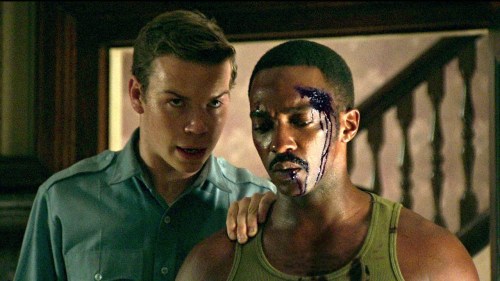
Detroit’s opening sequences paint a striking picture of a city in violent chaos, but its broad scope soon gives way to a more focussed telling of police brutality against a small group of youths. Larry (Algee Smith) is a burgeoning singer on the cusp of a record signing. One night at the Algiers Motel, Larry and his friend Fred (Jacob Latimore) cross paths with some youths goofing around with a starter pistol.  With riot tensions high, the paranoid and trigger-happy authorities move in to “quell” what they believe is a sniper.

Bigelow’s restless camera jitters and shakes its way around the scenes with a kinetic momentum that perpetuates the mood and tension of a powder keg ready to blow.  It’s an exhausting watch. The black community’s fear of a predominantly white police force is palpable, although the film stops short of being a complete diatribe against white authority—its main antagonist, Krauss (Will Poulter), is portrayed as an unhinged policeman drunk on power rather than being representative of white motivations. Ultimately, it is the judicial system that comes under the film’s moral scrutiny.

Unfortunately Bigelow’s literary muse, Mark Boal (The Hurt Locker, Zero Dark Thirty) has delivered a screenplay that falls short of his usual high standards, as moments of Bigelow-esque brilliance are dulled by overdrawn scenes that become repetitive and tiresome.  Nonetheless, Detroit remains an unnerving illustration of a dark period in American history that deserves to be seen.

Read my full review for the NZ Herald here.