Category: Uncategorized

No Ordinary Sheila

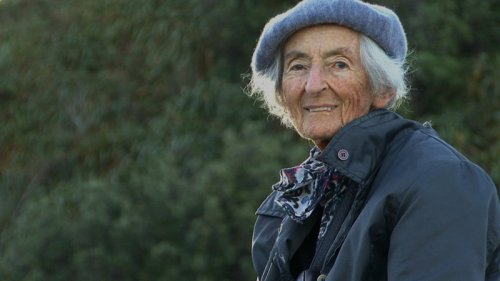
nosI went into No Ordinary Sheila ashamedly not knowing anything about the titular Sheila Natusch.  Thankfully her cousin and the film’s director, Hugh Macdonald, knows a thing or two about film-making, so within no time I was hooked into the life-story of this natural historian, illustrator and writer who has lived a life less ordinary.

This gentle doco tells the story of Sheila’s life, from her early years growing up in the deep south to the present day in Wellington. The film is littered with fascinating anecdotes; her friendship with Janet Frame, cycling the South Island top to bottom, and climbing multiple mountains.  It illustrates an admirable woman who has sucked the marrow out of life and can easily be considered a genuine slice of Kiwiana.  There is a veritable nostalgic vibe to Macdonald’s film that sits perfectly with a life that is rooted firmly in New Zealand’s great outdoors.

Interviews by Kim Hill, Susan Hamel, Dinah Priestley, Shaun Barnett, and Ken Scadden, among others, provide the structural backbone to Macdonald’s film, all who seem content to gently and prod the nonagenarian for stories. Although, I suspect she could’ve handled some tougher prodding, as it is apparent that Sheila possessed a defiant skill of stoically holding emotional responses at bay. Throughout her interview, she remains guarded when pushed on sensitive subjects such as her brother’s death, her ailing health, or being that last surviving member of her family. Her response can only be described as consummately practical … “oh, you just get on with it.” And her thoughts on going into a rest home? “Bugger that … double bugger that!”

The homegrown amateurish nature of Sheila’s artwork and research appropriately comes through in the film. Thankfully, Macdonald does not get too caught up in the artifice of film-making and lets Sheila’s story gently spill out through her interviews and some well researched archival footage.

No Ordinary Sheila is an important historical document about New Zealand and one of its more resilient treasures who, despite her recent death, is still shining brightly.


You can see my published reviews here.

Maudie

maudThis small but delightful film is not going to threaten Taika’s superhero behemoth for box-office takings anytime soon, but it’s good to see that there is room in the spring release schedule for something at the other end of the spectrum.
Maudie is a gently observational piece that takes a slice of Canadian rural life and lets a discordant zephyr blow through its fields. Set in Marshalltown, Nova Scotia, the titular Maud, played by Sally Hawkins (Happy Go Lucky, Paddington) suffers a life-long form of arthritis. Through dogged determination, she pursues a passion for painting whilst holding down a job as a housekeeper for the gruff and bad-tempered loner, Everitt (Ethan Hawke). They are an ill-fitting couple that, as Maud quips, are like “a pair of odd socks”. Yet through their differences, they find a commonality that extends to a curiously touching relationship.

Despite the demands of what is a very physical performance, Hawkins displays a wonderful ability to convey emotion through subtle expression. Thankfully, her skills are not lost on Director Aisling Walsh, who elevates this further by letting the camera sit with her performance for long periods. Walsh’s kinetic restraint only serves to enhance this character-driven film allowing their relationship to subtly bristle with drama and the occasional smile. With such a focus on its two protagonists, it is a relief that the chemistry between Hawkins and Hawke (clearly a casting director who likes birds of prey) is one that successfully elevates the film rather than lowers it.

The film is occasionally framed with painterly qualities that mimic her artwork, but on the whole, the visual style is dialled right back and seems to eschew the need to create visual drama where it’s undue. And despite being a little too coy in parts, Maudie is a warm and inviting film that gives Maud Lewis’s true story the telling it deserves.


You can see my published reviews here.

Walking Out

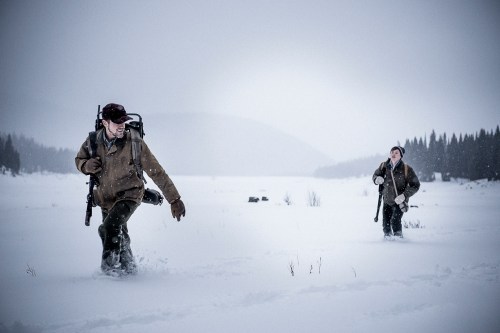
walkingDespite its Grand Jury Prize nomination at last year’s Sundance Film Festival, Walking Out has kept a surprisingly low profile. Adapted and directed by brothers Andrew and Alex Smith, the film is based on David Quammen’s fictional short story of the same name. It centres on a father and his estranged teenage son who head into the wilds of Montana on a hunting expedition.  David (Josh Wiggins) is very much a soft urbanite who conspicuously doesn’t belong among the wind-swept tundra, much to his dad’s annoyance. The two struggle to bond, although Cal, played by Matt Bomer (The Nice Guys), is determined to impart some fatherly advice. Unfortunately, the wilderness can be a cruel mistress and the pair are forced to bond for all the wrong reasons as they find themselves fighting for their survival. 

Walking Out deftly balances its pervasive tension with tender moments that insightfully express a father-son dynamic. At one point Cal pontificates “You want so badly for him to know who you are, you could cry”—it is an understated, yet achingly beautiful moment delivered with pin-sharp clarity.  Bomer and Wiggins competently carry the weight of this film’s heavy heart with nuanced performances that feel convincing and authentic.

Walking Out seems content to tell a simple story that avoids deep subtexts or weighty expositions. The Smith brothers have provided a good example of how directorial restraint can be more provocative than the blustering noise of its contemporaries. In its quietness, Walking Out proves to be an elegantly tense story worth wearing out the edge of your seat for. Its soundtrack evokes a haunting cinema of unease that ratchets tension with a discordant score working in chorus with the eerie calls of big game wildlife.  Cinematographer Todd McMullen’s stunning camera work further enhances the films visual style and sketches a mountainous Montana in all its remote beauty.

Walking Out will most likely strike a chord with the fathers and sons in the audience, although the film stands alone as a strong piece of cinema that stubbornly remains in your mind like a limpet.

Read my full review for the NZ Herald here.

Blade Runner 2049

br2049It can’t be an easy task following up one of the most iconic films of all time.  Despite many millennials who decry the slow pace of Ridley Scott’s original Blade Runner, there is no denying its place in cinema’s pantheon.  It is a film that almost single-handedly brought about the modern sci-fi noir genre with a stunning rendition of Phillip K Dick’s dystopian novel. Its sequel, Blade Runner 2049, does not break from Dick’s existential treatise on what it means to be human and explores his pessimistic world further with a new set of characters.
As the title suggests, the film is set in 2049, thirty years on from its predecessor and focusses on Ryan Gosling’s character, a replicant (biologically artificial human) known only as “K”.  Working for the LAPD to hunt down illegal replicants, he stumbles upon a case that contains evidence that is oddly connected to his own artificial past.  It prompts K to investigate his own background; Are his artificial memories actually real? Is he in-fact human? The search for answers leads him down dark alleys filled with shady characters, wrong turns and misinformation—arriving eventually at the original Blade Runner’s protagonist, Deckard, played by Harrison Ford who turns in a surprisingly nuanced performance.

At one point K’s senior, Lieutenant Joshi (Robin Wright) comments “We’re all trying to find something real.”  It’s a seemingly throw-away comment, but nails Blade Runner 2049’s central thesis—at what point do we become a real human?  However, unlike Scott’s first Blade Runner, which critiques this subject matter through a haze of provocative ambiguities, Villeneuve’s film is, unfortunately, a little too obvious in its exposition.  Despite this, there is plenty to love about Blade Runner 2049’s style which allows ample opportunity to sit back and soak in the film’s visual and audible splendour care of music by Hans Zimmer and cinematography by the great Roger Deakins. Deakins, who is probably the greatest cinematographer working today, could frame a polar bear in a snowstorm and still deliver colour and depth. Here, he has done a wonderful job working around what must be the constant bugbear of cinematographers today; digital effects.  With 2049, he has worked his camera among the digital fakery with aplomb. It doesn’t have the heft of Scott’s pre-digital original, but it’s the next best thing.

Blade Runner 2049 falls short of the masterpiece that was envisaged. It is a very clever film but doesn’t capture the mystery and ambiguous wonderment of its predecessor.  And although it’s difficult not to make comparisons, 2049 feels like a replicant of its original … which perhaps is quite appropriate given the subject matter.
 

You can see my published reviews here.

The Lost City of Z

lostcityIs it perhaps too much of a coincidence that Amazon Studios have backed a film about exploring the Amazon?  Surely not, although in the words of the film’s protagonist “So much of life is a mystery, my boy, we know so little of this world.” So, I guess we’ll never know.  What I do know is that I’m glad Amazon did open their wallet for this production, otherwise we’d have missed out on a fantastic re-telling of explorer Major Percy Fawcett’s true story.
The New Yorker staff writer David Grann has a penchant for uncovering true stories that have remained little known by the general public (Side note; keep an eye out for Grann’s Killers of the Flower Moon to be directed by Martin Scorsese). Here, director James Gray has taken Grann’s book, The Lost City of Z, and crafted an impeccably balanced film that dramatises Fawcett’s intriguing exploration into the unknown.

It is a journey into the unchartered jungles of what was then labelled by England as Amazonia, an unforgiving region that guardedly held many secrets, which as the title suggests, may also be the possible location of a fabled lost city.  On the surface it doesn’t seem the most original story to tell—you could be forgiven for assuming this might be a pulpy romp through the jungle swinging from vines in search for hidden treasure. Instead, we are treated to an emotionally charged film that is very much grounded in reality and in touch with its factual beginnings.  The Lost City of Z is an exploration into one man’s fortitude and an introspective investigation into his obsession with the journey up a remote river.  Many parallels can be made with Joseph Conrad’s Heart of Darkness, and in light of Apocalypse Now’s connections to Conrad’s book, it is no surprise that Gray has settled on a style straight out of the Francis Ford-Coppola handbook of filmmaking … with perhaps a hint of Aronofsky’s The Fountain.

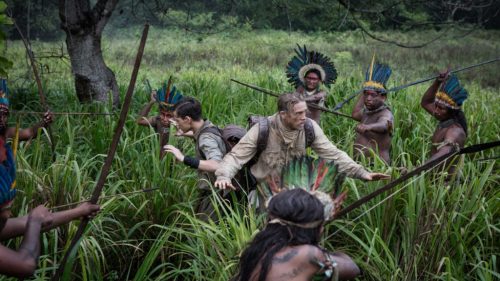
It is 1905 and Major Percy Fawcett (played by Charlie Hunnam) is commissioned to Bolivia on a cartography assignment.  Despite being hungry for action, he reluctantly leaves his wife, Nina (Sienna Miller) and newborn child behind and sets off, naively proclaiming “mankind awaits our discoveries”. With help from Henry Costin (Robert Pattinson) and a small team of intrepid explorers they cautiously make their way up the Amazon towards the river’s source.  The film provides some thrilling moments and ratchets tension superbly by employing a brooding and eerily discordant musical score that evokes a palpable sense of dread. It is by pure chance that Fawcett happens upon some pottery and other mysterious remnants of a long lost civilisation that prompts his return to England to prepare for another more thorough search.

The lavish production values elevate this film beyond the ordinary and demonstrates many well-considered cinematic moments.  But for all its technical proficiencies, the film’s true triumph is its ability to get under the skin like an Amazonian leech. This story could have been told in the staid traditions of so many period dramas.  Here James Gray subtly balances a heady mix of conventional filmmaking with a hint of magical realism that constantly threatens to send us adrift in Todorov’s The Fantastic without a paddle.  The result is a genuinely thrilling film that is laced with just enough intrigue to prompt a post viewing google about the man and his expeditions.

See my reviews here at Witchdoctor.

Battle of the Sexes

botsTennis seems to be a cursed sport in the world of celluloid, often plumbing the depths of innuendo or injecting romance where it feels out of place. Even the great Woody Allen failed with Match Point.  Unfortunately Battle of the Sexes fares no better, with Directors Valerie Faris and Jonathan Dayton continuing a slow decline since their excellent debut with Little Miss Sunshine.
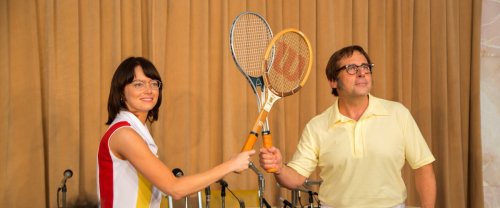
At the centre of this true story is a tennis match between tennis great Billy Jean King and former number one Bobby Riggs.  It’s 1973, and King (played by Emma Stone) is the number one womens tennis player in the world. Her attempts to resist the public taunts of self-confessed male chauvinist, Riggs (played by Steve Carell), become too great when he offers her a large pot of money to beat him in a tennis match—a match he touts as “male chauvinist pig versus hairy-legged feminist”. It is a promoters dream and a genuine case of “only in America.”  However, bubbling beneath the buildup to the match are Billy Jean’s personal battles over her sexuality and its impact on her marriage.

In an attempt to find some sort of meaningful message, the film rallies between Bobby Riggs and his gambling addiction to Billy Jean King and her relational problems, and seemingly everything in-between. Unfortunately, Battle of the Sexes seems very unsure about what message it’s trying to give; raising women’s rights, sexual identity, gambling, pay equity, marital balance, etc. It just throws all the balls in the air and lets them land … mostly out of court.

It’s a docudrama, biopic, romance, and comedy all rolled into one story that deserved a more focused telling. It’s a shame when the most compelling part of a film is the “what became of them” text that appears prior to the credits.

To be fair, it’s not all mishits and double-faults—the film does manage to capture the look and feel of the seventies without falling into cliche retro. Also, there are some tender moments that briefly brought me out of my slumber, but don’t expect the sum of its many parts to add up to a coherent whole.
 

You can see my published reviews here.

Lady Macbeth

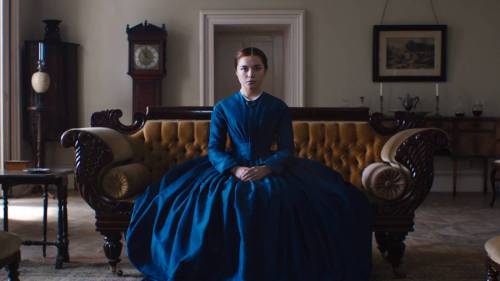
Macbeth“I’m thick skinned”—a seemingly innocuous opening statement from Lady Macbeth’s protagonist speaks volumes about the film’s central character, Katherine (played by Florence Pugh) and its exploration of liberation within an oppressive marriage.
Adapted from Nikolai Leskov’s book “Lady Macbeth of Mtsensk” (1865) by Alice Birch, Lady Macbeth keeps the action in the same period but shifts the story from Russia to northern England. As the title suggests, it is a thematic reworking of the character from Shakespeare’s famous Scottish play, although some might see more similarities with Charlize Theron’s character in Patti Jenkin’s 2003 thriller Monster. This is a black widow story and Katherine is a femme fatale in the truest sense. Its investigation into a corrupt feminine power within an oppressive marital system renders the film dark and brooding, and at times quite brutal … but it’s thrilling to behold.

Katherine is a chattel, bought as her husband says, “along with a piece of land not fit enough for a cow to graze upon.” He, along with his grumpy father (played by the wonderfully earthy Christopher Fairbank), keep her under their strict set of rules.  Indeed, there is very little joy here. When Katherine strikes up an amorous relationship with a farm-hand things don’t go down too well. It is one of those films where everyone is a nasty piece of work … except the poor housemaid, Anna (Naomi Ackie), who finds herself in the middle of the hostilities and acts as the film’s only form of moral compass.

Director William Oldroyd, a relative newcomer to feature film set, has breathed some fresh air to the staid old period drama. He comfortably ratchets mood and tension without any musical score, which is also a testament to the wonderful work of cinematographer Ari Wegner. There is plenty at play in Lady Macbeth’s visual style, not least Katherine’s character who is illustrated with an evocative use of camera and lighting, allowing Pugh to work a commanding performance. Pugh’s slightly unhinged portrayal is the perfect foil for this enthralling piece of psychological period cinema.

Read my reviews on the NZ Herald’s website here.

Tommy’s Honour

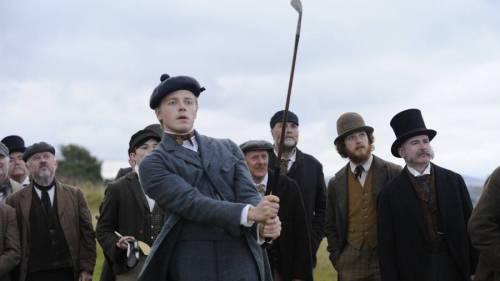
tommyGolf has never been my thing.  The concept is simple but, as many know, in practice it is a very difficult and frustrating game.  Perhaps telling a story about the game is no easier, as Tommy’s Honour returns a mixed scorecard.

Pamela Martin’s first feature screenplay has seen the fledgeling screenwriter transfer her writing talents from the New York offices of Playboy magazine to the windswept greens of St. Andrews. Quite a significant change of scenery, one would think.  Based on the book of the same name by Kevin Cook (Pamela’s husband), Tommy’s Honour tells the true story of Old Tom Morris and his son Tommy—both historical juggernauts of the modern game of golf. 

Young Tommy Morris, played by Scotland’s rising star Jack Lowden (Dunkirk), is a renegade among the golfing fraternity. His desire to see golfing competitors elevate themselves above their role as mere chattels for the “Gentlemen” who wager on their results, proves a difficult task. Thankfully he’s one of the world’s best—a useful skill for a man who champions pay equity and a softening of the class difference within the seemingly impenetrable golfing society.  Tommy is fiercely independent and ruffles plenty of feathers, while his father looks on seemingly helpless to sway his fervent son.  Tommy’s extracurricular activities of drinking, goofing around, and his love for an unfavourable woman named Meg (played by Ophelia Lovibond) derail his golfing ambitions, with the latter having far reaching consequences.

Unfortunately the story seems to cast Tommy’s father, Old Tom Morris (Peter Mullan) into the margins a little too often.  He isn’t really given his due as a course designer, and the film clearly opts to tell the more dramatic (and sellable) story of his son. Shame, because Old Tom Morris’ story deserved a more thorough exploration. 

Tommy’s Honour works well as an entertaining yarn but falls short of the historical document that it purports to be. Unlike my golf game, Tommy’s Honour just makes par, but like my golf game, it remains an exercise in frustration that something more could’ve been made of it.

Read my reviews on the NZ Herald’s website here.

Darren Aronofsky

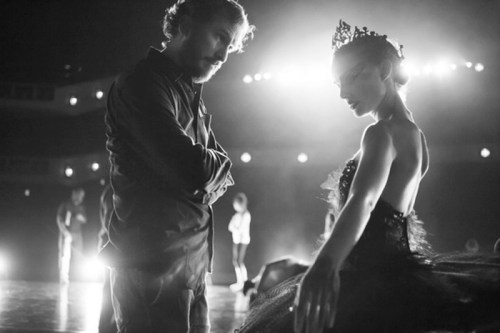
darono

“Director Darren Aronofsky appears to make a conscious effort to bring the spectator towards the sensory experience of the protagonist, specifically so that the spectator experiences the physicality of his cinema. The underlying purpose of his construction and deployment of such cinema is not merely entertainment. Instead, it is an existential statement, or enquiry into our place in the world — a place where understanding and meaning are brought about through the spectator’s examination of “self” prompted by the physicality of the cinema.”

It’s good to see that much of my thesis still holds true for Aronofsky’s latest film mother!  So, why not celebrate … here’s my thesis in its glorious entirety.   Now you can wade your way though Vivian Sobchack’s phenomenological framework, or douse yourself in Don Ihde’s five operational hermeneutic rules and then set yourself alight with Martin Heidegger’s existential rantings.  All to the backdrop of Aronofsky’s filmography. It will feel like swimming in molasses. Wonderful stuff!

The Cinema of Darren Aronofsky – A Phenomenological Case Study*

*Usual academic rules apply–please don’t reproduce, quote etc. without acknowledgement.

I Am Not Your Negro

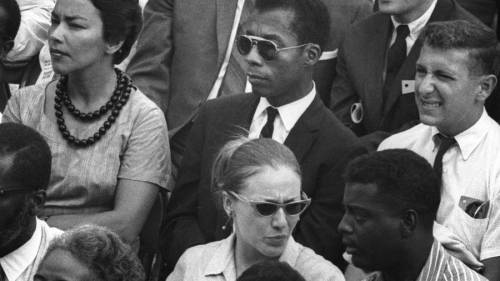
ianyn“The future of the negro in this country, is precisely as bright or as dark as the future of the country”—this provocative statement by black activist James Baldwin may on the surface sound reductive but his stance is unflinching and he unapologetically uses black lives as the benchmark of America’s success as a nation … and in Baldwin’s words “it is not a pretty story.”

In 1979 Baldwin penned the beginnings of a manuscript that was to be his next project, called “Remember this House”. Director Raoul Peck has taken these pages and created a documentary that is a stimulating rendition of Baldwin’s seminal work.

I Am Not Your Negro is an important film, not just as a document of America’s checkered racial history but also as a warning to the world about the fragility of cultural difference. It shrewdly illustrates the historical treatment of America’s black community in order to access deeper fundamental problems within America, and indeed the Western civilisation. Just as Al Gore has used climate change to illustrate our problems with materialism, similarly Baldwin through the lens of Peck uses a racist America to illustrate our fundamental inability to embrace cultural difference and commonality. Baldwin posits “It’s not a question of what happens to the negro here, to the black man here … but the real question is what’s going to happen with this country.”

Peck’s aesthetic scope tells Baldwin’s story with a chaptered structure and an evocative use of imagery.  He seamlessly traverses decades of footage, splicing in recent events to remind you that this is still a current problem.

The film unfortunately stops short of a comprehensive solution, but argues that America’s problems that created “the nigger” still exist today and is a “formula for a nation or kingdom decline”.  With a finger firmly pointed at Western civilisation (although it is difficult to think of any civilisation, past or present, where cultural difference has been harmoniously embraced) the film at its core seems to wrestle with the age old conundrum of humanity’s inability to grasp power.  Whatever the case I Am Not Your Negro is an intoxicating and provocative film that certainly gets you thinking.

Read my reviews on the NZ Herald’s website here.