Category: Uncategorized

mother!

mumDirector Darren Aronofsky is very comfortable with making sensory arresting films that divide opinion and court controversy.  With many of his films garnering critical appreciation long after release (Pi, The Fountain), some argue that the director is ahead of his time. After the divided response to his latest film, perhaps this will be the case with mother!

Jennifer Lawrence’s character is only known as “mother” (all but one character are named with lowercase initials). She lives in an idyllic country house that she and her husband, Him (uppercase “H”), played by Javier Bardem, are restoring.  It is their personal paradise, of sorts, until one day a man appears at the door and is allowed to stay. The man’s wife arrives soon after—the couple pushing the boundaries of the offered hospitality until they are caught tampering with a forbidden ornament in Him’s out-of-bounds study.  Sound familiar yet? It was to me, but I couldn’t put my finger on exactly why. I’ve written a thesis on the director, in theory I should know his game backwards, but here the master of the allegorical parable dangled me like a puppet clueless as to why the film’s opening felt so very familiar. It was only after the two arguing sons arrived on the doorstep, that it finally struck me.  This is the Christian story; God, Adam, Eve, Kane, Abel, Jesus, they’re all there. But what of Jennifer Lawrence’s character? Mother Nature is an obvious fit, although there is a suggestion that she is also part of the holy trinity. At one point someone yells “there she is, Inspiration!”—again, an expression of Mother Nature, or as many Christians will tell you, the Holy Spirit.

The film’s final chapter is a head-scratcher. It descends into anarchic chaos and delivers a sensory onslaught that will test the most thick-skinned cinephile. As throngs of people arrive at their house, the claustrophobic camera-work clings to mother, following her everywhere, rarely leaving her porcelain face. The lack of musical score enhances Aronofsky’s brutal vision of humanities ugly side. Thankfully, Aronofsky’s intention appears to be for his audience to read mother! as an allegorical telling of humanity’s failures rather than a literal reading (which would otherwise render it a sick and sadistic torture story).

Towards the end mother pleads with Him, “Please … make them go away!”  And in light of the worlds current political and environmental climate, I can understand her anguish. The film does offer a release valve, an out, an ending that goes beyond its Biblical roots … but I won’t spoil it for you.

mother! may not be for everyone—it requires a great deal of tolerance and a willingness to embrace the unconventional. But put in the effort and you’ll be rewarded with a stunning film that is both an illuminating and damning criticism of the human race.
 

You can see my published reviews here.

A Ghost Story

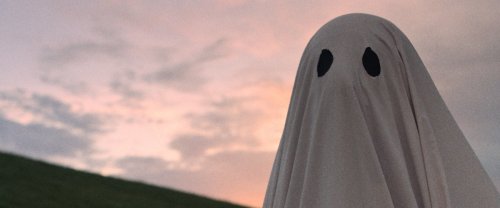
agsWe’ve all been there in our younger years: cut eye holes out of a sheet, throw it over yourself and roam the hall pretending to be a ghost. But despite Casey Affleck’s character looking the quintessential trick-or-treater, A Ghost Story delivers a haunting and ephemeral existential tale rather than cheap jump-scares.

Early in the film, Affleck’s character, C (the protagonists being named by a single initial), dies and returns as the aforementioned sheet-clad ghost. Still and solitary, he haunts every frame of the film, sadly observing his grief-stricken lover, M (played by Rooney Mara), move out of the house he loved so dearly.   Years pass and C’s ghost remains stubbornly fixed to the land, silently observing the house’s various occupants come and go. Thematically, A Ghost Story traverses many topics but its core is rooted in a solid sense of place and examines what it means to be attached (both physically and emotionally) to a piece of land. It is little surprise then, that the story was born out of an argument Director David Lowry had with his wife about moving house. 

Lowry elides time beautifully as he succinctly shows years of tenancy compressed into minutes. Meanwhile, C’s quest to retrieve a mysterious note that M slipped into a crack in the wall soon after his death remains tantalisingly just out of reach—the note being the film’s central plot device and providing the only semblance of conventional narrative structure in a story that is otherwise very meditative in its intention.

Certainly a far cry from his previous directorial outing, Pete’s Dragon, Lowery has delivered a slow burn that is painstakingly meticulous, indulgent and patient. There is a palpable sense of David Lynch or Terrence Malick in Lowry’s aesthetic scope; the long takes, the camera’s limited but very deliberate movement.  The culmination of which projects an almost unbearable dreamlike sense of loneliness. A five-minute continuous take of Rooney Mara’s character alone in her kitchen eating an entire pie sums up the film’s approach. Mara delivers a tour de force of non-verbal acting in this scene that is simultaneously rewarding and frustrating. It will have you scratching your head along with the film’s other elusive messages about relationships, grief, mortality and the ruthlessness of time … but, boy, it’s wonderful to watch.

A Ghost Story may not be for everyone—it requires a great deal of patience and a willingness to embrace the unconventional but put in the effort and you’ll be rewarded with a film that is both original and sublime.

See my reviews here at Witchdoctor.

Wind River

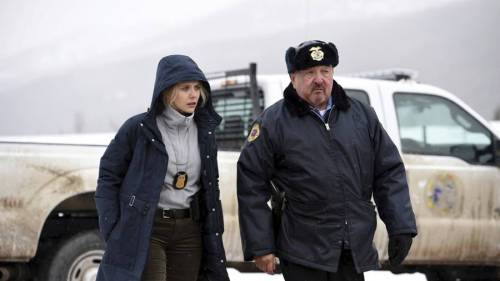
windTaylor Sheridan’s proclivity for scripting stories that shrewdly observe troubling American social issues has provided an interesting mix of genres. Wind River is no different, offering a heady blend of modern western, thriller, and neo-noir sensibilities.  Having previously penned Hell or High Water and Sicario, the talented scriptwriter has turned his attentions to the Director’s chair for Wind River—the fledgling Director wisely scaling things back with a simple murder-mystery set among the windswept snowscape of a Wyoming Indian Reserve.

Inspired by true events, the film centres on the rape and murder of a teenage girl found in the snowy wilds by professional game hunter Cory Lambert (Jeremy Renner).  The mystery proves too great for local tribal Police with their meagre resources, and the Feds are clearly disinterested, offering a sole FBI agent to help on the case. Jane Banner (Elizabeth Olsen) is a slight and seemingly inexperienced young agent, who conspicuously doesn’t belong among Lambert and his wind-beaten companions. Unfortunately, her character never conquers this imbalance, much to the detriment of the story’s gender concerns.  Although, as Lambert explains, the landscape is harshly indifferent to all that go before it, reducing everything down to survival. And it appears that Banner cannot survive without the help of her male companion.  Banner represents a missed opportunity that contemporaries such as Silence of the Lambs’ Clarice Starling (to which Wind River owes a great deal) comfortably navigates. Its racial ideals fare no better, with Lambert again being the great white saviour applying the mop to an impotent cultural minority unable to deal with their own problems.

Despite the race and gender misfire, the cinematography and score elevate the film beyond mediocrity, evoking a palpable sense of isolation. Sheridan’s script maintains a robust structure throughout, keeping the plot humming along and offering some genuinely thrilling moments; even occasionally stepping aside to offer some poignant insights on grief and loss.  Sheridan’s Directorial strength clearly lies in ratcheting tension, but he makes a good fist of the more nuanced moments by getting excellent performances out of his cast. 

Read my reviews on the NZ Herald’s website here.


God’s Own Country

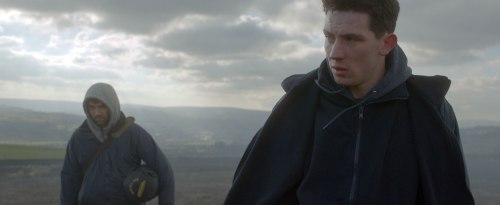
godocA muddy Yorkshire farm is perhaps not the first place that comes to mind as a backdrop to a burgeoning romance.  Yet in his first feature-length film, writer/director Francis Lee has harkened back to his Yorkshire upbringing to craft a story of love and self-discovery among the mud. Lee’s experience of growing up on his own family’s farm in West Yorkshire has certainly influenced the film’s genuine sense of place, painting a Yorkshire countryside that is raw, earthy, muddy, and wet—a little bit like a New Zealand winter.

An only child, Johnny (Josh O’Connor) struggles with the weight of running a failing sheep farm under the watchful gaze of his ailing father. Stubborn, grumpy, and very much the archetypal Yorkshire farmer, Johnny’s father makes Geoffrey Boycott look like a beacon of positivity. His health is failing and leaving the farm for Johnny to manage appears to be inevitable. However, when a farm-hand arrives in the form of a Romanian immigrant named Gheorghe (Alec Secareanu), it awakens amorous sensibilities in Johnny that he hadn’t previously considered and provides a welcome distraction from the farm’s unbearable loneliness.

Through all its muck and grime God’s Own Country is a beautiful film to watch. Cinematographer Joshua James Richards balances a heady mix of environment, framing and lighting to capture the farm’s bleak and organic nature. The film’s visual tendencies and its economy of dialogue give way to superb physical performances from its cast.  Mention must go to Ian Hart as Johnny’s father, who gives a moving portrayal of a stroke victim suffering the frustration of losing both physical and emotional control.

Unsentimental and unflinching in its depiction of gay love, God’s Own Country is raw and explicit in its sexual content and as a result, it is fairly arresting to watch (some might find it too much). However, on the other side of its brutally honest beginnings is a very evocative romantic tale. And although it doesn’t tread far from a typical romantic narrative arc, it remains a touching and poetic depiction of what it means to be a gay man in an isolated community.
 

You can see my published reviews here.

In Between

inbetween“I haven’t felt my heart in such a long time”— a seemingly throw-away remark common to many films. But in Maysaloun Hamoud’s latest feature, In Between, such sentiments take on a more desperate meaning.  Hungarian born Hamoud both directed and wrote In Between, a title that succinctly sums up the predicament of its three central characters; that is, how they are caught in the middle of the treacherous waters of cultural difference that impact their agency as liberated women.

The film tells the story of three Palestinian flatmates living in Tel Aviv. Leila (Mouna Hawa) and Salma (Sana Jammelieh) are liberal Palestinian women by comparison to most around them. Their struggle to act true to themselves within a framework of a conservative patriarchal society is ever-present in their periphery. When Noor (Shaden Kanboura), a conservative Muslim, moves in it highlights their cultural differences but also their commonality as women. All three women find themselves in separate romantic relationships that challenge issues of sexuality, identity and liberation.

The film wastes no time in stating its stance on gender politics: in the opening scene, Noor waxes her legs as her mother proffers sage advice on how to please her future husband. The film reaches an uncomfortable turning point with a brutal (if there is any other kind) rape scene (viewer discretion advised)—the aftermath being an incredibly raw and emotional sequence of events that cut to the bone. It’s a sequence that highlights Hamoud’s ability as an evocative storyteller, a skill on par with The Salesman’s Asghar Farhadi.

Shot with a social realist sensibility with some very clever but economical camera use, cinematographer Itay Gross has done a wonderful job of setting an evocative mood to compliment Hamoud’s story.

Maysaloun Hamoud has crafted a thought provoking triptych of feminine tales that highlight Israel’s powder-keg of social problems.  Rather than providing answers, In Between tosses them in the “it’s complicated” basket, which may be a cop-out to some, but I like to think of it as provoking a healing discourse on the subject of Women’s Rights.
 

You can see my published reviews here.

The Wall

thewallAfter the bombastic bluster of his previous outings, Director Doug Liman (Mr. & Mrs. Smith, Jumper) has dialled things back to create a svelte psychological war thriller that is surprisingly good. It certainly suggests that Liman should investigate this introspective and minimalist brand of film-making more.

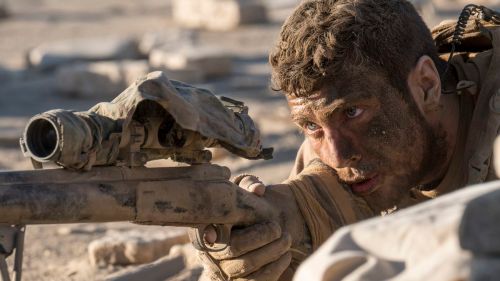
This compressed thriller thrives on its simplicity. It’s 2007, and the war in Iraq is coming to an end. Two American soldiers scope the scene of a possible sniper attack on an Iraqi oil line, but when Matthews (John Cena) gets shot and Isaac (Aaron Taylor-Johnson) finds himself pinned down behind the titular wall, a deadly game of cat and mouse begins.

The plot follows a well-trodden path but Liman thankfully avoids oversimplifying his archetypal characters. It is perhaps no surprise that the antagonist is a chatty sniper who likes to keep communication lines open between himself and Isaac’s radio.  Together the two serve and volley semantics, and the occasional bullet. But the conversation also allows us to get to know each character.

The irony of a simple story set against the backdrop of what was a complex war is further enhanced by cinematographer Roman Vasyanov, whose crystal clear vision with the camera keeps things within the bounds of the film’s modus operandi. Vasyanov is no stranger to filming war settings, but here the action is vacuum packed and presented with a still camera that is predominantly locked in place, like a sniper rifle, offering only tilts and pans, rather than your usual handheld chaos. 

The film is further held together by Aaron Taylor-Johnson’s (Nocturnal Animals) performance. Centre of frame for the majority of the movie, Taylor-Johnson gives a convincing performance that expresses a decidedly human side to his character.

Liman has provided a good example of how directorial restraint can be more provocative than the blustering noise of his previous outings. In its quietness, The Wall is a tense experience that is well worth wearing out the edge of your seat for.

Check out my reviews for Witchdoctor here.

Logan Lucky

llFive years ago Hollywood director Steven Soderbergh (Ocean’s 11,12,13, Erin Brockovich) quipped “If I have to get into a van to do another scout, I’m just going to shoot myself.”  Well, saddle up Stevo, because your so-called “retirement” has come to an end with Logan Lucky.

Set in Boone County, West Virginia, Logan Lucky resembles an Ocean film but with all the knee slappin’ swagger of a West Virginian bar brawl. The Logan brothers, Jimmy (Channing Tatum) and Clyde (Adam Driver), cite a family curse for their bad luck.  Jimmy was a promising American football player until his knee blew out and Clyde lost his arm (or hand, as he insists) on tour in Iraq. Determined to change their bad fortune, they hatch a plan to circumvent (quite literally) the local speedway’s cash takings that are being pumped through pneumatic tubes into an underground vault. Unsurprisingly, an explosives expert is required for the heist—the appropriately named Joe Bang (Daniel Craig) along with his two brothers. After a comically small deliberation on the morals of carrying out the felony (to get the film’s audience onside as much as themselves), their tenuous plan kicks off a riotous regimen of shenanigans and tomfoolery.

Soderbergh is never one to shy away from peculiar production practices, and here he has turned to an unknown writer (to us, at least) to pen this screwball caper. Credited as Rebecca Blunt, the film’s writer is rumoured to be a pseudonym for Soderbergh’s wife Jules Asner, comedian John Henson, or even Soderbergh himself.

Having produced the Ocean’s triplets (and with one in the oven), Soderbergh’s experience in working with an ensemble cast is clearly evident; here the main cast offers solid performances that embrace the film’s tone. However, Logan Lucky is not without its faults; a few heavy handed stereotypes, some pedestrian moments, and forced cameos from Seth MacFarlane, Katherine Waterston, and Hilary Swank, unfortunately derail the film’s momentum and continuity.  There is no doubting that Logan Lucky has a big heart and tries its hardest to be endearing, but it falls a couple of rednecks short of a Lynyrd Skynyrd concert.


You can see my published reviews here.

A Date for Mad Mary

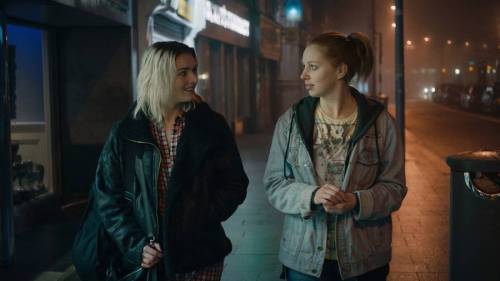
adfmmNot since Muriel’s Wedding have marital concerns felt so amusingly raw and honest in this adaptation from Yasmine Akram’s play “10 Dates with Mad Mary”.  A small independent film from Ireland, A Date for Mad Mary first screened at the NZIFF last month and now, thankfully, gets its theatrical release. Darren Thornton’s first feature in the director’s chair has delivered on the play that he and his brother directed for the stage. It is a charming coming-of-age story that is sparingly humorous, often melancholic, but always engaging and proves that Ireland can offer more than the John Carney (Once, Sing Street) brand of dramedies.

Mary has just been released from prison, as her troubled background of drinking and goofing around resulted in six months jail time for a violent pub brawl. Alienated from her social circle, Mary accepts the maid-of-honour responsibility from her soon-to-be-wed best friend Charlene (Charleigh Bailey), but discovers it’s not so easy to find a date for the wedding. Her lack of focus and motivation to get her life back on track doesn’t help matters and cracks begin to appear in their friendship. When she strikes up a relationship with the wedding photographer Jess (Tara Lee), it awakens amorous sensibilities in her that she hadn’t previously considered.

Although billed as a comedy/drama the film is sparse on the laughs, missing golden opportunities to take advantage of humorous situations.  However, Thornton’s decision to gravitate toward the serious side does not go without its rewards. Talented cinematographer Bratt Birkeland’s restrained camera-work never feels overbearing and maintains the film’s character study with pin-sharp clarity throughout. Filling the frame for the lions share of the film is Seána Kerslake, whose performance as Mary holds the film together and expresses a decidedly human side to her character. Kerslake’s gift for the close-up exhibits a rare subtlety of expression that is wonderfully captured.

Although A Date for Mad Mary doesn’t break any new ground, it exhibits a confidently assured (if slightly thorny) approach to its subject matter and despite hitting many familiar beats, its rhythm is impeccably in-time. 

See my review in the NZ Herald here.

Twin Peaks

tpDavid Lynch is a man blessed with a wild imagination and great hair (his cranial embellishments second only to his kissing-cousin Jim Jarmusch).  An iconic film-maker that has given us enigmatic worlds of fractured logic and narrative ambiguity hearkening back to the surrealists of the early twentieth century (Luis Buñuel, Germaine Dulac, Salvador Dali, et al.).  Mulholland Drive, Wild at Heart and Blue Velvet are just a few of his filmic canon that any cinephile should wax lyrical about. But this is not cinema, this is television … although Twin Peaks: The Return may as well be one big 18-hour movie. 

The first season began way back in 1990 and swiftly garnered cult status.  I was one of many who took up drinking black coffee, eating cherry pie, and wearing camel coloured trench coats. The second season followed a year later but was met with tepid reviews and a declining audience … and no doubt a declining donut and cherry pie market (which probably saved a life or two), and so the show was swiftly wrapped up. The world of Twin Peaks was relegated to the nostalgic history bin.

Not many took notice of Laura Palmer’s final words in Season two: “I will see you again in 25 years.”—a prophecy that would’ve come true to the exact year, had Lynch not have to wrangle some extra cash from the studio’s bean counters in order to get Season three done properly.  I’m glad he did—a whole eight more deliciously dreamy episodes than the studio originally envisioned. It stalled proceedings by a year, but hey, at least this time Lynch was able to complete the Twin Peaks story properly.

Stylistically little has changed over the 26 years with the new series retaining much of its original charm, humour and peculiarity. Lynch has stuck to his guns, unapologetically stamping Twin Peaks: The Return with his unique style (with co-writer Mark Frost giving a few tugs on the reigns) and directing all 18 episodes that (at the time of writing) seems to be boldly eschewing TV norms yet again.  Interestingly, Lynch is a product of middle America and his upbringing is surprisingly unremarkable. But it presents a striking contrast to his artistic style, and this dichotomy perfectly sums up the enigma that is David Lynch. He is a visionary who belies the dark and sometimes violent nature of his work.  

Despite being made for television, each episode’s visual and audible field is of cinematic scope and really deserves to be viewed on a system that does it justice. Episode 1, 2, 3, and 8, in particular, are something to behold with some abrasive and wonderful imagery in concert with the intoxicating score. Each shot in Twin Peaks: The Return is exquisitely framed and the takes are satisfyingly slow.  The brooding cinematography of Lynch’s camera oozes slow tracks and zooms that creep and crawl around his world, observing its denizens with a genuine sense of curiosity. The camera often pays attention to erroneous people or objects not apparently involved with the plot. One shot in Episode 7 is a three minute take of a cleaner sweeping the floor at the Bang Bang Bar. Long empty minutes pass by as the employee patiently sweeps up the empty dance floor and another stands behind the bar, while “Green Onions” plays in the background. Why?  Dunno. I haven’t worked it out yet … nor may I ever. Just soak it up, because there is plenty more like this, always tickling a dreamlike logic and rarely revealing anything that makes immediate sense.  It’s unexplainably wonderful stuff. You really feel that Lynch is taking his time to carefully sketch out his world in excruciating detail and sometimes he simply gets lost in the minutia. He once quipped, “My world was no bigger than a couple of blocks … huge worlds are in those two blocks”. Indeed, for Lynch, the devil is in the detail, and here the details are small, seemingly innocuous moments, captured with cosmic meaning courtesy of one director’s introspective focus. Lynch’s world has grown a few more blocks since the first two seasons, casting its net well beyond the borders of that sleepy town we love so dearly. The charm of the original series is still there, but it also feels satisfyingly fresh.

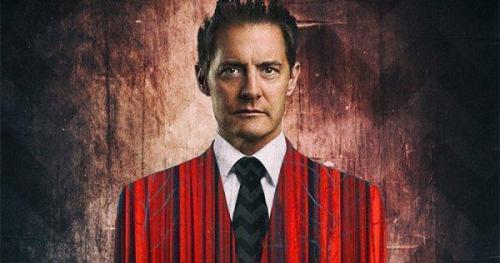
So, to the plot … hmm. Where do I start?!  I’ve tried to put this down on paper but it just ends up a confusing mess, testament to Lynch’s penchant for building worlds that are notoriously difficult to nut out. Suffice to say, the broad (and spoiler free) strokes involve Agent Cooper’s return from the Black Lodge (an otherworld place where spirits reside) to the world of the living. You might recall, that the last we saw of Coop, 26 years ago, he was possessed by the evil spirit Bob, who had previously possessed Laura Palmer’s dad (and murderer, as it turned out).  The good Coop’s return to the real world has been thwarted by his evil Bob-possessed doppelgänger who has beaten him to the punch and returned first, doing everything in his power to ensure that good Coop doesn’t return. The title, “Twin Peaks: The Return”, is really a double entendre—it’s returning to our screens, but more pertinently it is a story about Agent Cooper’s return to the world of the living.   Beyond that, there’s a murder case, some cosmic hullaballoo, a frog creature climbing into a sleeping girl’s mouth, tarred homeless men wandering the desert at night looking for a light … I could go on, but I’m sure you get the gist.  It’s all completely bonkers, but it’s fantastic!  Here’s a handy hint: some visual cues allow for a recalibration of your bearings. Red items tend to pertain to evil, a warning flag. Gold, on the other hand, is the opposite.  Snuggle into that little colour-coded gem as you watch it and see how far it takes you.

The cast is worth a brief mention. It’s a veritable who’s who, with a stellar ensemble. Lynch regulars aside, (Naomi Watts, Laura Dern, Kyle MacLachlan and most from the original series reprising their roles) further cameos come from  David Duchovny, James Belushi, Ashley Judd, Harry Dean Stanton, Amanda Seyfried, Jennifer Jason Leigh, Michael Cera, and Tim Roth. You get the feeling that the acting world is lining up for a last chance to be directed by the legend.  

Yes, its many characters are a little confusing and there are moments that some might find irksome. Many will throw their hands up in frustration at the show’s seemingly impervious wall of ambiguities. However, if you mindfully soak in the experience, rather than fuss and fidget over solving its riddles, then you will be richly rewarded. This may very well be Lynch’s swan song on the small screen, and if so, what a way to go out!

See the review at Witchdoctor.
Atomic Blonde


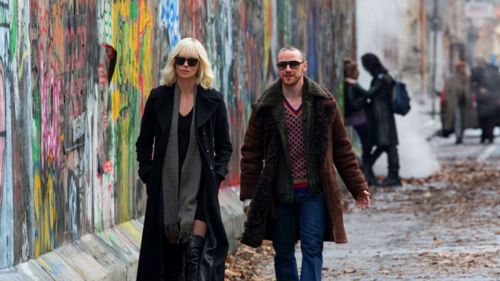
abThe name is Blonde, Atomic Blonde. Actually, her name is Lorraine which doesn’t have quite the same zing … but other than that, Charlize Theron’s new role may as well be a female Bond (or perhaps more accurately a female Bourne).

It is 1989 and the Berlin Wall is about to collapse, signifying the end of communism in Europe’s East. However, a rogue list naming covert operatives is in the wild and it threatens to halt the pro-democracy movement.  Enter Lorraine Broughton (Theron), a spy for Britain’s MI6 who is sent to retrieve “the list”. Her point of contact in Berlin is David Percival (James McAvoy) and together the two navigate the cagey and violent world of espionage.

Set against a backdrop of graffiti, punks, physical media, and eighties music (including the obligatory Falco and Nena), Atomic Blonde makes damn sure you know it’s the eighties. Cinematographer Jonathan Sela frames the film with a graphic novel sensibility (from which the story originates) and every opportunity is taken to bathe scenes in neon pinks and baby blues.

In his first feature film as Director, David Leitch has employed his background as a stuntman to great effect. Technically there is little to fault the film’s kinetic flair with impressive set pieces and fight sequences that evoke a genuine physicality.

Although we’ve seen this kind of spy story many times over, the film competently negotiates the pitfalls common to the genre; in particular the delicate balance between over or under explaining its many plot complications.  Atomic Blonde’s flashback narrative structure goes some way to alleviate such problems.

Most notably, Atomic Blonde is a comment on the current gender imbalance in spy thriller films (similar to Wonder Woman’s take on the superhero genre). Casting a woman as your protagonist is one thing, but when she excels in what is traditionally a man’s domain, then it becomes a statement. At one point a character who is sympathetic to the old communist regime utters “Women are always getting in the way of progress”—to which Theron’s sharp retort is clearly a rebuke of such antiquated notions.

However, dig a little deeper beyond the style and gender concerns and (like Wonder Woman) we are met with a bog standard genre flick that, while competently handled by its Director, walks a well-trodden path. For some, this will be enough, but others might consider Atomic Blonde to be a little hollow.
 

You can see my published reviews here.