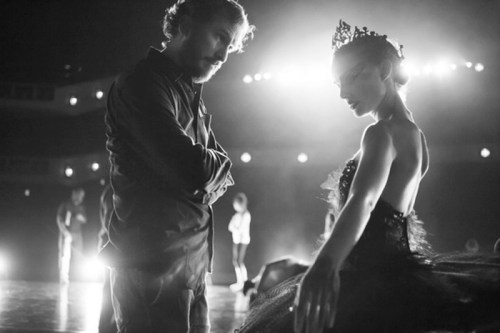
Detroit
 The link between racism and unlawful police brutality never seems to leave the headlines, and this makes Kathryn Bigelow’s latest film, the true story of the murder of three black men in 1967, a relevant topic today. The fact that Detroit is set fifty years ago only serves to illustrate how little America has moved on with regard to race relations.
Set to the backdrop of the Detroit race riots, the film begins by explaining that the pointy end of the maligned racist stick is the result of historically deep-seated problems. Certainly, Detroit and Raoul Peck’s recently released I Am Not Your Negro would make the perfect double bill.
Detroit’s opening sequences paint a striking picture of a city in violent chaos, but its broad scope soon gives way to a more focussed telling of police brutality against a small group of youths. Larry (Algee Smith) is a burgeoning singer on the cusp of a record signing. One night at the Algiers Motel, Larry and his friend Fred (Jacob Latimore) cross paths with some youths goofing around with a starter pistol. With riot tensions high, the paranoid and trigger-happy authorities move in to “quell” what they believe is a sniper.
Bigelow’s restless camera jitters and shakes its way around the scenes with a kinetic momentum that perpetuates the mood and tension of a powder keg ready to blow. It’s an exhausting watch. The black community’s fear of a predominantly white police force is palpable, although the film stops short of being a complete diatribe against white authority—its main antagonist, Krauss (Will Poulter), is portrayed as an unhinged policeman drunk on power rather than being representative of white motivations. Ultimately, it is the judicial system that comes under the film’s moral scrutiny.
Unfortunately Bigelow’s literary muse, Mark Boal (The Hurt Locker, Zero Dark Thirty) has delivered a screenplay that falls short of his usual high standards, as moments of Bigelow-esque brilliance are dulled by overdrawn scenes that become repetitive and tiresome. Nonetheless, Detroit remains an unnerving illustration of a dark period in American history that deserves to be seen.
Read my full review for the NZ Herald here.
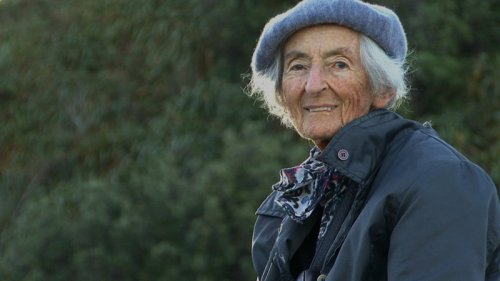 I went into No Ordinary Sheila ashamedly not knowing anything about the titular Sheila Natusch. Thankfully her cousin and the film’s director, Hugh Macdonald, knows a thing or two about film-making, so within no time I was hooked into the life-story of this natural historian, illustrator and writer who has lived a life less ordinary.
 This small but delightful film is not going to threaten Taika’s superhero behemoth for box-office takings anytime soon, but it’s good to see that there is room in the spring release schedule for something at the other end of the spectrum.
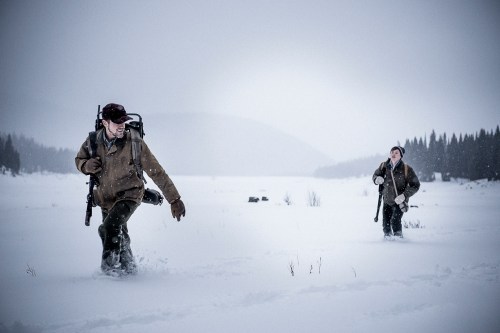 Despite its Grand Jury Prize nomination at last year’s Sundance Film Festival, Walking Out has kept a surprisingly low profile. Adapted and directed by brothers Andrew and Alex Smith, the film is based on David Quammen’s fictional short story of the same name. It centres on a father and his estranged teenage son who head into the wilds of Montana on a hunting expedition.
 It can’t be an easy task following up one of the most iconic films of all time. Despite many millennials who decry the slow pace of Ridley Scott’s original Blade Runner, there is no denying its place in cinema’s pantheon. It is a film that almost single-handedly brought about the modern sci-fi noir genre with a stunning rendition of Phillip K Dick’s dystopian novel. Its sequel, Blade Runner 2049, does not break from Dick’s existential treatise on what it means to be human and explores his pessimistic world further with a new set of characters.
 Is it perhaps too much of a coincidence that Amazon Studios have backed a film about exploring the Amazon?
 Tennis seems to be a cursed sport in the world of celluloid, often plumbing the depths of innuendo or injecting romance where it feels out of place. Even the great Woody Allen failed with Match Point. Unfortunately Battle of the Sexes fares no better, with Directors Valerie Faris and Jonathan Dayton continuing a slow decline since their excellent debut with Little Miss Sunshine.
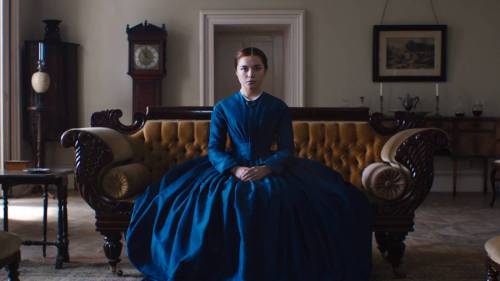 “I’m thick skinned”—a seemingly innocuous opening statement from Lady Macbeth’s protagonist speaks volumes about the film’s central character, Katherine (played by Florence Pugh) and its exploration of liberation within an oppressive marriage.
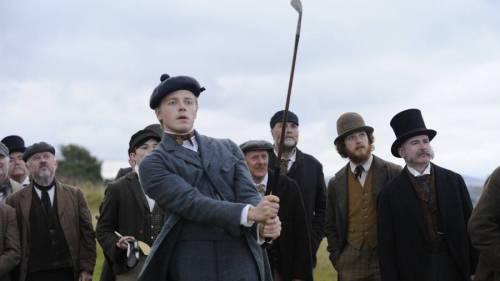 Golf has never been my thing.