
Allied
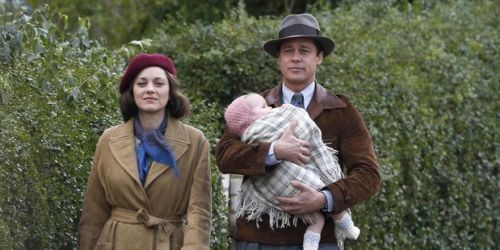
Hrmph … Allied. Its trailer smacked of a run-of-the-mill spy thriller. A Hollywood vehicle to transport its stars toward a seasonal pay check by means of a reliable director at the helm. I’ve seen the likes of it before so I really wasn’t keen to see this film … but I’m glad I did.
Paramount’s formulaic approach was certainly never going to set the world alight, but Allied surprised me by its entertainment value alone. Directed by the very safe Robert Zemeckis (Castaway), with a cast of two stars that will certainly get bums on seats … against my better judgement, it appears that the studio got the balance just right.
Set during the Second World War, Max Vatan (Brad Pitt) is a Canadian intelligence officer. During a deadly mission behind enemy lines in Morocco he encounters his accomplice, a female French Resistance fighter named Marianne Beauséjour (Marion Cotillard). Their faux marriage (for the benefit of the mission) soon becomes a reality after they reunite in London later in the war. However, when doubt is cast over Marianne’s loyalty to the Allied cause it prompts Max to question his own loyalties.
Sounds fairly dull, I know, but Steven Knight (Eastern Promises) has penned a script that is so watertight, Zemeckis could have used it for Tom Hank’s raft in Castaway. Yes, it’s a little on-the-nose in parts, but the provocative glamour reaches beyond its stars’ pulling-power and steals the show. Of course there are the film’s stars. Brad Pitt is, well, Brad Pitt – It’s difficult to be anything else when you are that famous and handsome (that man still has great hair). And Cotillard injects a ripe sense of intrigue and mystery to proceedings. But central to the film’s impetus is its desire to hearken back to the classic Hollywood studio films of yesteryear, where star power and glamour were reasons enough to see a film. Make no mistake, Allied is one of these films. It’s certainly not without its faults, and there are moments of over pronounced referential eye-winking at war-time classics such as Casablanca, but despite this Allied set me on a journey that arrested my critical faculties and had me believing the unbelievable; sacrificing realism and logic for the sake of enjoyment. Yes, it is impossibly glamorous and the sex scenes among the swirling sand-storms of Morocco felt a little forced, but I didn’t care. Hrmph … I wanted to dislike it, but it was just too much fun.
Star rating: 4 out of 5
See the published review here
 It’s that time of the year where the heavily Oscar baited biopics tend to be released. So, it was with anticipation that I headed into the theatre to see the genre’s first cab off the rank.
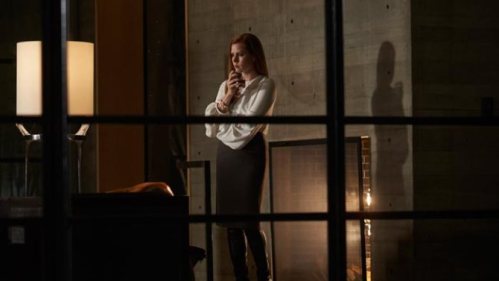 At this years Venice Film Festival American director and fashion designer Tom Ford said of cinema— “You need to think about it. Things can be entertaining, but if you leave the theater and it doesn’t stay with you, doesn’t haunt you, doesn’t challenge you, then it’s not successful, for me. So I hope to make films that make one think.” Despite the recent buzz about Amy Adams, I found myself more excited to see her latest film, Nocturnal Animals, because I wanted to be “haunted” by Ford’s latest foray into cinema.
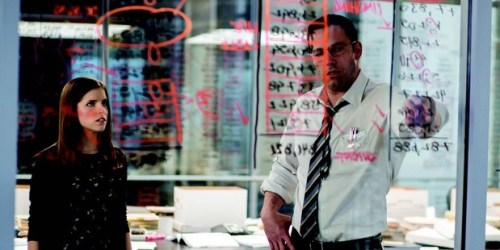 Starring Ben Affleck, Anna Kendrik, and J.K. Simmons, The Accountant is a bit Rain Man, a bit A Beautiful Mind, a hint of X-Men, and a whole heap James Bond … if Bond had autism (actually, it wouldn’t surprise me if ol’ Jimmy was on the spectrum). So, what’s not to like?
 The Red Turtle has recently done the rounds of the film festival circuit, including our own New Zealand International Film Festival. A collaboration between Studio Ghibli and Oscar-winning Dutch born writer-director Michael Dudok de Wit (Father and Daughter) makes for an interesting fit. Dudok de Wit has applied his hand solely to short films to date, so it must have been an interesting turn of events that convinced him to work on a feature film with an animation studio from half a world away in distance and style. It took a decade to make, but make it they did, and the result is a genuine treat.
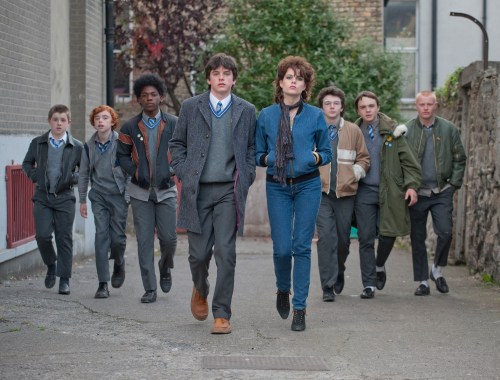 Irish writer-director, John Carney, has had a string of hits and misses in his career. His surprise triumph, Once, beautifully expressed a delicate love story through song and picture and garnered critical success. However, Carney’s mojo quickly evaporated with his subsequent releases Zonad, and the recent foray into America with Begin Again, which was met with a tepid reception. His latest feature, Sing Street goes a long way to restoring his creditability as a director who can blend an authentic heart-felt story with music. Set in 1985 among the schooling milieu of a depressed Dublin, Sing Street ostensibly operates as an autobiography of Carney’s musical upbringing.
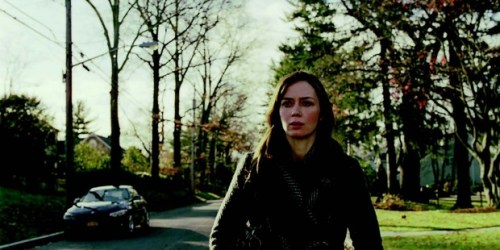 It’s a question everyone asks – was the book better than the film? To me it seems a fruitless inquiry as they are such dramatically different mediums. In most cases the book wins out, simply because it allows the reader to imagine a picture, whereas the film has the onerous task of presenting that picture … which differs for everyone. In this instance, I saw The Girl on the Train having not read the book. So, I was charged with reviewing the film on its own terms rather than having to consider screenwriter Erin Cressida Wilson’s treatment of Paula Hawkins’ best-selling pot boiler.
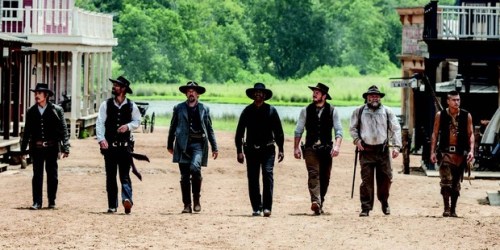 I regretfully admit that I have not yet seen the 1960 version of The Magnificent Seven (which was originally based on Akira Kurosawa’s 1954 Japanese classic, Seven Samurai). In fact, the whole western genre is a bit of a blind spot for me. However, the positive is that I can look at Antoine Fuqua’s (Training Day, The Equalizer) remake with fresh eyes rather than compare it to the original. Apparently I’m in good company – the film’s star, Denzel Washington, citing similar reasoning, didn’t see the original either.
