Film Noir, Double Indemnity, and Edward G. Robinson.

The academic year has kicked off and with it my first block course at Massey University in Albany.  This year I am studying Film Noir, a genre that I am not too familiar with.  I have studied fringe noir, such as the works of Wells, Hitchcock, and Clouzot, but have never dived head long into the ‘hard boiled’ Hollywood films of the forties and fifties.  I’m really hoping that this year will bring about a real appreciation for this genre.  This weekend I saw Black Angel(1946), Murder My Sweet(1944), Crossfire(1947), and Billy Wilder’s excellent Double Indemnity(1944).  All are characteristic of the genre, although with varying budgets.  I must make special mention of the acting by Edward G. Robinson in Double Indemnity … quite the tour de force.  I saw a short clip of him on The Woman in the Window(1944) and he alone makes me want to see the rest.

As with all of these films, a suspension of disbelief must be adhered to … at least to a certain degree.  After all, you must remember that these films are over sixty years old, and whilst certain portrayals would be considered a gross cliche today, back then it was new and fresh.  So, if you do end up watching any of the films mentioned above, attempt to view with a fresh pair of innocent eyes.  Cast your mind back to life sixty years ago, and don’t let the cinematic cynicism that rides on the back of time colour your judgement. If you do this then I think you’ll find that these films have quite some depth and are a real joy to watch.
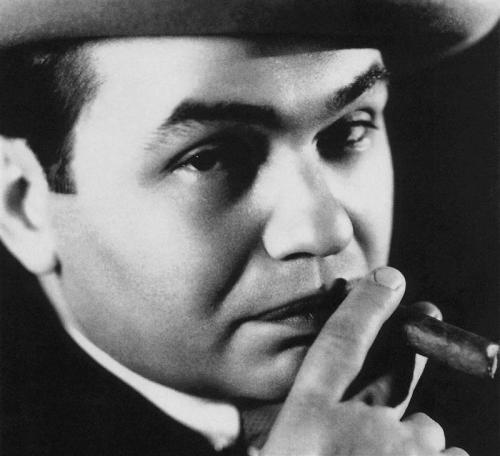
Edward G. Robinson
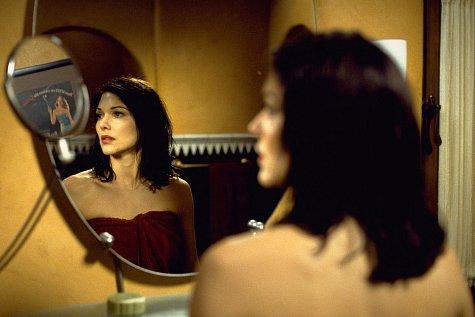
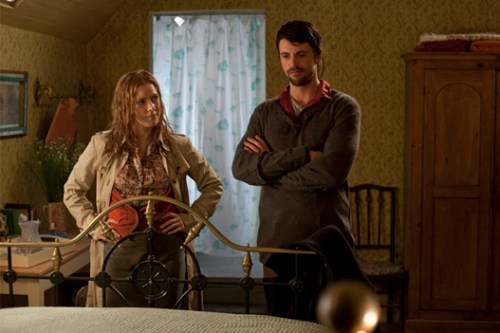
Lynch’s Mulholland Drive, Scott’s Alien, and their gender representations

The transformation of gender representations undergone by the protagonist raises challenging questions about the nature of modern and/or postmodern identities.  Added to the academic section is an abstract of an essay where I discuss this with reference to Ridley Scott’s sci-fi/horror classic Alien and David Lynch’s superb Mulholland Drive (pictured).

Leap Year – review

See the film Leap Year near February 29th. That sounds like a good idea … at least it would’ve been were the film any good.  See my review here.

Oscar night!

It’s Oscar time! Normally this gets my cinematic juices flowing but this years awards seem to highlight an increasing trend. A bad trend, that gnaws at the rotting flesh of Hollywood’s carcass. I think the older I get, the more cynical I am toward the Academy. Is it me or is the Academy’s vote in recent times become increasingly pulled in different directions? Quality, sentiment, popularity, and the industry dollar all seem to vie for the voters attention. Did Christopher Plummer really win the best supporting actor for his role in Beginners, or was it a sentimental nod towards his life’s achievement as an actor? The boundaries aren’t clear, and as such mimics the art it is trying to award. You also have to bear in mind that most of the voting Academy are conservative. Very conservative, male, white, and over 50 (like I will be in ten years … yikes!) That said, I think the problem really lies at the nomination stage. Jessica Chastain nominated for her role in The Help rather than The Tree of Life. Kirsten Dunst and Ryan Gosling ignored. Hmmm … I’m not too sure how the nominees are selected but the system seems to be flawed. When films such as Melancholia are snubbed because of political reasons, it tells me that the Academy has lost sight of what art is. I look at the best picture nominations and see Warhorse, Extremely Loud & Incredibly Close, among other questionable nominees and I despair. Where are the likes of Melancholia, Shame, Drive, and We Need to Talk About Kevin? These are glaring omissions … ask any film critic worth their weight and I’m sure they’d agree. At least there are other awards and critics that level the field somewhat and give a semblance of correct balance.

By the way, congratulations must go to The Artist and Mechel Hazanavicius for the Oscar nod. It could’ve been so much worse.

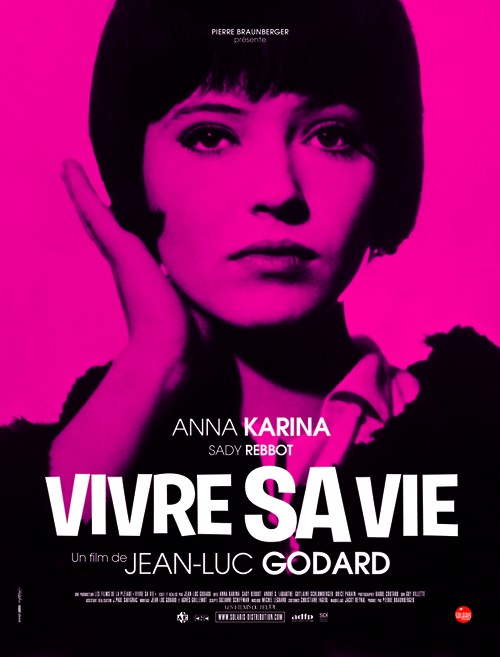
Godard’s counter-cinema, Vivre sa Vie, and von Trier’s Dogville

Just added to the academic section the abstract from an essay I did last year concerning Godard’s counter-cinema, Vivre sa Vie, and von Trier’s Dogville.

Tinker Tailor Soldier Spy – review

I noted a short while ago that Tomas Alfredson was due to tackle John le Carré’s classic novel Tinker Tailor Soldier Spy. I was salivating with anticipation, not just because Alfredson’s previous outing, Let the Right One In, displayed the trademarks of a genuine auteur, but also because it showed his willingness not to stagnate within the same genre. Ad to this a cast of Gary Oldman, John Hurt, Benedict Cumberbatch, Colin Firth, and Mark Strong, it was difficult to see myself disappointed.  See my review here.

.

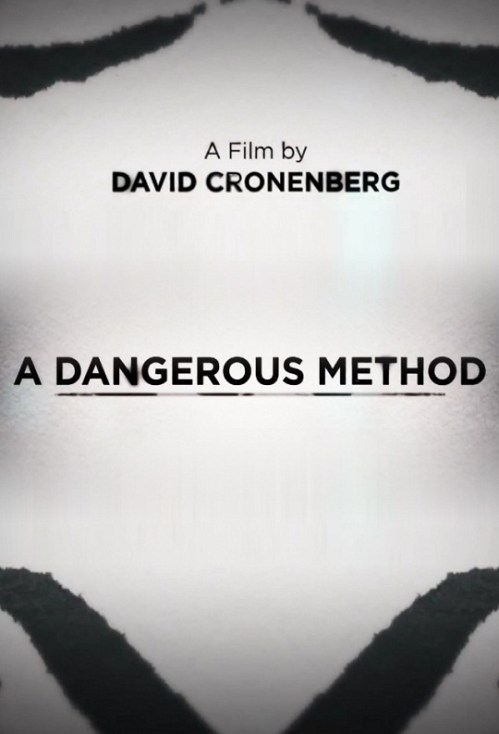
David Cronenberg, A Dangerous Method, and Film Weekly

A new Film Weekly podcast is out.  This week Jason Solomons visits the last house of Dr Sigmund Freud for a session with A Dangerous Method’s Viggo Mortensen.  You can listen to it here.  I’m quite a fan of David Cronenberg’s work, notibly Existenze, Spider, A History of Violence, and Eastern Promises.  These are superb films.  Cronenberg’s latest film, A Dangerous Method, is released in New Zealand April 26, and I am really looking forward to it.  From what I gather it is a lot more staid than his previous work, but it has a fantastic cast and psychonanalysis is a theme that Cronenberg works in and around so well.

Term time looming, and The Descendants – review

I’m trying to get as many films in before term starts.  In a few weeks I’ll be up to my neck in film noir (as is the paper I will be taking) and won’t have time for too much else.  Actually, who knows really … I have no idea what to expect of my lecturer, or indeed, no idea of what he will expect of me.  With this I’m mind I’ve been focussing on Oscar contenders as I tend to do around this time of the year.  From what I gather, nine nominations for best picture seems to be a little excessive, especially when quality productions such as Melancholia and Shame have been snubbed.  None-the-less there are plenty of good films nominated that thankfully shout louder than the not-so-good ones.  Next week I’ll report on Tinker Tailor Soldier Spy, but this week it’s The Descendants.  Nominated for five Oscars, directed by Alexander Payne (Sideways, About Schmidt), and starring George Clooney, this film had the pedigree for potential.  You can see my review here.

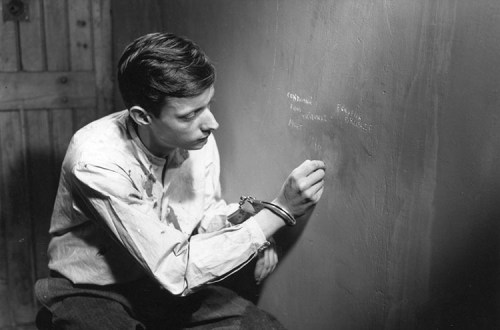
Ebert’s take on A Man Escaped

Bresson’s 1956 classic A Man Escaped is a film that I saw for the first time last year as part of my paper in French Cinema. It is a fantastic film that epitomises Bresson’s style. Roger Ebert has recently done a fantastic review that is worth a read. He does a great job of nailing the film down to its essence. In it he writes:

Watching a film like “A Man Escaped” is like a lesson in the cinema. It teaches by demonstration all the sorts of things that are not necessary in a movie. By implication, it suggests most of the things we’re accustomed to are superfluous. I can’t think of a single unnecessary shot in “A Man Escaped.”

You can see the rest of his review here.

20120205-202704.jpg

The Artist – review

The Artist has recently leapt into the spotlight as the front runner for the best picture Oscar. But is it a good film? Before seeing The Artist I knew it was a French film, a melodrama, and that was made in the tradition of the silent films of the 1920s era. Beyond that I knew little, yet somehow I have been very much looking forward to seeing it. Was it simply its novelty that was capturing my interest? This is dangerous territory considering that a good film is so much more than a few simple circus tricks, and I was hoping not to be disappointed. You can read the rest of my review here.