Some more TV picks for your perusal.

See the good Witchdoctor’s latest streaming television recommendations and warnings here.

Here’s my input …

Trying (AppleTV+)

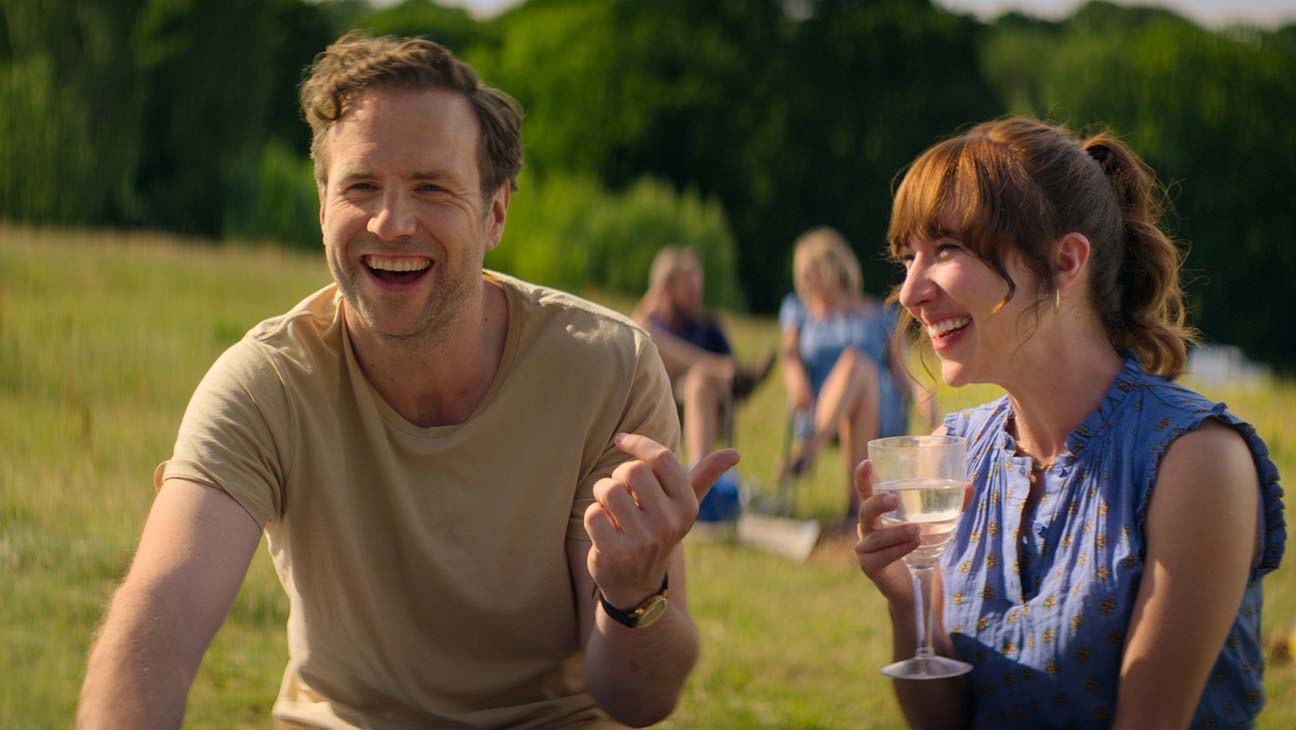
Apple is busting its US bubble with their latest original, Trying, an easily digestible feel-good comedy that that traces out the lives of two Londoner thirty-somethings who are, yes, “trying” to have a baby. It’s no spoiler to say that they can’t conceive (you find that out early in episode one) so they embark on a journey of adoption, discovering it’s a long-winded process that is fraught with many pitfalls. Prepare yourself for a predictable mix of likeable comedy and sentimental drama tightly packaged into eight half-hour episodes. There’s not much new ground broken here, but it is undeniably warm and engaging thanks to the leads Rafe Spall and Esther Smith who strike up a decent amount of chemistry and are surrounded by a solid cast that includes the versatile Imelda Staunton. Yes, Trying is whimsical and the couple’s cherry optimism as they flit around Camden and other recognisable London landmarks will have some groaning. It’s no Fleabag, but if you’re getting tired of the misery out there in TV-land then this is the perfect tonic.

Deadwater Fell (TVNZ OnDemand)

Just what I needed in these grim times was a good ol’ fashioned pick-me-up. Deadwater Fell isn’t that series. This four-part mini-series is a grim dirge of a drama as suggested by its rather foreboding title. Writer Daisy Coulam (Grantchester, Death in Paradise) appears to have plumbed the depths of her dark mind to uncover this tale of misery. Set to the backdrop of a dreary Scottish town, this crime drama focusses on a seemingly happy family who meets a firefly demise in their home but for the only survivor, Tom (David Tennant). The town quickly becomes suspicious of the part he might’ve played in the fire leading to dark looks, finger-pointing, and angry villagers with pitch-forks at the ready. Despite the depressing subject matter Coulam and fellow director Lynsey Miller have done a fine job of slowly revealing each character’s back-story, dangling an apparent truth and then suggesting otherwise. It is undeniably well produced and acted, but it is also unbearably bleak. So, for many now may not be the time.

… and in the meantime.

I’m consuming quite a bit on the small screen at the mo (such as the mind contorting Devs, pictured above), so I contributed to the Witchdoctor’s wrap up of some good stuff out there. Have a squiz here.
The Stranger (Netflix)

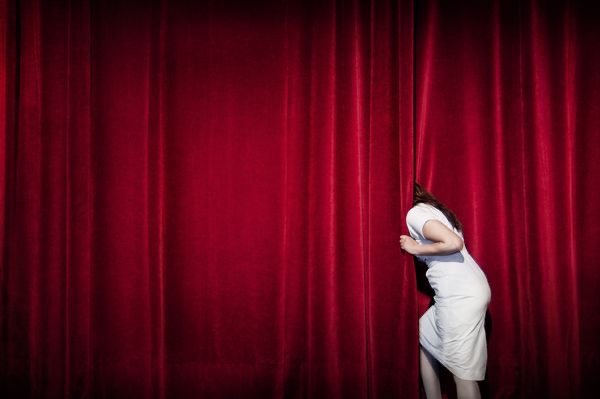
If there is such a thing as the TV version of a page-turner then this is it. The Stranger is a Netflix original that’s perfect for bingeing on those cold lockdown evenings—a British eight part thriller-drama bursting with familiar faces and packed full of twisty-turny “no way!” moments. The series centres on the Price family, a regular middle-class family, but with a slew of secrets to hide. When Adam, is approached by a mysterious stranger who whistleblows his wife’s fake pregnancy, the story heads down a deep rabbit hole of red herrings, dead ends, and yes, murder! There is a sense of Happy Valley or Broadchurch in its blend of family drama with police procedural, although The Stranger is a lot looser in plausibility—you don’t have to dig far below the surface to find plot holes. Clearly, The Stranger wants to keep you above ground, and it’s at this level where the series operates best, cleverly distracting you with a barrage of intriguing plot twists and character wrinkles. Each episode will have you craving for the next, so take it at face value and get aboard the binge train.

Servant (AppleTV+)

AppleTV+ has cast a wide net in it’s opening salvo of programming. Servant represents the tech giant’s foray into that undefinable category of downbeat chills that M. Night Shyamalan seems to have mastered. It’s a 10-parter that skirts the edges of the Shyamalan’s uncanny brand of creepy drama as it traces the fortunes of the Turner family. Dorothy is suffering a mental breakdown after the mysterious death of her baby, Sean is trying to keep her horrific secret in the dark, and their new nanny is a religous-ultraconservative straight out of Gloriavale. Oh, and Ron Weasley pops is from time to time to drink their wine. A chamber piece of sorts, Servant never ventures too far from the Turner household, instead letting the characters boil in their own caustic malaise. Fans of Shyamalan will get off on this sombre, brooding, spook-fest, and as with any genre piece, focussed film-making is what hold this series together. There’s plenty of inventive camera-work that avoids the “wankometer”, although beware, some cliches are hiding in the shadows and the score is perhaps a little heavy handed. But on the whole Shyamalan and his stable of directors maintain a consistent tone throughout. It’s unclear if this will be back for another round, and I’d like to think not as the series leaves us on a satisfying (albeit rather opaque) note.

Intermission

img_0034
Due to Covid-19 we will be taking a (hopefully) short break. Back soon.

Queen & Slim

QUEEN & SLIMVerdict: A well-meaning and beautiful looking disappointment.
As far as first dates go, this one’s a bit of a fizzer. No, I’m not talking about the titular Queen and Slim’s Tinder date from hell, to which this film explores. Rather, I’m referring to my first outing with promising first-time feature directing and writing duo Melina Matsoukas and Lena Waithe, whose woke sensibilities and vibrantly kinetic film-making style held so much promise. Add to the mix, two “it” actors—the eye-catching Jodie Turner-Smith and Get Out’s Daniel Kaluuya—and you have a film that by all measures should be overflowing with style, sass and smarts.

The story follows the duo’s aforementioned first date which goes pear-shaped after they are pulled over by a racist white cop. Following some racial injustice, rash responses and a flurry of gunshots, Queen and Slim suddenly find themselves high-tailing it for the border. The film proceeds to make some fairly pointed comments on authoritarian prejudice as the couple’s panicked flight from the authorities garner a Bonnie and Clyde style posse of unsolicited support that usher them towards freedom.

There is plenty to like about Queen & Slim. For one, it’s beautiful to look at, drenched in silky imagery that dovetails nicely into Pete Beaudreau (A Cure for Wellness, Margin Call) well-considered editing patterns. I simply can’t emphasise enough how good this film looks, and for some, this alone will be worth the price of admission. Secondly, Daniel Kaluuya’s screen presence—anyone who’s seen him in Get Out and then Widows will know his significant range.

Unfortunately, all this is put to waste by Waithe’s patchy screenplay that ebbs and flows from moments of sublime enlightenment to cliched dashboard-thumping expletives and woefully signposted character motivations. I could hear the clunky gears turning.

It’s a classic case of style over substance. Shame, because Queen & Slim film does have a noble message, but it gets overexposed by Waithe’s overwrought dialogue. What’s more, Matsoukas shows her lack of feature-length experience, one that hasn’t yet captured the focussed subtlety of contemporaries such as Barry Jenkins (Moonlight, If Beale Street Could Talk). As for a future second date with Matsoukas’ next flick? Weeell … for now, I’ll just be polite and say “it’s not you, it’s me”.

See my reviews for the NZ Herald here and for Witchdoctor here.

Color Out of Space

coosVerdict: A trippy tale of cosmic horror that occasionally rises above its B-horror roots.
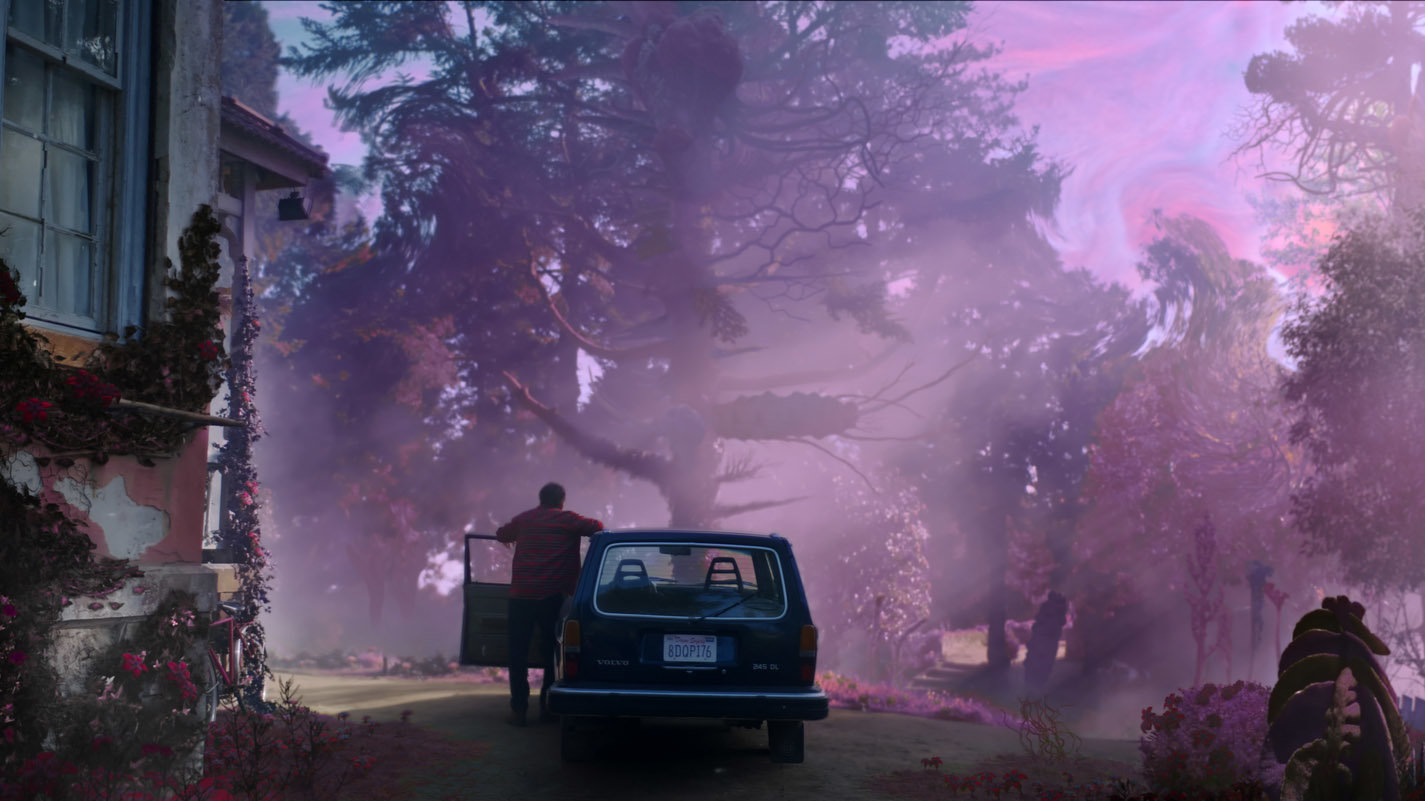
You might think that a loopy Nicholas Cage, a herd of alpacas, and a half-baked woodland hippie might resemble some sort of comedy, but you couldn’t be further from the truth. Color Out of Space, the latest in many adaptions of H.P Lovecraft’s literary work, is a story of cosmic horror that picks at the raw nerve of our deepest existential fears. 

Lovecraft was indeed ahead of his time, his stories inspiring a wave of celluloid horror many years after they were written. Unfortunately, few are any good. Alex Garland’s recent masterpiece, Annihilation, being a notable exception (actually adapted from Jeff VanderMeer’s book, but with remarkable similarities that capture the cosmic horror Lovecraft was aiming for), but most trip and fall into a mad scientist’s vat of cheap B-grade excess. 

Is this any different?  Well … kinda. It is relatively faithful to the source material, narratively speaking. But that’s not saying much as it has a very simple plot: When a strange meteor falls into the Gardner family’s front yard it contaminates the water supply, turning the flora and fauna into a wondrously indescribable hue. Yep, there’s something in the water alright (last week’s reviewed Dark Waters and this would make a terrifying double bill) and things from here begin to get pretty trippy for the Gardner family, giving way to a wild-eyed alpaca blood soaked dad that only Nicholas Cage could pull off. Even Tommy Chong (of dope-smoking duo Cheech and Chong fame) turns up. Again, no, this isn’t a comedy.

There are some exceptionally thrilling moments within Color’s psychedelia and director Richard Stanley (returning after a long hiatus) has wrangled a tsunami of sight and sound into some very experiential and mind-blowing sequences. Beyond that, unfortunately, the film rather predictably surrenders to the genre-revelling schlock of its cinematic forebears and never fully captures Lovecraft’s intended cosmic horror. Color just can’t seem to decide what kind of movie it wants to be; a high-end sci-fi, or B-grade ham. It’s the lovechild of Alex Garland and Ed Wood and a very frustrating experience to boot. I loved it, and I hated it.

See my reviews for the NZ Herald here and for Witchdoctor here.

Dark Waters

dwVerdict: The murky waters of environmental law turn crystal clear in this efficiently told whistleblowing biopic.
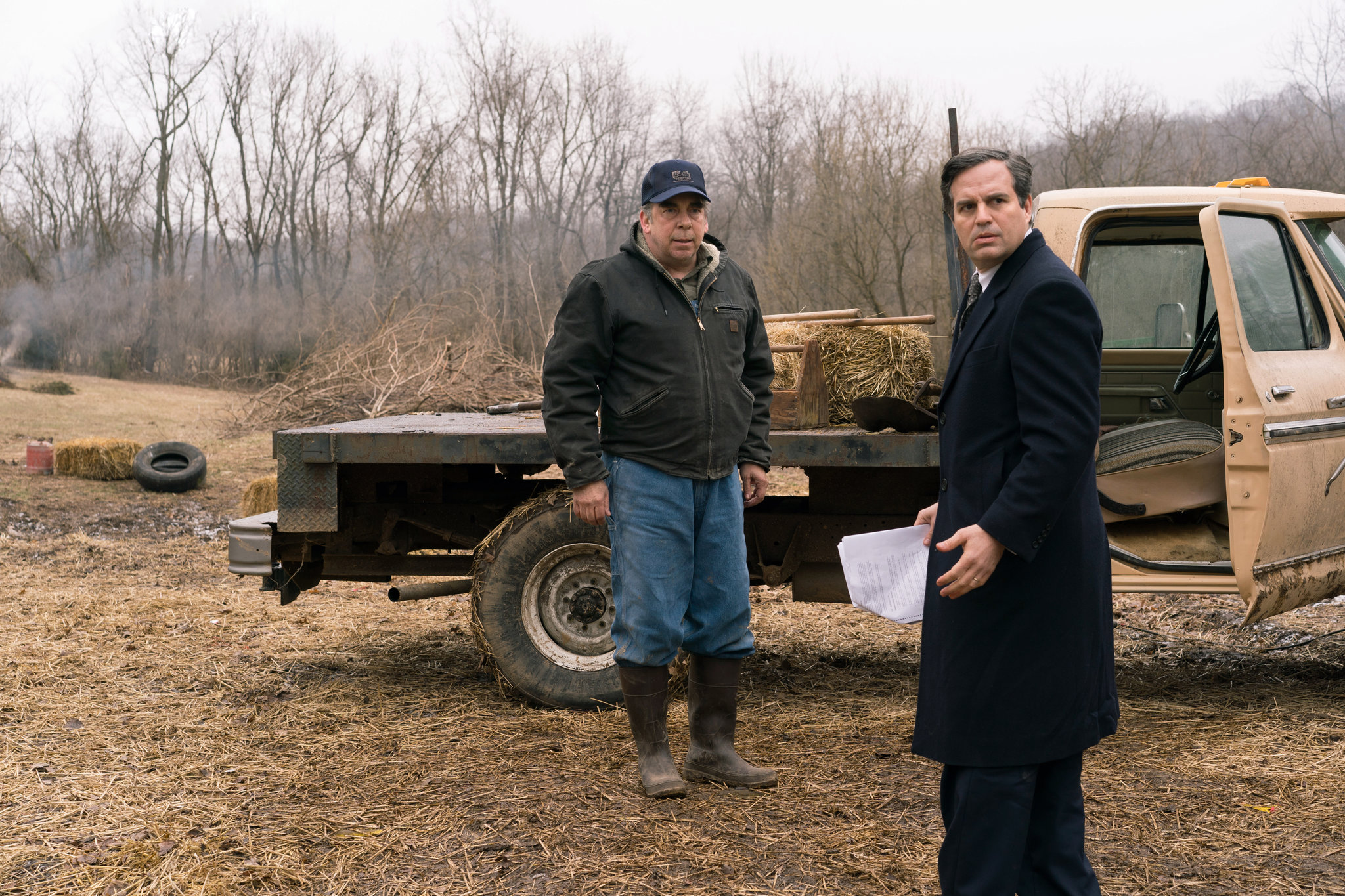
How do you spice up the mundane subject of environmental law? Throw in a couple of A-listers, shoot them with provocative mood filters and set your story to the angsty backdrop of our environmentally frail times. Dark Waters is all this and more—a film that through its lid-lifting on the DuPont scandal has tapped directly into the zeitgeist of today’s environmentally savvy public.

Cut from the same cloth as movies like Erin Brockovich, The Insider, and more recently The Report, Dark Waters offers more of the same David vs Goliath whistleblowing narrative that, while not breaking new cinematic ground, is a compelling enough drama to have you questioning the safety of the water we drink.

Robert Bilott (played by a suitably driven, yet affable, Mark Ruffalo) is a corporate lawyer who defends chemical companies, but when a farmer thrusts into his reluctant hands compelling evidence for gross negligence of one of the world’s largest chemical companies, it causes him to sit up and take notice. The ensuing investigation into the chemical giant DuPont, who knowingly released dangerous chemicals into the public’s water supply, snakes its way down a river of shadowy conspiracies and paranoid side-glances.

Is this movie formulaic? You bet. But it’s a formula that works and director Todd Haynes (Carol, I’m Not There) has meticulously worked his craft with a laser-like (but very predictable) precision. From the do-I-turn-the-key-for-fear-of-the-car-exploding cinematic flash-points of tension to the seamless montages of Bilott pouring over legal documents, Dark Waters flows before your eyes ushering us from one complex plot-point to the next with effortless ease. In fact, this film almost feels too efficient and calculated for its own good. Which is why the more organic and messy relationships, such as Robert’s marriage to Sarah (Hathaway), feel disappointingly undercooked.

Despite this, Dark Waters still operates as a compelling and well-told whistleblowing yarn that explains the complex machinations of the DuPont case with aplomb. I will never look at my glass of water the same.

See my reviews for the NZ Herald here and for Witchdoctor here.

Mr. Jones

mjVerdict: A captivating account of truth-seeking journalist Gareth Jones.
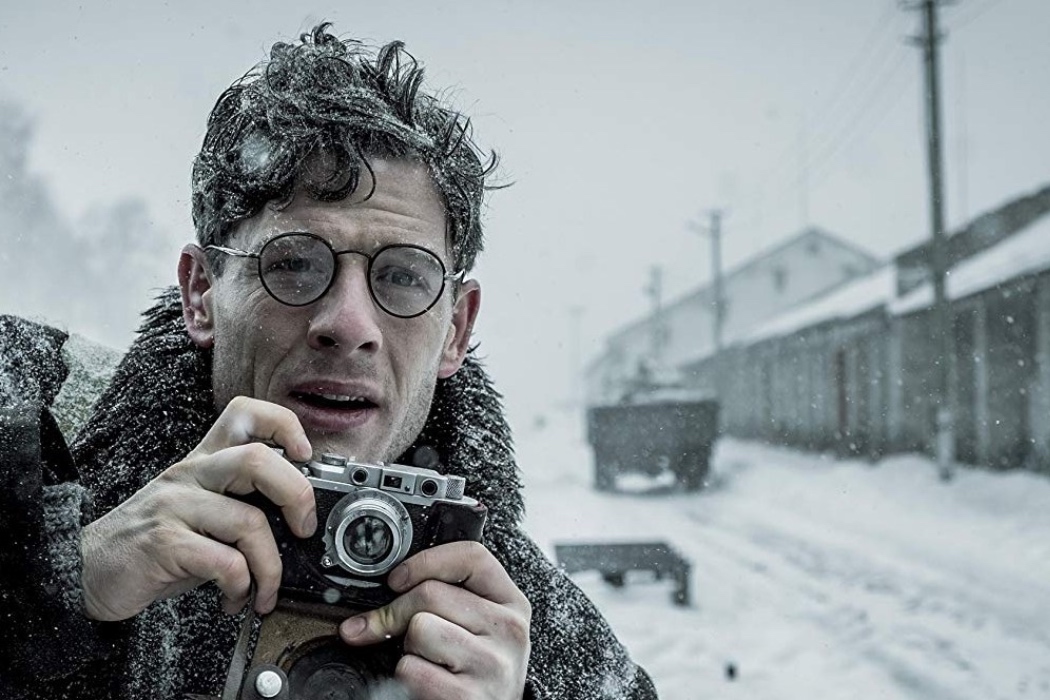
Back for its theatrical release following a rather quiet response at last year’s NZIFF, Mr. Jones feels like a timely reminder of today’s unrelenting flow of fake news.

Set in the early 1930s, Mr. Jones is based on the true story of Welsh journalist Gareth Jones (played by Bond candidate, James Norton), who ventured into the maw of Stalin’s genocidal starvation of the people of Ukraine. His eyewitness account of Holodomor (as it is known by) contradicted the dominant narratives flowing out the Soviet Union at the time—stories that the west was willing to accept in favour of burgeoning trade opportunities. Yet despite Jones’ vociferous protests his words continually fell on deaf ears.

Spearheading this tale of injustice is a suitably odious Peter Sarsgaard (An Education) who slithers into the frame as the Pulitzer winning Walter Duranty, New York Times’ patsy to Soviet interests. His decision to favour hedonism over truth represents the sickening number of political players who turned a blind eye to Stalin’s atrocities.

In contrast, a sympathetic George Orwell (played by Joseph Mawle) pops up intermittently to hear Jones’ concerns—burdens that would later be famously reworked into his opus, Animal Farm. These interludes may seem a tad superfluous at times, however this insight into Orwell’s politically driven narratives serve to highlight Jones’ frustration in convincing the political establishment to accept his ground-level reporting as fact.

And it is at ground-level and in Ukraine’s frozen tundra where this film operates best. Oscar-nominated director, Agnieszka Holland (Europa Europa, In Darkness) has crafted a bleak and desperately lonely vision of Holodomor that appropriately hits home the horrors of Stalin’s atrocities.

Not without a few flaws, most notably Jones’ “obligatory” love interest with New York Times employee Ada Brookes (Vanessa Kirby) whose character, while softening an otherwise all-male cast, does little to further the film’s cause. Some might also wonder if a trimmer, more focussed, version of Mr. Jones lives inside its slightly bloated 141 mins running time. Small quibbles for what is otherwise a gripping history lesson.

See my reviews for the NZ Herald here and for Witchdoctor here.

The Lighthouse

tlhVerdict: An unnerving and claustrophobic monochrome nightmare at sea.


You will never look at seagulls the same after watching Robert Eggers latest film, The Lighthouse, a tale of nautical superstitions and closely guarded secrets set in the late nineteenth-century. His first film, The Witch, was among other things a feminist film. The Lighthouse, similarly is a cold-hard stare at toxic masculinity, exploring what happens when two mismatched men are forced to cohabit in a lighthouse, on a rock in the middle of the sea, farting, drinking, masturbating, and beating on seagulls. It’s unsettling at times, yes, but also utterly mesmerising.

As Eggers once quipped “nothing good happens when two men are trapped in a giant phallus.” And he’s right, but before you dismiss The Lighthouse as some sort of ugly stew of perverted male squalor, think again, because this well-considered journey into the mental abyss has been meticulously crafted by a director at the top of his game.

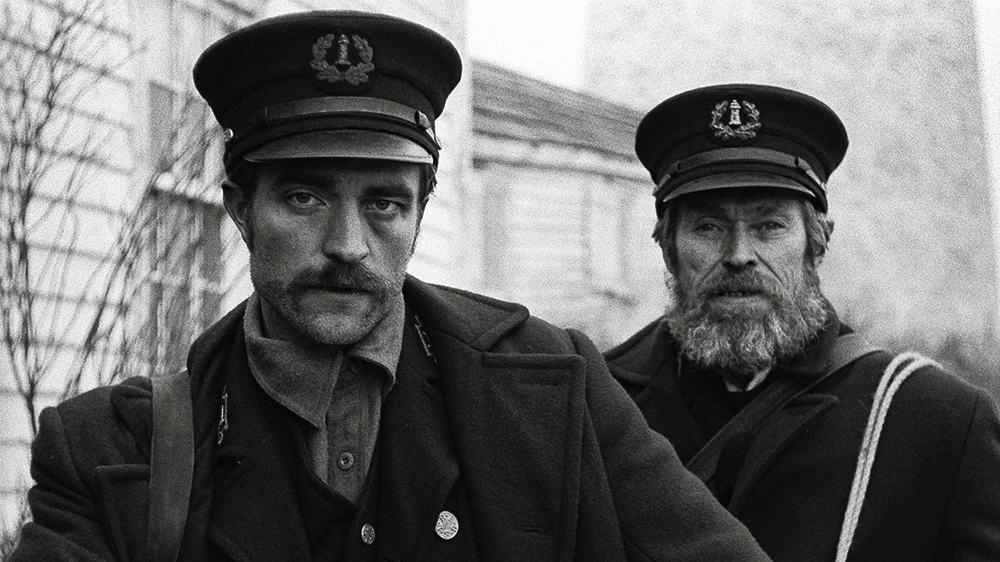
At its centre is Thomas Wake (Dafoe), a salty-sea-dog-turned-lighthouse-keeper and his new assistant, the quiet and guarded Ephraim Winslow (Pattinson), who have four weeks to go about their duties on the weather-beaten island before relief arrives. But when a storm delays the impending relief, it tests their mental resilience. Wake becomes jealously protective of his lighthouse and his insistence that only he “tend to the light!” leads Winslow to become curious about its attraction. The film cleverly flirts with magic realism, as the mystery of the “tended light” is slowly revealed.

Shot in black and white with an aspect ratio of 1.19:1, which is to say, almost completely square, The Lighthouse is a claustrophobic and suffocating experience. Cinematographer Jarin Blaschke’s who also worked with Eggers on The Witch, and his brooding camera evokes photography from the period, which is hauntingly complimented by the unceasing cry of the island’s foghorn, moaning as if in labour with Eggers’ new film.

Add to Eggers’ formal brilliance two highly committed performances from Pattinson and Dafoe and you have a thrilling gothic vision of madness that may well be an oppressive experience, yet is something to be admired.

See my reviews for the NZ Herald here and for Witchdoctor here.

Emma

emma
Verdict: A stylish and smart big-screen treatment the Austin classic.

The oft-adapted classic, Jane Austin’s Emma, seems to be a screenwriters dream. Not least because of the book’s intriguing plot contrivances that drip with romantic machinations, but more because it has at its centre a wonderfully complex female character that bristles with feisty agency. Emma is a story of misguided match-making as she (played by a mischievous Anya Taylor-Joy) plays cupid for others who blindly bare the brunt of her bad advice.  Needless to say, things go horribly wrong.

Kiwi word-smith Eleanor Catton appears to have relished her opportunity to adapt the queen of romantic mismanagement for the big screen. Plunging her pen deep into the pages of Austin’s book, Catton has gilded this plucky production with delightful attention to Austin’s wonderfully witty prose. She has avoided pandering to the “Downton Abbey sect” and its more easily digestible frippery. Rather, this version feels more faithful to the source material than prior renditions which will no doubt delight fans of Austin. Those less familiar with Austin’s work might find the sharp word-play and dizzying array of characters a tad disorienting.  It is a complex web that Emma weaves and it appears that Catton doesn’t suffer fools, so if its a more contemporary version you’re after, then perhaps Amy Heckerling’s Beverly Hill’s update, Clueless (a good film in its own right), might be a better option.

The film’s tagline “Handsome, clever, and rich” is not only an apt summation of its protagonist, but also describes Catton’s intelligent screenplay and a production that brims with all the trimmings that come with a romantic romp through the early nineteenth century. Costumes, finery and luxuriously green-gardened estates—it’s all there along with an excellent ensemble cast that includes Bill Nighy hitting peak Nighy.

If I had one reservation, it is that director Autumn de Wilde, in her feature debut, hasn’t quite lived up to her music-video roots. Her name might look lovely on the poster, but the film’s beautiful production design and vivid cinematography should’ve been weaved into something a little more kinetic.  But de Wilde’s lack is thankfully made up for by Catton’s biting script and Anya Taylor-Joy whose embodiment of Emma proves a whimsical delight.

See my reviews for the NZ Herald here and for Witchdoctor here.

For Sama

fs
Verdict: Probably the most courageous documentary you’ll see this year.

The horrors of civil war are explored in Waad Al-Kateab’s Oscar-nominated documentary For Sama. A Syrian journalist and reluctant hero, Waad recounts her tumultuous five years trapped within the besieged city of Aleppo along with her husband Hamza and their newborn daughter, Sama. They lived a meagre existence while working at a makeshift hospital during Assad’s brutal assault on the city.

Armed only with Waad’s handheld camera and Hamza’s surgical know-how (but both with an inspiring supply of courage), the couple do their best to save lives with limited resources. The film is a heart-breaking assault on your senses and doesn’t pull any punches as the seemingly endless conveyor-belt of wounded—civilian casualties of Assad’s unforgivably ill-targeted bombings—pass through the hospital doors.  Yet, behind the bloodshed For Sama presents itself as a love story on many levels; one of Waad and Hamza’s love for each other, also one of compassionate love for the city of Aleppo, but ultimately, as the title suggests, this film is Waad’s love letter to her daughter, Sama.

Waad explains how the plight of the rebels was muddied by an influx of Islamic extremists. However, the film wisely avoids getting too bogged down in the politics of war, rather, locking its attention on the plight of the innocent civilians at ground level, specifically the children caught up in the bombing. One heartbreaking scene in which two young boys softly weep over the body of their brother, a victim of yet another bomb, is particularly difficult to stomach. Such scenes, harrowing as they are, are necessary and serve to focus the film’s humanist concerns, as well as crystallise Waad and Hamza’s personal moral edict to stay and save lives rather than flee.

Never losing sight of the medium of film, Waad and her co-director Edward Watts have wrangled over 500 hours of hand-held footage and weaved it into a strong piece of cinema. The result is a profoundly intimate yet horrifically heartbreaking film—a powerful document of love and injustice that traverses an array of emotions. For Sama is essential viewing.

See my reviews for the NZ Herald here and for Witchdoctor here.