
Pain and Glory
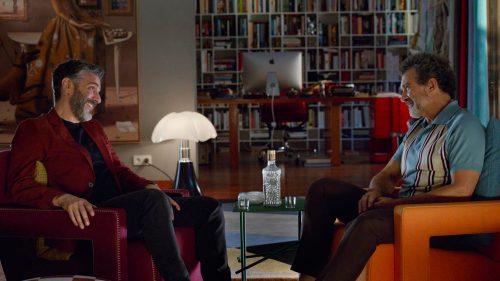 Making an autobiographical film about a director’s life can be a tricky task. Get it wrong and it comes across as a self-absorbed exercise in navel-gazing. But get it right and you have something wonderful, like Pedro Almodóvar’s Pain and Glory.
Set in Spain, this film centres on the “fictional” life of Salvador Mello. Through a series of flash-backs, Almodóvar (for whom this film operates as a thinly veiled semi-autobiographical drama) fleshes out Salvador’s formative years at the hands of his impoverished mother (played by Penelope Cruz), his absent father, and the sexual awakenings of the house help. Fast forward to the present and Salvador is now a successful but creatively stifled film-maker, who suffers from numerous ailments and is struggling to unite his past with the present. But through a series of coincidental reconnections, his past is thrust upon him. There is a hint of Fellini’s 8 1/2, or even Cuarón’s more recent Roma in the self-confessional nature of Almodóvar’s sideways glance at his own life and the people who influenced him.
Almodóvar collaborator Antonio Banderas gives an exceptionally soul-searching performance as Salvador, one of intensely focussed restraint as an internalised individual who ruminates on his past life. He is a picture of contradictions, with mournful eyes that betray his smooth image of studied unkemptness. At one point Salvador exclaims to a colleague “The one who cries is not a better actor than the one who struggles to hold back tears”— advice that Banderas takes on board in one heart-wrenching scene that sums up the pain and glory of Salvador’s life. Indeed, Banderas’ remarkably nuanced performance does plenty of this film’s heavy-lifting and elevates it into something quite sublime.
But far from solely a Banderas masterclass, Almodóvar’s distinctive flavour is evident throughout. Although at the restrained end of his oeuvre, Pain and Glory is still a visually compelling work with a rich colour palette and some subtle formal flourishes that are wall-hangingly beautiful. Certainly, Pain and Glory’s thought-provoking final shot will have your post-viewing tongues wagging while you sip on your Tempranillo.
See my reviews for the NZ Herald here and for Witchdoctor here.
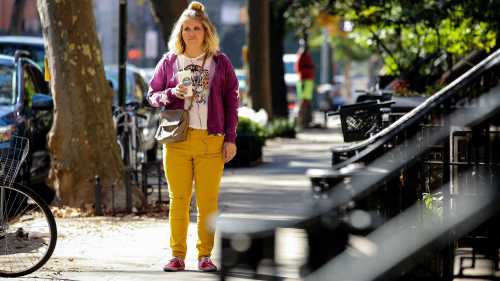 As Brittany Runs a Marathon’s spoilerific title hints, this movie quite literally does what it says on the tin. Yes, Brittany does actually run a marathon. But this indie dramedy also packs plenty of soul-searching smarts that go beyond the accessibly cheerful packaging. Think Francis Ha with sneakers.
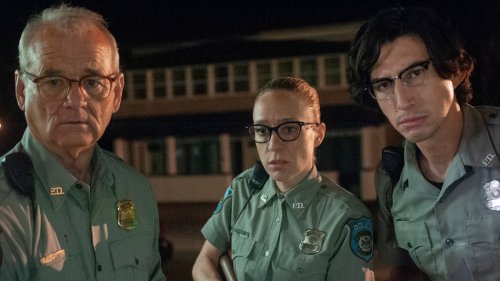 It’s hardly surprising that Jim Jarmusch has finally made a zombie flick. It is a sub-genre that many filmmakers have dabbled in and Jarmusch is certainly not shy of turning his pensively paced films into genre movies (eg. Dead Man as a Western). Certainly, this isn’t his first film about the undead. Notably, he sent two love-struck vampires, Tilda Swinton and Tom Hiddleston, into a poetic haze in Only Lovers Left Alive. But where that film wallowed in its dreamy melancholic fervour, The Dead Don’t Die is a different beast, opting to reside in the comical and schlocky spirit of yesteryear’s zombie flicks. It’s kooky, mildly amusing … and unfortunately, a complete misfire.
 The Melbourne Cup is one of the more glamorous events on the world’s sporting calendar. A sport of small margins, jockeying specifically, requiring a delicate balance of weight management, knowledge, skill, and perhaps most importantly determination—something Michelle Payne, Melbourne Cup’s first female jockey winner, had in spades. However, prior to her win in 2015, she couldn’t seem to catch the eye of the male-dominated horse-racing fraternity. Considering it’s a job that seemingly suits gender parity (arguably even favouring a female’s slighter frame), it’s a travesty that female jockeys had been cast into the margins for so long.
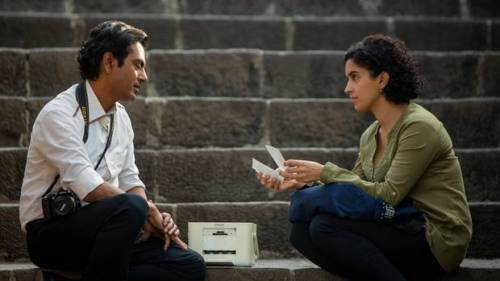 India’s movie industry isn’t really known for subtlety, Bollywood, in particular, has yet to come to grips with the “less is more” method of filmmaking. Thankfully, there are a number of Indian filmmakers who balk at Bollywood’s gaudy style, overuse of archetypes and cookie-cutter stories. Ritesh Batra is one of those directors, his breakout hit The Lunchbox (2013) wooing crowds with a bittersweet romance sensitively draped over a portrait of Mumbai city. However, in his latest feature, Photograph, Batra may have overcooked his response to Bollywood’s bombastic cliches by giving us a film so contemplative and agonisingly restrained that it will try your patience.
 What a luxury to have Joaquin Phoenix, an actor of such immense scope, to hang your film on. Especially when that film is about one of the most iconic (and dare I say it, celebrated) fictional villains in history. His turn as the Clown Prince of Crime will most likely draw comparisons to those who have gone before (Ledger, Nicholson, et al). But it needn’t. This film is a different beast and Phoenix occupies quite a different period in the Joker story.
 There is an uneasy tension in the air with Ari Aster’s latest horror.
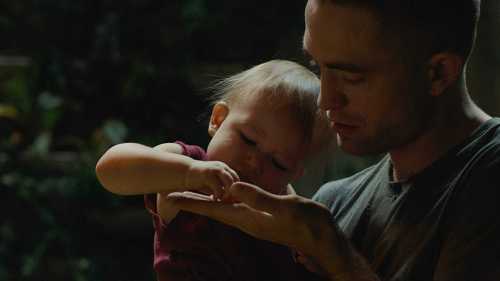 Movies from the enigmatic French director, Claire Denis (Beau Travail), are often described as elliptical in nature—a cinematic version of those three provocative dots at the end of a sentence prompting an “and?” response, where more is denoted by what isn’t said. High Life is one of those films—a smouldering question mark that casts a giant shadow over the film’s other concerns.
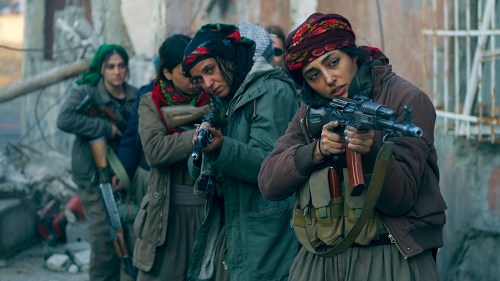 Based on true events, Girls of the Sun is set during the volatile period of Isis expansion into Kurdish territory in northern Iraq. It follows Mathilde, a French war journalist (played by Emmanuelle Bercot) as she documents a group of Kurdish women anti-Isis fighters and their struggle to reclaim their town and the children captive within.
 tobywoollaston.com