The Party

Weighing in at a very modest seventy-one minutes, what The Party lacks in screen time it makes up for in detail. Writer/director Sally Potter has delivered a punchy dramedy that boldly fizzes with black humour and satire. While it doesn’t entirely avoid the oft-maligned staginess of a chamber-piece (a curse that’s not necessarily a bad thing if the writing is up to snuff), Potter has kept things visually as silver-tongued as her script, and it works … most of the time.
Kristin Scott Thomas plays the political matriarch Janet, who fresh off a promotion, puts together a small soirée to celebrate. The wonderful ensemble cast makes up the collection of invitees, each one giving this dark comedy plenty of meat and drink to dine on. There is Janet’s liberal-idealist friend April (Patricia Clarkson) with her hippy boyfriend Gottfried (Bruno Ganz) in tow; there’s the academic Martha (Cherry Jones) and her pregnant partner Jinny (Emily Mortimer)—they’re a gay couple who both argue over the correct level of radical feminism to assume; and finally the outsider, a cocaine-snorting suit (Cillian Murphy).
Janet’s husband Bill, played by an overly forlorn Timothy Spall, sits sullenly as this dynamite-laden bandolier of guests file in and proceed to bristle with thorny exchanges and barbed retorts. It doesn’t take long before everyone begins lobbing bombshell announcements into the champaign and canapés.
With very little plot, the film risks becoming too script centric and while Potter’s screenplay weaves some spell-binding wit, it does occasionally become knowingly smug. Thankfully, Potter doesn’t let things get too stuffy and counters with some nice visual flourishes that utilise the limited set size to good effect. Shot entirely in black-and-white and utilising some lively camera and lighting choices, The Party is clearly giving a knowing wink to the screwball comedies of yesteryear.
The Party will likely split its audience into two camps. Some will find it bright, buoyant, playful, and sharp-witted. The cynical among us will most likely find it smarmy, morose, and irritating. Suffice to say, if you enter the theatre with the correct attitude you’ll probably have a lot of fun with this film.
Read the full review for the NZ Herald here.
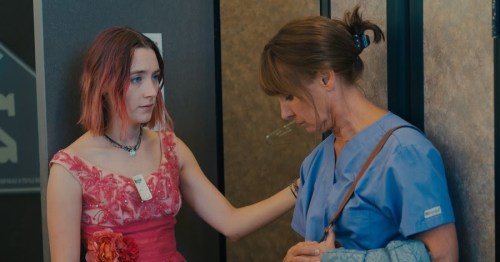 Greta Gerwig is no stranger to mixing a celluloid cocktail of angsty humour with a twist of social realism. In her sophomore years, the fledgling writer/director/actor was understudy to Noah Baumbach, both bringing about delightful films such as Francis Ha and Mistress America. With Lady Bird, Gerwig has spread her wings, gone solo, and showed us what a genuine talent she is.
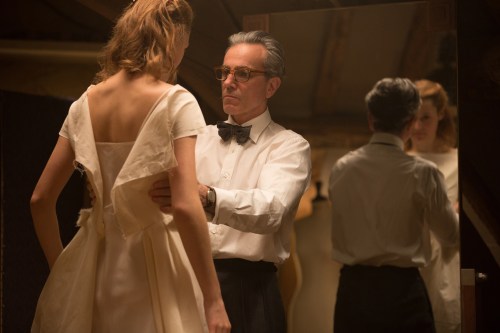 Paul Thomas Anderson doesn’t seem capable of putting a foot wrong. He is one of the most malleable auteurs currently working with a filmography that spans genres, periods and subject matter, each time garnering critical praise. The American director’s latest feature, Phantom Thread reunites him with Daniel Day-Lewis, whom he directed to Oscar-winning plaudits in There Will be Blood.
 Thando Mgqolozana’s controversial novel, ‘A Man Who Is Not a Man’ has already ruffled plenty of feathers within South Africa’s Xhosa community. His work explored the contentious issue of traditional circumcision and the dubious conditions with which the rite is undertaken. Now, South African writer/director, John Trengove, has made the bold (or foolhardy, depending on your opinion) move to stir the pot further. His latest film, The Wound, is a reworking of Mgqolozana’s book (Mgqolozana also co-wrote the screenplay) and examines homosexuality against the traditional backdrop of the Xhosa ritual.
 The process of animating over the top of pre-shot footage (rotoscoping) is a procedure that has existed since the dawn of cinema, most notably applied recently by Richard Linklater (A Scanner Darkly and Waking Life). Loving Vincent pushes the envelope further, with Directors Hugh Welchman and Dorota Kobiela (and an army of artists) making the technically ambitious decision to turn their film into a Van Gogh oil painting through the arduous process of hand painting each frame. While some might find this a painstaking exercise in gimmickry, there is little doubt that the result is an immersive experience, nudging you ever closer to the work of the famous Dutch painter. Certainly, Loving Vincent is a film where you could hang any one of its overwhelming 65,000 frames on your wall—although at twelve frames per second, the resulting animation takes a little adjustment.
 “The humiliation and depression had given way to blinding anger at my powerlessness over the unfair whims of men.”—it is a line that succinctly expresses one of Molly’s Game’s many concerns with male power and while the film is not explicitly feminist, its sentiments feel very apt in Hollywood’s current #metoo climate.
 tobywoollaston.com