
20th Century Women
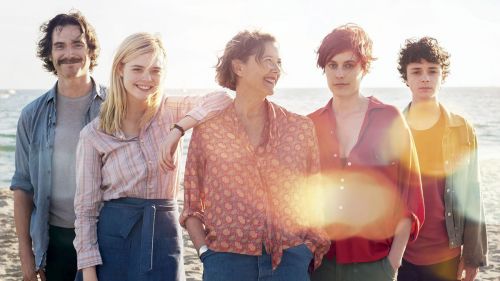 After a well-received run at last year’s NZIFF, 20th Century Women finally gets some more big screen love. Brimming with warmth and wit, this enlightening if slightly meandering tale provides plenty of post-viewing conjecture to unpack.
Written and directed by Mike Mills (Beginners), one might ask how is it that a male is telling women’s stories—as the title suggests, this a film about 20th Century Women, right? Well, not exclusively; it has a soft-natured feminist slant which develops further to show how female stories are often inextricably connected with male stories. 20th Century Women is loosely a biopic based on the real-life women who influenced Mills and is, in a sense, an ode to these women written by the man they helped shape.
Set in 1979, the film centres around a quintuplet of characters who all live in the same house. At the coalface of motherhood is Annette Bening who plays Dorothea; landlord, single mother, and compassionate matriarch who is struggling with what it means to bring up a son in a society bristling with cultural change. Likewise, her teenage son Jamie (played by Lucas Jade Zumann) has to endure the conflicting and bewildering world of advice and desires.
Dorothea’s large multi-story house is a do-up; boarder William (Billy Crudup) earns his keep by assisting with renovations. The other boarder is Abbie, played by the likeable Greta Gerwig whose free-spirited nature is pitted against her struggle with cancer. And then there’s Julie (Elle Fanning), who doesn’t technically live in the house but comes and goes at her whim and sneaks in at night to sleep with Jamie. They don’t have sex, their relationship being purely platonic … at least according to her.
Despite being overly invested in life’s quandaries beyond its due, this earnest tale is liberally littered with enough existential insight and astute observations to be an enlightening and rewarding experience. And although it leans heavily on the performance of its superb ensemble cast there’s enough meat on its bones to be well-worth seeing on the big screen.
See my reviews for Witchdoctor here.
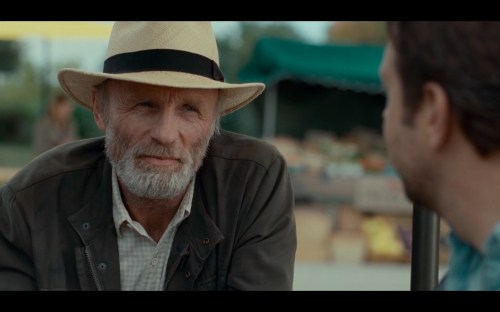 Digital giant Netflix’s bankrolling of a film that champions all things analogue is an anachronism that some might smirk at. Others will nostalgically nod at Netflix whose roots lay in the twilight of physical media.
 On my way to work, I saw a young student walking along the footpath, open book in one hand, a half-eaten apple in the other, lost in what must’ve been a good read.
 It seems ironic that such an agile and articulate documentary can be born from the burnt out husk of a drug-addled rock band. But that is exactly what first-time documentarian Julian Boshier has produced. The aptly titled Swagger of Thieves chronicles the fortunes of the “almost” iconic kiwi hard rock band, Head Like a Hole (HLAH). Their misspent potential is a schtick that is perhaps a well-trodden path of many bands, yet Boshier has managed to show an exceptionally candid side to HLAH’s story.
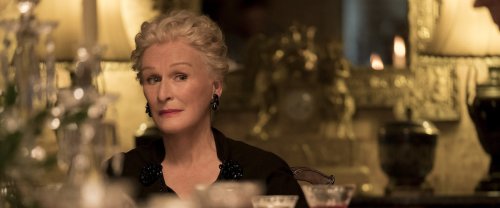 That this murder mystery is pleasingly old-school only serves to bed in well with its source material. Agatha Christie’s sordid tales of murder and mayhem have long been a rich source of cinematic intrigue since the age of silent cinema, often with mixed results. But here, director Gilles Paquet-Brenner has done an admirable job with a conservative but well-considered adaptation of arguably Christie’s most twisted tale.
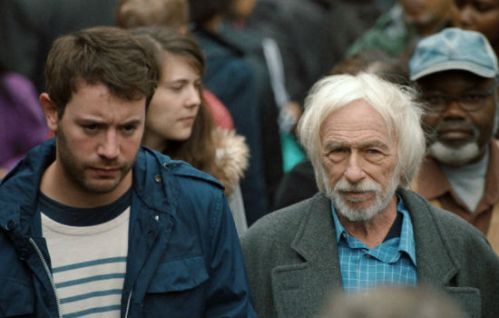 French writer/director Stéphane Robelin (All Together) appears to have developed a penchant for warm-palleted comedies; the kind of light-hearted crowd pleasers that go down well with dinner out and a glass of red.
 A very Marlon Brando-esque Jason Clarke (Zero Dark Thirty) takes the lead as the last surviving son of Joseph Kennedy’s flagging dynasty in this tale of political intrigue and moral soul-searching.
  Most have experienced the mesmerising quality of cats and their unique personalities. In his first feature-length film, Turkish director Ceyda Torun has created an urban wildlife documentary that gives a snapshot of a city’s fascination with its homeless feline population.
 I’m unapologetically lukewarm about the superhero genre having long suffered the much-maligned superhero fatigue.
 tobywoollaston.com