The Salesman
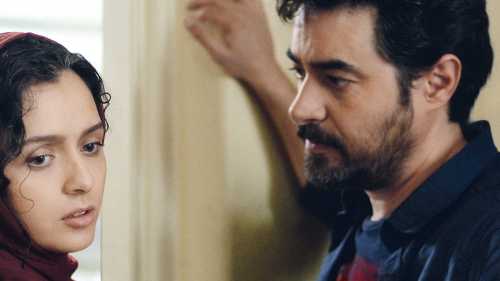 Much was made of The Salesman’s nomination for the Best Foreign Language Film at the Oscars this year. The film’s Iranian director, Asghar Farhadi (A Separation), stated that he would not attend the ceremony due to Donald Trump’s executive order barring Iranians from entering in U.S., and upon winning, his prepared speech was instead read by proxy. Unfortunately, much of its sting was deflated due to the best picture announcement debacle, but it still raises questions over Farhadi’s Oscar nod being a protest vote. Some anti Trump sentiment by the voting Academy perhaps? We’ll never know, and all I can offer is a critique of the film on it own merits.
Set in Tehran, a middle-class couple Rana (Taraneh Alidoosti) and Emad (Shahab Hosseini) are forced from their apartment due to construction faults. The opening scene that depicts the building’s imminent collapse is tense and superbly sets the film’s tone; clinically stark, devoid of warmth or any musical score and working within a very drained palette — a style that appears to be straight out of the Michael Haneke handbook (Amour, Funny Games). It is a stunning opening sequence nonetheless and works to facilitate the film’s brooding atmosphere and sense of tension. The couple eventually find alternative accommodation, but only too late do they discover its previous tenant to be a prostitute who had unsavoury customers calling in at all hours. One night Rana buzzes open the door thinking that it must be her husband. Big mistake. Her assault and the pursuit of the assailant brings about a captivating mystery that ends with an unexpected (if somewhat drawn-out) ending.
Unfortunately, the film presents a nagging problem throughout. In their spare time Rana and Emad are members of a theatre group who are putting on a production of Arthur Miller’s Death of a Salesman. There appears to be an assumption by Farhadi that the viewer has seen or read Millar’s play, which for me, has since been lost in the foggy memory of my final year at high school. Yet, it is obvious that the role Millar’s play has within the story is an important one, as is evident in the film’s title and most likely forms some sort of subtext that was unfortunately lost on me. Despite this, I found The Salesman a refreshing and taut mystery and perhaps a more informed critique might be offered if only I could remember that damn play … I blame my seventh form teacher.
You can see the published review here.
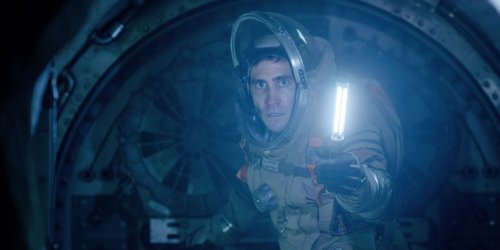 The writing duo of Rhett Reese and Paul Wernick have recently penned successful action/comedies (Deadpool, Zombieland), but Life presents their first effort at a sci-fi thriller. It seems to be a polarising genre — some are good (Event Horizon, Sunshine, Alien), some are bad (Species, Mission to Mars, Europa Report). However, Life is unique in that it is decidedly, well … ordinary. Like its cast, my expectations for this film were floating in zero gravity when I entered the cinema. I felt like an American watching cricket waiting for the penny to drop. Yet, somehow Life never let a solid opinion settle, as I was met with equal measures of good and bad. So thumbs up, Life, for sitting on the fence. Not many sci-fi thrillers manage to do that.
 Jeff Nichols is a restless director and certainly not one to bed-down in any single genre. He has plumbed the depths of the psychological thriller in Take Shelter, wrangled the stars in the coming-of-age drama of Mud, and more recently pushed the envelope with the sci-fi road-film, Midnight Special. He is certainly one of the more versatile directors working today, and in his latest outing, Loving, the enigmatic auteur tackles racial injustice.
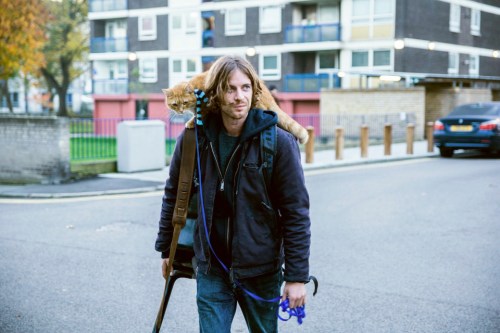 There seem to be plenty of films that anthropomorphise their animal subjects to a level where they might as well be a human. Obviously, some rules of nature must be bent for animal/human relationships to be expressed in cinema, not forgetting that such films also play well to the purchasing power of younger audiences. But, when you’re dealing with the weighty topics of drug addiction and parental neglect, as in A Street Cat Named Bob, a fine line needs be traversed to make the story accessible to a wide audience. Certainly a tricky proposal for the film’s marketing execs. Thankfully director Roger Spottiswoode (Turner & Hooch) has dipped his toes into such waters before and comes oh so close to getting the balance right.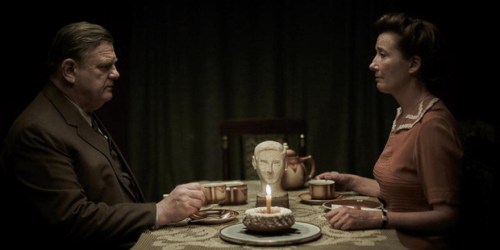
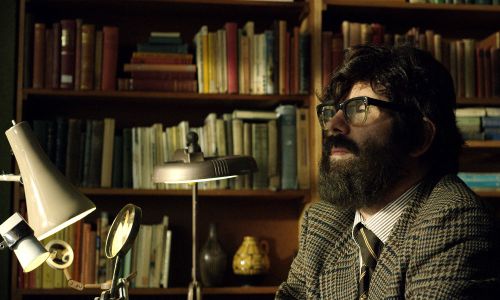 “As one goes deeper into blindness, one begins to live by other interests, other values. One begins to take up residence in another world.” This haunting comment by John Hull gives a snapshot of his achingly poignant true story. In 1983, just days before the birth of his first son, the academic and theologian lost his sight, and in order to make sense of his condition, he began keeping a diary on audiocassette. Directors Pete Middleton and James Spinney (in only their first feature length film), have done a commendable job of adapting John Hull’s tapes to the big screen.
 I am always wary when a film of notable scope and pedigree such as Silence is largely ignored during awards season. Either I’m reading too much into its lack of critical chatter, or the film is a dud. I was hoping the former. After all, master director Martin Scorsese has had this film in the oven on slow-cook since the nineties, so my hopes were high.
 Adapting a celebrated Broadway play to the screen without it being considered “stagey” can’t be easy. The award winning play Fences opened for its third run in 2010, and here, the play’s five main actors have reprised their role for its big screen treatment.
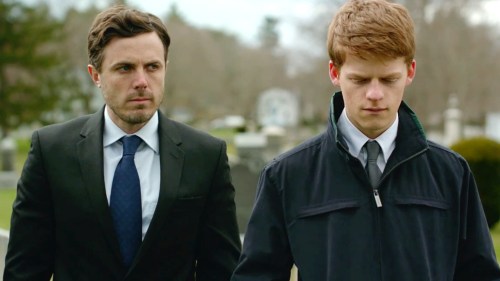 It’s Oscar season and the nominated films are being released thick and fast. One of the contenders, Manchester by the Sea, is the third feature film by director and writer Kenneth Lonergan (Margaret), who was originally best known for his work as a playwright. Here, Lonergan has brought to the big screen a heartbreaking tale of social tragedy.
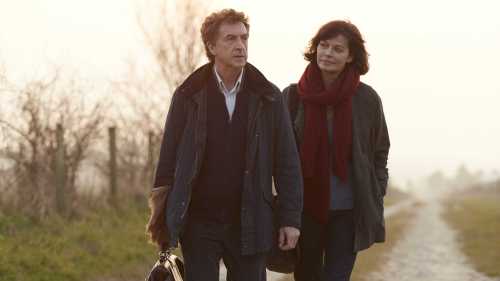 Doctor turned Director Thomas Lilti can at least claim to know his material. Topically similar to his last directorial outing (Hippocrates: Diary of a French Doctor), The Country Doctor is a gently observational piece that takes a slice of rural French life and lets a discordant zephyr blow through its fields. As they say, Doctors never make the best patients, but in this instance they do make quite good Directors.
