The Mummy
 It looks like Universal Pictures want some of that lucrative franchise action. In the opening credits to The Mummy we are introduced to the “Dark Universe” logo — a series that is being spearheaded by The Mummy in what appears to be a new world of characters born out of classic horror; The Hunchback, Dr. Jekyll, Frankenstein, and Dracula, to name a few. Although, if The Mummy is any indication, they’re going to make a monstrous mess of the whole lot.
In The Mummy we get Tom Cruise in all his blockbuster glory. From his quizzical expressions to his dramatic running style, everything here is so familiar, even down to the cookie-cutter template that this action blockbuster has been styled on. Cruise plays Nick Morton, a military recognisance scallywag who likes to steal antiquities and sell them on the black market. One amorous night he steals a map from Jenny Halsey (Annabelle Wallis) which leads him (and her eventually) to the resting place of a 5000-year-old mummified Egyptian princess named Ahmanet (Sofia Boutella). Ahmanet was fairly miffed over a family spat back in the day … but I wont bore you with the details. Suffice to say that she comes back to life to set things straight and wreaks havoc over old Blighty.
Where do I start with what is wrong with The Mummy? Well, if you are sensitive to gender representation then you will most likely realise it contains a bunch of a negative stereotypes. Ahmanet being the monstrous feminine seductress that toys with the male mind might’ve been an interesting angle to explore further, but instead we are dialled back to the old-fashioned conventions of a self-centred hero with his abject love interest in tow. And don’t get me started on the age gap between Cruise and Wallis.
But, at the end of the day the film is meant to be taken as a light hearted romp, so I’ll dispense with further heavy-handed complaints. Even as a light hearted romp though, it’s still a disjointed mishmash. There are some nice set pieces but none of these coalesce into a coherent film. Character development is poor, leaving any vested interest in their cause waning. Perhaps the most intriguing character is Dr. Henry Jekyll played by Russell Crowe. The small glimpse of his struggle to contain the monstrous Mr. Hyde looked like a movie I’d want to see. Or, if we’re lucky we might see Mr. Hyde run on for Crowe’s beloved South Sydney NRL side — certainly would be a more fun than The Mummy. In the meantime, buckle your seat-belts, because this looks like only the first of many more monstrous turds flung our way.
You can see the published review here.
 “Am I still a twin if my twin is dead?” — a question posed by the protagonist of Rachel Tunnard’s debut feature, Adult Life Skills. The question succinctly sums up the film’s central thesis into what makes us whole; specifically when someone we love so dearly feels like they are a part of our being. Thankfully, such heavy questions are complimented with large dollops of humour, thanks to Tunnard’s witty script which is infused with as much playfulness as it is with existential insight.
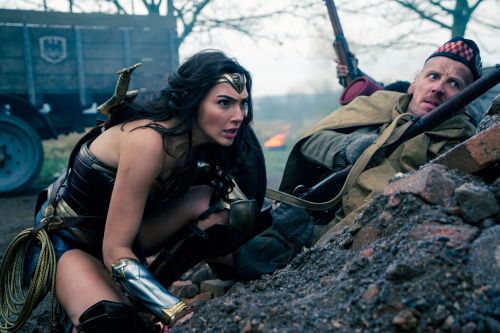 The fact that I remain grumpily unsentimental towards the superhero genre I think is a good thing. If anything, it allows me to offer an unflinching opinion of the film on its own merits. And the merits of DC’s cinematic universe has been fairly uninspiring to date. I was genuinely hoping Wonder Woman might be the exception.
 Having sold over ten million copies, William P. Young’s best-selling novel, The Shack, has a reader fanbase that unsurprisingly, has now been tapped into by the movie industry. It is an interesting story of one man’s very personal journey through great loss, depression and redemption. But does the film handle this story with the gravity it deserves?
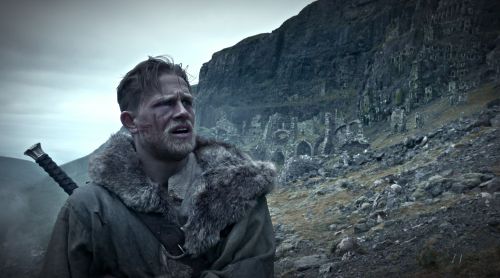 Nothing stirs me less than a film about King Arthur. In the current scape of entertainment the legend plants itself firmly within the fantasy fraternity of Game of Thrones, Lord of the Rings and the like. It’s a well trodden path that offers a bland and dreamy world of kings, wizards, and swords. And the title “King Arthur: Legend of the Sword” really doesn’t do the film any favours. On the flip-side nothing gets me more excited than a film by Guy Ritchie (Lock, Stock and Two Smoking Barrels, Snatch). He successfully breathed life into the Sherlock Holmes franchise with Robert Downey Jr. So, just maybe, Ritchie could do the same here with Charlie Hunnam who plays the titular Arthur.
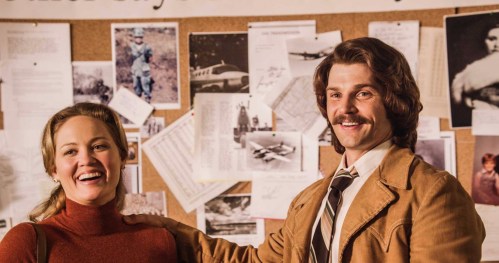 My reticence towards films that champion fundamental Christianity in contemporary society is that they tend to be preachy and often err on the side of sentimentality and over simplification. I’m sure there are exceptions but I’ve yet to see any. The Case for Christ, thankfully, is not one of those films … at least not entirely.
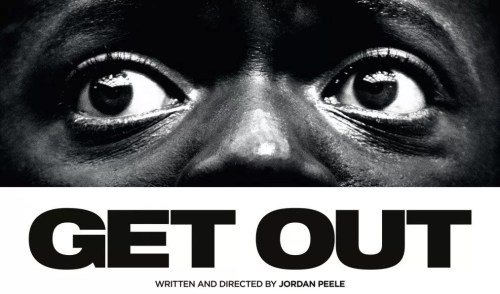 So, what’s your “thang”, Chris? — a question posed to the black protagonist of Get Out. The seemingly innocuous question by his girlfriend’s white dad highlights the reductive stereotypes tackled in Get Out. Jordan Peele has boldly stepped into the director’s chair for the first time and delivered a scathing social critique that is dressed up as a horror film. It’s nothing new for the horror genre to be a vehicle for social commentary — Zombies as metaphor for consumerism, misogyny equating to pathological fear of feminism, yada yada yada. However, it is rare for horror to comment so vehemently on race, as is the case in Get Out. It’s a subtext that the film wears proudly on it sleeve for all to see, in fact it’s barely a subtext at all. It’s so assertive about racism, in comparison it makes American History X feel like a film about cheese making. Forget about your clichéd southern hillbilly racism, this is the benevolent but sinister brand of racism that is firmly ensconced in the underbelly of liberal America.
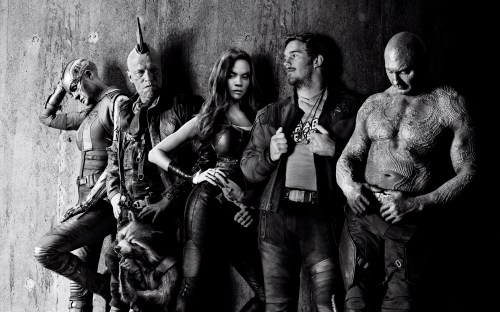 “I have famously huge turds!” is a line that you might find irksome rather than funny, but when it’s delivered with the understated clarity and bombastic bluster of Guardians of the Galaxy Vol. 2, you’ll be all aboard that laughing gig.
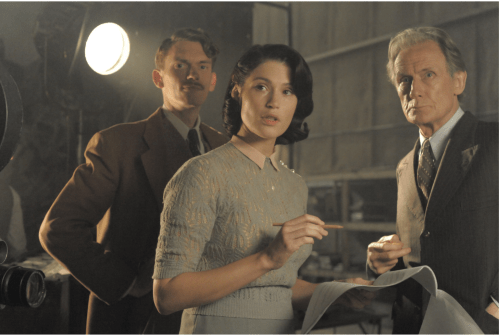 Danish director Lone Scherfig has certainly taken a shine to English stories. She piggy-backed on Nick Hornby’s screenplay with her 2009 surprise hit, An Education, which brought the wonderful Carey Mulligan to a wider audience; then in 2011 adapted David Nichols’ best selling novel in One Day. Now Scherfig has Gemma Arterton putting on an awkward Welsh accent in a war-time film that has equal measures of romance, drama, and comedy.
