Top ten memorable scenes: #9 Pan’s Labyrinth

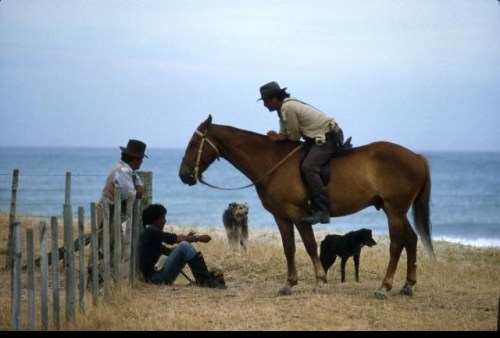
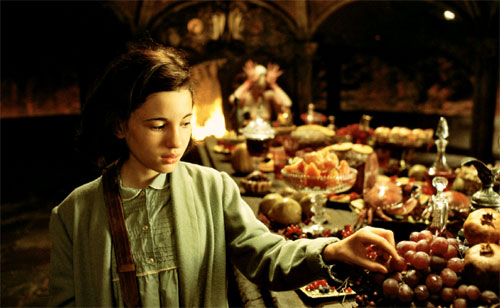
At number nine is the pale man scene from Guillermo del Toro’s excellent Pan’s Labyrinth.  This film was a pleasant surprise to me, but lot more brutal than I was expecting … not such a bad thing considering its subject matter.  Pan’s Labyrinth is a visceral journey through Ofelia’s (played by Ivana Baquero) troubled mind and gives a very thoughtful account of the way she deals with the horrors of war.  I chose this scene from many that were extraordinary in this film.  Despite being constructed around the classic “look behind you!” trope this simple scene is so much more when viewed in relation to the rest of the film.  It cinematically paints Ofelia’s mental allegory for her real world desperation, her struggle with temptation, and the evil that ensues.  I found the pale man to be a unique yet familar horror, and one that twangs on the nightmarish “I see you at all times” motif.  You can see the clip here.

Top ten memorable scenes: #10 Mission:Impossible

I was daydreaming the other day, replaying in my mind some of my favourite movie scenes. So I thought I’d attempt to offer my top ten. These scenes are not necessarily from good films, but each scene is memorable for one reason or another, and has made an indelible impression on me. With so many to choose from it will be difficult keeping it to ten … but here goes. Starting with number 10 and counting down over the next few weeks:

#10: The cable drop sequence in Mission: Impossible

Brian De Palma’s foray into the Mission: Impossible franchise is easily the best of the four films to date. Despite many a movie goer’s recent propensity to dislike Tom Cruise, I think that he is excellent in this film. Mission: Impossible is actually quite a good film and certainly parts of it are excellent, like this scene. Ethan Hunt (Tom Cruise) is literally hanging by a thread as he is is lowered by Franz Kieger (Jean Reno) into a room full of intruder alerting sensors in this, the most memorable, and I would argue iconic, scene of the modern spy/action genre. The hero, his sidekick, an oblivious employee, a rat and a betraying bead of sweat, make up the characters in this tension filled scene. The scene itself is not a complex one and the key to its success is nothing groundbreaking. But it is the precision to which it is constructed that makes it work so well. This is a scene built around what it lacks: a backing track, gratuitous use of sound, over zealous camera movements. Yes, this is an exercise in restraint combined with a rythm of tension and ease.

Ngati and communication

Just uploaded an abstract from “Ngati, and alternatives to the dominant model of communication in a Western society”, an essay I wrote back in 2009. You can read it here.

20121121-084035.jpg

Whip It, Safety Not Guaranteed, and Ruby Sparks

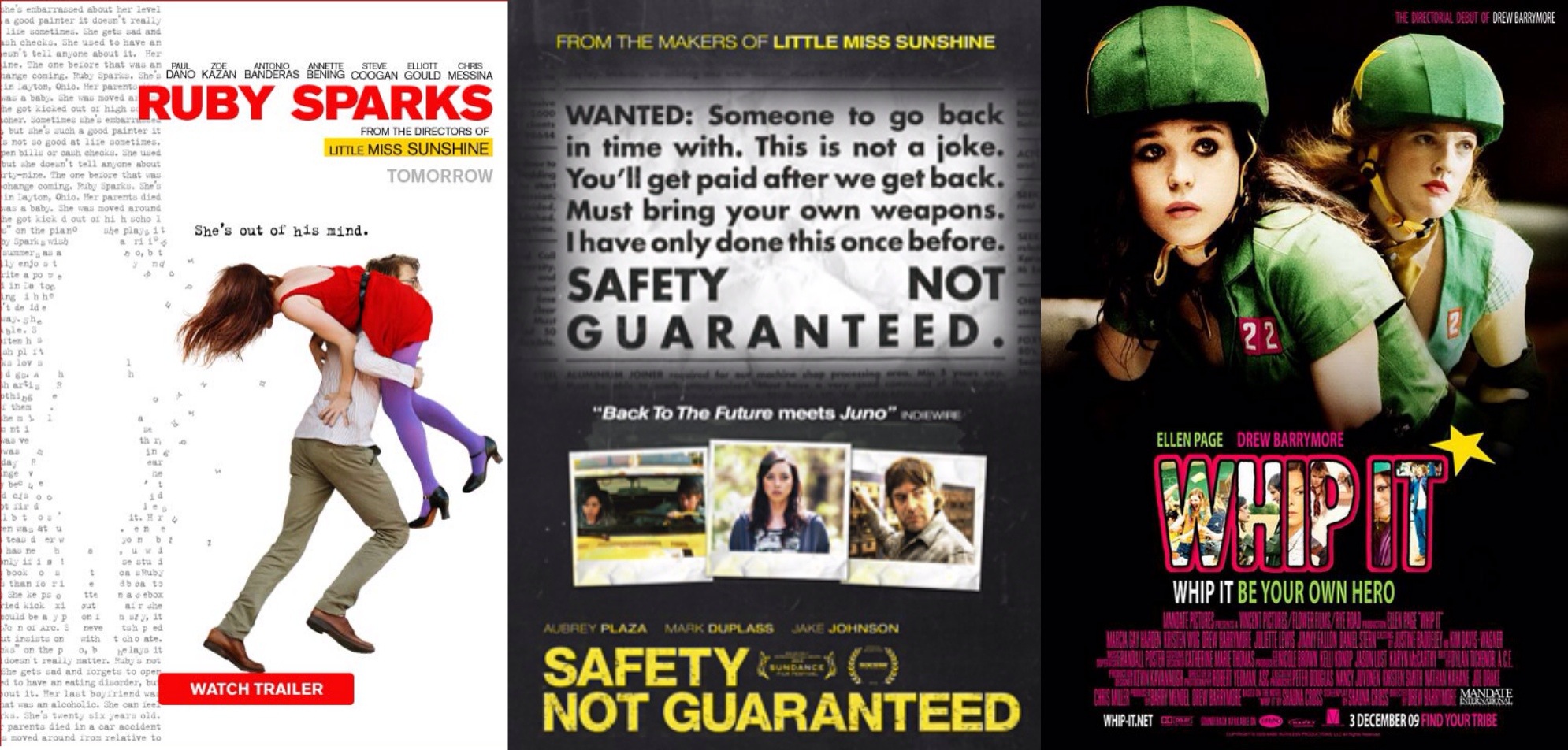
These are the last three films I have seen and I thought I’d give a couple of brief thoughts. All three have large dollops of “quirky” with a twist of romance and comedy. For the most part they are all entertaining films, although none gallop into fresh fields, choosing instead to head down the well trodden path of awkward youth. I had big hopes for Ruby Sparks whose directors, Dayton and Faris succeeded in winning me over with their last outing, Little Miss Sunshine. Unfortunately things have changed in the last six years and Ruby Sparks, though an interesting premise, misses the mark by quite some way … and the jury is out on Paul Dano as an actor. Safety Not Guaranteed, likewise is built on an intriguing premise but ultimately fails to deliver. Both seem to have visions of grandeur but get bogged down in production gimmicks. Whip It is hands down the better film. Barrymore’s directorial debut delivers a no nonsense plot that has a protagonist with genuine depth. All three try hard to be original and endearing but Whip It succeeds where as the other two, entertaining as they are, sink under their own weight.

20121119-203622.jpg

Colours in movie posters from 1914 to the present

Here’s an interesting study. Vijay Pandurangan has analysed the colours in movie posters from 1914 to the present. Here’s his graph (with the most recent years at the bottom). Look at the increase in cyan and reduction in magenta in recent years. Indicative of colour grading technologies and the trend towards a cooler palette contrasted with warm oranges. Not too sure what happened in 1924.

20121107-220055.jpg

Exams over, now onto thesis … and Aronofsky’s films

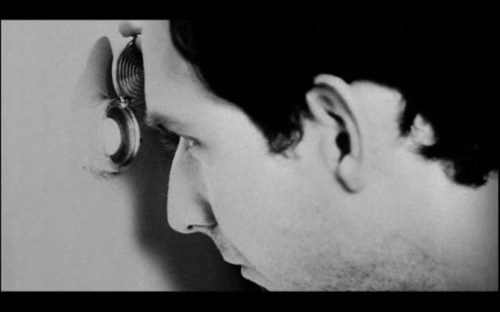
It’s so nice that exams are over. They always feel like an exercise in memorisation rather than anything else, and my memory has never been that good … or I have a lazy memory, I can never tell which. Now that I’ve dispensed with film noir I’m starting to solidify my area for thesis research which you can see here. It’s looking more and more likely that I will be focussing on films by Darron Aronofsky (Pi, Requiem for a Dream, The Fountain, The Wrestler, and Black Swan).  If conflict between nature and science, and a heavily stylised and abrasive examination of paranoia is your bag then I highly recommend Aronofsky’s first feature film Pi (1998). Imagine Copola’s The Conversation with a large dollop of David Lynch on the top. I revisited Pi again, after over a decade and found it to be more rewarding on second viewing. However, this may be because I am a more informed viewer than I was fourteen years ago. It really is an amazing film.

20121107-195726.jpg

Pi (1998), directed by Darron Aronofsky

Update!

Time to pop in with an update:

Only three weeks left until my film noir exam and I’ve got to the point of saturation. As much as I enjoy studying film, I don’t like exams. This is the first exam I’ve had in about 15 years … I’m worried my writing hand will seize up! Still, things are on track and coupled with some good assessment, I think I’m ahead of the game.

I have decided to do my thesis part-time over two years. Trying to cram a thesis in one year whilst holding down a full-time job and juggling family commitments does not sound like good idea … it is supposed to be fun after all. I feel happy with this decision and am very much looking forward to starting. I have been in contact with the course co-ordinator and presented some tentative areas I’m interested in working on:

Cinema and the child culture: filmed alienation. Children’s catharsis through films containing dark fantasy (refer to Sendak’s comment that “Disney is bad for children” and Le Guin’s article on the Child and the Shadow). Films concerning children concepts of fantasy, the blurring of reality and its depiction of escapism, trauma, and the use of fantasy as a coping method. Post-modern cinema that explores children’s ‘psychological reality’. Depictions of children’s concept of death, life, and reality.

or the more accessible and contained

The visual methods of creating alienation and paranoia in films by Darren Aronofsky.

Im leaning toward the latter but I’ve yet to be paired with a supervisor and am looking forward to bouncing some ideas off him/her.

I’ll be back to my regular updates and film reviews after my exam. In the meantime, I have seen the following Hunger Games (surprisingly impressed), Hotel Transylvania (ho hum), The Conversation (Fantastic! Best movie I’ve seen in the while), China Town (deserves to be labelled a classic), and a revisit of Memento (great film which is actually better the second time around!)
Holy Motors review

I am entering into the final push for this year’s studies (film noir). Therefore I will be focussing my efforts in that direction for the next couple of months rather than Cinematic Musings. However, before I go trotting off into the dark abyss of post-ww2 male anxiety, I must briefly mention a fantastic (quite literally) film that I recently saw.  Read my review of Holy Motors here.

Sartre’s No Exit and Clouzot’s Le Corbeau

Just thrown up a brief abstract of an essay I wrote last year. Here I explore the thematic relationships between Sartre’s No Exit and Clouzot’s excellent (if slightly clinical) Le Corbeau and question to what extent Le Corbeau can be read as an existential text (of which No Exit is considered) as well as an example of occupation cinema.

At last, a full trailer for Life of Pi

Here it is. Ofcourse there is only so much you can garner from two minutes. Although I’m luke warm on the musical score, Ang Lee seems to have captured the visuals just how I imagined them in head from the book. Really hanging out for this one.