
Parasite
 Korean director Bong Joon-ho has once again lanced the infected boil on the bum of society: inequality. Those who saw his sci-fi action-thriller Snowpiercer (which cut a strikingly violent image of a class system gone awry) will know he isn’t a stranger to the topic. While far less abrasive, Bong’s latest, this year’s Palme d’Or winning Parasite, is no less pointed. Rather, this time he gives us the same critical castigation cloaked in the tranquility of a present-day urban setting.
Bong brings an uneasy mix of dark comedy and caustic ideas to his story about a family of four who wrestle with poverty, greed and dignity. Ki-woo (Woo-sik Choi), a street-wise teenager, lives with his family within the bowels of the city’s “lower class”, wallowing (literally at times) in the filth, vomit and excrement that seemingly pools on their doorstep. But fortune (and a bit of creative forgery) lands Ki-woo a job uptown at the wealthy Park family residence. As he ingratiates himself into the family’s trust he manages to engineer (again, via deceitful means) jobs within the household for the rest of his own family to occupy.
The aptly titled Parasite is indeed a double-entendre that perfectly describes the two families’ symbiotic relationship. However, all is not as it seems at the Park mansion and Bong, whose camera begins to spit and sputter to life, appears to delight in slowly exposing the rotting underbelly of their newfound life.
Exhilarating and thrillingly portrayed, Parasite is elevated by some jaw-dropping scenes, employing to maximum effect Bong’s skill as a visual director as well as his dextrous use of satire to illuminate the more unsavoury side of class-politics. In many ways, it casts a striking resemblance to last year’s Palme d’Or winner Shoplifters, and also gives a quiet nod to Jordan Peele’s slick modern horror, Us. Nonetheless, Parasite remains a unique parable of the haves and have-nots—a resonant masterpiece that, like its name, gets under your skin but leaves you the richer for it.
See my reviews for the NZ Herald here and for Witchdoctor here.

 In his debut feature, director Carl Hunter has embraced a very British vibe with this low-key dramedy about a missing person, a mourning father, and, umm, Scrabble. And what better person to play its mainstay—an unconventional Scrabble-obsessed tailor—than the inimitable Bill Nighy. Like him or not (and for the record, I like him), he plays these kinds of roles with aplomb.
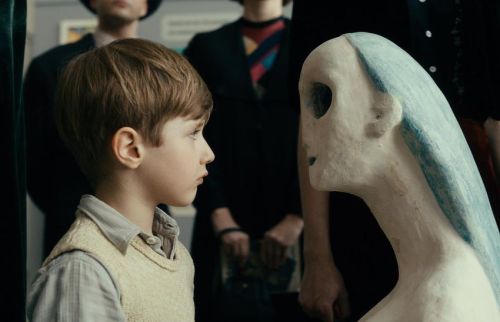 The regally named Writer/Director Florian Henckel von Donnersmarck (who hit a career-high with the Oscar-winning The Lives of Others), has helmed an ambitious project that examines the opaque world that lies between art and its creation. Such is an artist’s modus operandi, this film follows suit by placing meaning tantalisingly just beyond reach and invites you to plum the depths of an artist’s life to find it.
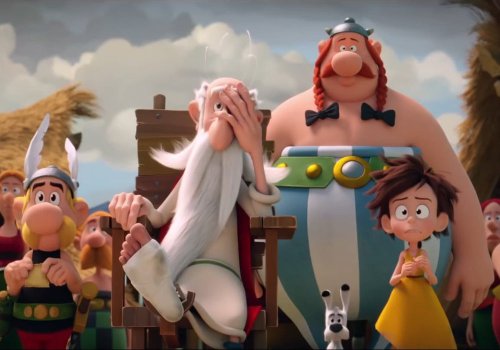 If you’ve been into any local library recently you’d most likely have seen an empty section on the shelf where the Asterix books normally sit. Such is the popularity of the moustachioed hero and his oafy side-kick that they’ve been flying off the shelves since the sixties.
 It’s been three decades in the making but Terry Gilliam has finally done it! For so long, the spectre of cinematic death has loomed large over his project but the fact that The Man Who Killed Don Quixote has been released at all represents a marvel of Directorial tenacity. It certainly was an ambitious assignment, made more so by some spectacular bad luck; illness, floods, financial difficulties and a number of other studio ailments. But finally it’s here and it’s wonderful to see Gilliam having the last laugh…. even if his film isn’t very good.
 Given the world’s recent refugee crisis, it is surprising how few films on the topic have hit the big screen.
 When a film opens with a quote from James Baldwin you know you’re in for a racially charged examination of life. It’s a shame then, that this tale of extreme prejudice gets neutered by a Director who appears to have tripped on her own artifice.
 Try as it might, DC’s cinematic universe has always struggled to escape the orbit of its own sobriety. Aquaman tried but his watery gags floated like unflushable turds. Wonder Woman gave a sideways glance at levity but got bogged down in its own cause, and the rest have all fallen cringe-fully flat. Shazam! at least goes some way to rectify matters with an origins story that has an eighties blockbuster charm, bringing welcome relief from The Joker’s ironic DC catch-cry “why so serious?”
