
Dumbo

DumboThe circus has long been a home for stories about the downtrodden and marginalised who find commonality under one canvas roof. Here Director Tim Burton (Edward Scissorhands) has put his own spin on the well-worn trope and remade a fresh version of Disney’s beloved animated classic.

That said, there is plenty to recognise Dumbo as a typical circus tale. The main character is a one-armed war-vet-come-circus-hand (an eyebrow-slanting Colin Farrell), who along with his two children care for an impossibly cute baby elephant with unfeasibly large ears.  So large in fact, that Dumbo’s airborne antics (yes, he learns to fly) catch the eye of a rival entrepreneur whose nefarious plans threaten to permanently separate Dumbo from his mother.

Perfectly cast, Dumbo reunites its Director with Batman stalwarts Michael Keaton (Beetlejuice), who plays a deliciously silver-tongued theme-park owner and Danny DeVito (Batman Returns), a spherically shaped ring-master. Also from the Burton alumni is Eva Green (Miss Peregrine’s Home for Peculiar Children), a trapeze artist sympathetic to Dumbo’s cause. It’s a wonderful ensemble cast that look perfectly at home in this lavish production.

But at the film’s heart is the flapping pachyderm himself. Burton effortlessly ushers us across the digital divide and turns a synthetic soul into something real, thanks in part to an effects team who have done a stunning job at creating Dumbo’s complex array of expression. “Find the eyes and you’ll see the soul” as the saying goes and the result here is an enchanting character that bleeds pathos with every blink.

Although anthropomorphised animals mightn’t be everyone’s cup of tea, Burton’s version of Dumbo is ultimately a human story that speaks across generations. Young and old will find tears and laughter here—certainly, this reviewer and three twelve-year-olds in tow seemed to run the gamut of emotions. And despite a few underdeveloped characters and a score that occasionally gushes like a broken mains pipe, Dumbo is a tissue factory worth of sadness dried by a big-top of colourful delights.

See my reviews for the NZ Herald here and for Witchdoctor here.

Fighting with My Family

fwmfSaraya “Paige” Knight competes as part of a wrestling mad family from Norwich, who run a local wrestling gig out the back of a van. This is the “pro” brand of wrestling, complete with fake punches, body slams and dramatic leaps off the top rope onto some poor sucker waiting to take the fall—the kind of wrestling that spawned the likes of Hulk Hogan and (yes) Dwayne “The Rock” Johnson. For Saraya (the excellent Florence Pugh) and her brother Zac (Jack Lowden), the dream of making it to the glitz and glamour of America’s WWE hits a snag when the inseparable siblings have to split their tag-team … she got selected to trial, he didn’t.  
This simple but true story is Saraya’s after all—it’s a classic rags-to-riches tale, a kind of Rocky story built on sweaty training montages and more eye-rolling cliches than a wrestler’s verbal retort.  

Of course, no film about wrestling would be complete without an appearance from the aforementioned mountain of machismo himself. The Rock’s planetary sized screen presence orbits his goofy charismatic charm, sucking your attention with tractor-beam-like command—that’s no moon, it’s The Rock. So it’s unfortunate then, that he only makes two brief appearances (despite promo material suggesting otherwise). But hey, that’s one for each bicep, so you take what you can get.

However, as is so often the case, the film’s heart and soul rest with its writer/director. Here, Stephen Merchant (The Office) proves that he can pen some heartwarming moments and very funny gags for the big screen. Sadly, his directorial efforts don’t fare so well—he’s on autopilot and although hanging on tightly to his inflatable pen, he seems to be drowning in a sea of predictability.  Nick Frost (Shaun of the Dead) delivers a rib-tickling performance as Saraya’s dad, lacing this film with plenty of feel-good vibes as he vicariously lives through his daughter’s fortunes. Beyond that, Fighting with My Family remains an entertaining but lightweight affair of humorously choreographed muscle.

See my reviews for the NZ Herald here and for Witchdoctor here.

Hotel Mumbai

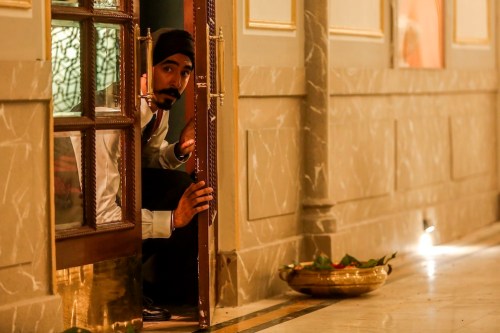
hmDev Patel and Armie Hammer lead an ensemble cast in a film about the 2008 Mumbai terrorist attacks. There were a series of twelve coordinated attacks across the city that would last four days leaving over 160 people dead and hundreds more injured.  This film, however, focusses on the events that unfolded over one exhaustively long night at the Taj Hotel.

The opening sequence of Saving Private Ryan comes to mind as this thriller doesn’t waste any time climbing into the horrifying action. The onslaught of killings and bloody mayhem, although expected, relentlessly assaults your senses with only brief moments of nerve rallying relief.

Despite some key setup sequences the film keeps the majority of the action within the doomed halls of the luxury hotel. In his first feature, Australian Director Anthony Maras has done an impressive job at breathing life into the palatial building as it seemingly cries out in pain, heaving and huffing under the strain of the terrorist’s bullets, bombs and fires. In stoney contrast to the hotel’s normal inviting warmth, the second and third acts expose its cold labyrinthine underbelly.  The building’s blinkered indifference, unflinching and unsentimental to the innocent guests trapped within its bowels, highlight the sheer brutality that humans are capable of inflicting on one another.

But it is this voyeuristic stare at the brutality that presents the film its problem. Often losing sight of its humanity, Hotel Mumbai focusses on “action” rather the people at the centre of it. Making this kind of film inherently walks a fine line between art and exploitation, and Hotel Mumbai feels too much like the latter. The terrorists roam the halls like aliens in the Nostromo, creating a currency of tension that feels like an entertainment transaction rather than a fundamental story about people.  Sure, the white knuckle thrills are undoubtedly effective but they come laced with a sense of guilt.  

There is little doubt that Maras has displayed some very impressive technical filmmaking and orchestrated a nerve-fraying experience. But as for a story of well fleshed-out characters that resonate deeply with the victims of the Taj Hotel tragedy? Hotel Mumbai falls short and leaves you exhausted rather than despairing.

See my reviews for the NZ Herald here and for Witchdoctor here.

If Beale Street Could Talk

ibsctBarry Jenkins (Moonlight) has hit another out of the park. Beautiful and woozily sensual, If Beale Street Could Talk is essential viewing. 

Nuff said.

See my reviews for the NZ Herald here and for Witchdoctor here.

Destroyer

destLost in the shuffle of award season comes a police procedural so hard-boiled it could break your teeth.  LAPD Detective Erin Bell (Nicole Kidman) is not one for small talk; her steely nature and gaunt face (along with some Rami Malek calibre prosthetic dentistry) casts a striking central figure that occupies the lens like an oncoming freight train.
Neo-noir elements are slathered liberally over this cop thriller; it’s a nihilistic slow-burn that takes a while to get going, but like all good cop dramas, once hooked you’re desperate to see how it ends.

Prowling the sun-drenched suburbs of present-day L.A. in search for Silas (Toby Kebbell)—a bank robber who has recently re-emerged after wronging her years earlier—Bell’s search leads her down a rabbit warren of wrong turns and dead ends. What begins as standard police procedure becomes a primal cry of motherhood as the story investigates how the crime at hand has stained her relationship with her daughter. The chilly utilitarian connections in Destroyer certainly make for a stark moral universe.  However, welcome relief comes in the form of Bell’s undercover partner (Sebastian Stan) who manages to break up, albeit too briefly the film’s dusty scapes and drained palette with the soft glow of their relationship.

From her first outing with the critically acclaimed Girlfight, Karyn Kusama has honed her skills, becoming a noteworthy Director of women-centric tales.  Here, her decision to hang the whole film on Kidman’s performance has paid off. While Kidman may not be the first name you’d think of to play a vengeful haprd-ass, her immense scope has repaid Kusama’s gamble, delivering the film its driving force.

And driving it is, with a kinetically charged second half that makes good of its slow beginnings and offers a final twist that packs a decent wallop. But despite this, and Kidman’s compelling performance, Destroyer will most likely find itself lost in the white noise of awards season and seems destined for the scrapheap of obscurity. Shame, it deserves better.

See my reviews for the NZ Herald here and for Witchdoctor here.

Everybody Knows

ekIranian writer/director Asghar Farhadi, maker of quiet but piercing human mysteries (A Separation, The Salesman), has gone once more to the well, yet again painting a portrait of a family under the suffocating chokehold of dark secrets. However, the skill with which he has crafted his latest feature, Everybody Knows, suggests that for Farhadi the well has not yet run dry.

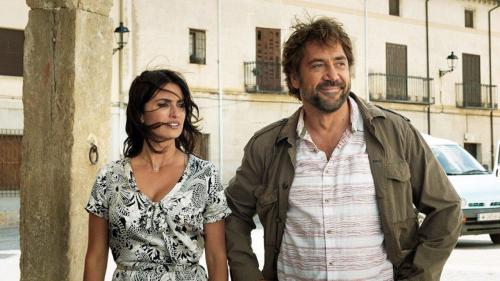
Set in a small rural town near Madrid, Laura (Penélope Cruz) returns to her childhood home to attend her sister’s wedding.  When her teenage daughter Irene (Carla Campra) is kidnapped on the night of the wedding along with a chilling warning against contacting the police, the family gather around to consider their options.

Side-glances and finger-pointing abound as this taut mystery spares few from the merciless gaze of suspicion — as the film’s provocative title implies, Everybody Knows revels in the small-town milieu where no secrets are safe. While the family’s background slowly unfolds (and indeed the mystery of Irene’s whereabouts), the film takes on an almost Agatha Christie tone as the ensemble of agitated characters helplessly mill about exchanging barbed remarks and petty retorts.

Both leads, Cruz and Bardem (who plays her old flame) show their class, giving anguished but balanced performances. Yet what makes this film extraordinary is the seemingly modest way in which it is delivered.  Technically the film appears nondescript, bland even, but closer inspection reveals Farhadi’s very deliberate style. His careful consideration of framing and lighting is a concerted wonder of subtlety and furthermore, the bold decision not to have a musical score only proves to enhance the story’s intrigue.

The result is a film that appears to take pleasure in slow cooking its central puzzle. And as the meat of the mystery slowly falls off the bone it exposes hidden motivations and menacing issues of resentment. Everybody Knows is a slow burn that some might find frustrating but I found the impeccable pace of this intriguing mystery immensely satisfying.

See my reviews for the NZ Herald here and for Witchdoctor here.

Escape Room

ERMany of us have experienced the tension of being locked in a confined space with only an hour to escape. No, I’m not referring to tackling Auckland’s traffic, but rather the current fad of escape rooms that seem to be everywhere at the moment.  Such is their ubiquity it’s little wonder Hollywood has mined the craze for some big screen treatment. All the prerequisites are baked right in for a thriller such as this to grab and run … and in this instance fall flat on its face at the final exit.
Escape Room takes its cue from (but falls well short of) cult-classics such as The Game, Cube, and Saw. It’s a lightweight tale of implausible horror that pits six escape room players against the ingenuity of an unknown puppet-master.  The stakes are simple, $10,000 or death—although none are privy to the latter upon entry, of course. If only they’d read the fine print. 

There are the usual bunch of archetypes who receive an invitation to play; the shy student, the smarmy stockbroker, a shelf-stacking slacker, the long-distance trucker, the Iraqi war vet and an escape room fanatic whose only seeming purpose is to explain the ins-and-outs of escape rooms just in case we aren’t aware of how they work. None are particularly well-sketched characters, but that’s to be expected when life expectancy is this limited.

It quickly becomes apparent that Escape Room is standard check-your-brain-at-the-door fare. No tricky plot points to trip over or clever culture subverting subtexts here. In fact, the only head-scratching moment comes in the film’s finale which offers one of the more illogical, bizarre and poorly rendered WTF endings I think I’ve ever seen. Clearly, Director Adam Robitel (Insidious: The Last Key) hadn’t a clue on how, or when, to end this film.

There are some solid flash-points of tension early on, but as the ever-dwindling team shift from room to room it all becomes rather episodic and dull. For the record, it took me exactly 99 mins to escape the theatre, others might get out sooner.

See my reviews for the NZ Herald here and for Witchdoctor here.

Colette

colettePart way through Colette, our lead says to her husband “I can read you like the top line of an optician’s chart.” It is an amusing but biting line signaling the refreshing winds of change that sweep through this proto-feminist period drama.  Don’t be fooled into dismissing Colette as yet another stuffy costume snore starring a type-cast Keira Knightley. No, this quick-witted and feisty feature crackles with energy and humour as it pits the forces of traditional marital dynamics against a lop-sided distribution of talent.
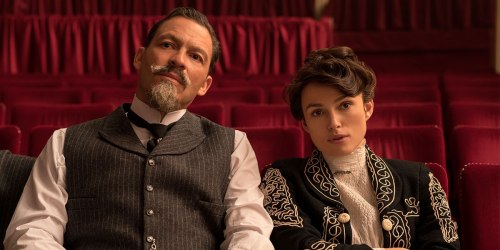
Set in Paris during the turn of the twentieth century, this is the true story of novelist Sidonie-Gabrielle Colette (Knightley) and her marriage to Henry Gauthier-Villars (Dominic West). Willy, as he was affectionately known to his adoring public but latterly referred to by Colette as a “fat, smug, lazy, selfish bastard” was a patron of hedonistic excess and an “author” whom Colette dutifully ghostwrote for. Willy became a celebrated rock-star of the Parisian literary field despite his fragile empire being built on the duplicitous foundations of Colette’s writing talent. It is a familiar tale of sexist and professional treachery that will no doubt garner comparisons to the recent film The Wife (starring Glen Close). However, this is more than The Wife’s “behind every great man” story, as Colette dives head first into the sexual politics of a woman coming to terms with her autonomy and gender identity.

It is a simple story but with wonderfully complex characters that you can really sink your teeth into, and thankfully screenwriter Richard Glatzer (Still Alice) takes plenty of time to explore them.  The two leads offer vibrant performances that bristle with a pin-sharp wit as they boil in their volatile chemistry.  Knightly’s take on a blossoming woman in a society that demands feminine submission encapsulates a heady mixture of humility and rage as she bounces off West’s quite brilliant balance of bombastic bluster and faux naivety. 

Although the film’s somewhat rigid visual style doesn’t quite match the lively milieu of its characters, this thoroughly entertaining biopic is worth seeing for the two outstanding performances alone.

See my reviews for the NZ Herald here and for Witchdoctor here.

On the Basis of Sex

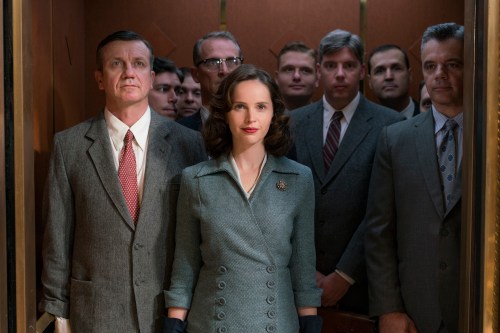
You might have noticed the meme “Notorious RBG” bandied about recently; a humorous meld of Ruth Bader Ginsburg—a demure Jewish lawyer—and American rap artist Notorious BIG who is anything but. As this film neatly illustrates, Ginsburg’s dogged drive and determination for shaking up the establishment show that there is more truth to the meme’s apparent oxymoron than meets the eye. She’s diminutive in stature but a giant in the fight for gender equality.
On the Basis of Sex begins in the sixties with Ruth as a bright-eyed Harvard law school entrant with a gifting for the books and a firm belief in the power of change. It’s a volatile combination and her struggle with sexism within the male-dominated law fraternity was something her quiet resolve could not ignore. So she set about illuminating the lecturers, Judges and pundits who didn’t think sex-discrimination existed … rather successfully.

Spanning her life through to the seventies, the film settles down into a procedural court-room drama examining the Wiesenfeld case—a foundational case that Ginsburg used to bring about constitutional change to womens rights.

Felicity Jones (The Theory of Everything) walks a fine line between an authentic portrayal of the real Ginsburg—whose reserved and mild nature was never going to set the silver screen alight—and breathing new life into her persona for the purposes of engaging cinema. Thankfully, she finds common ground and delivers a performance that leans well enough on emotional drama while never losing sight of Ginsburg’s stoney temperament.

For the most part On the Basis of Sex adequately handles its material. Yet, conventionality is a sticking-point for a film that struggles to avoid riffing on some well-trodden clichés. Director Mimi Leder (Deep Impact) certainly doesn’t bring anything fresh to the cinematic bar despite having a seemingly solid screenplay to work with. Although Jones works hard to spice up the dry world of constitutional law, On the Basis of Sex remains superficially inspiring and lacks the venom of Notorious RBG’s reputation.

See my reviews for the NZ Herald here and for Witchdoctor here.

Green Book

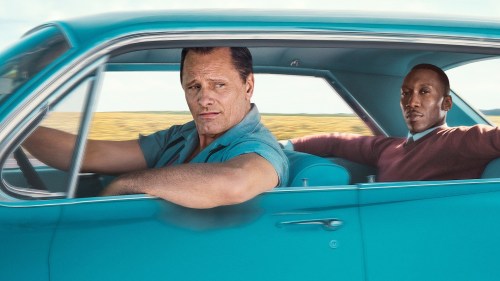
gbOne half of the Farrelly directing duo, Peter Farrelly, has departed from the couple’s proclivity for comedy to deliver a heartfelt account of an unlikely friendship in the face of racial adversity. 

Taking its title from a guidebook designed for blacks travelling through America’s racist south, Green Book is set in the sixties and focusses on two New York men. Tony “the lip” Vallelonga is a sloven working-class family man played by Viggo Mortensen (Captain Fantastic), and Dr. Don Shirley is an educated classical pianist with impeccable social manners and a clipped sense of decorum, played by Mahershala Ali (Moonlight). Both are socially, racially and ideologically worlds apart, however, they are forced together through a mutual work arrangement that pits Tony as the driver and hired muscle to guide Don though the more unsavoury (racially speaking) parts of the southern states.  

The pair’s racially charged trek through America’s hotbed of entrenched prejudice threatens to be a volatile powder keg ready to blow.  However, as the film progresses the diatribe that is ever-present on the periphery never eventuates. Rather, the film amicably traces its road-movie sensibilities through a more peaceful narrative path, keeping non-violence at its moral heart, narrowing the focus instead onto their burgeoning friendship. 

Some commentators have suggested that Green Book lacks the conviction of current contemporaries (such as If Beale Street Could Talk, Sorry to Bother you, BlacKkKlansman etc), instead opting for a sentimentality that is avoidant of the greater issues at stake. And sure, it’s not without its faults; the film stumbles over a few inconsistent character motivations and its well-telegraphed statements on racism err on the obvious, lending the film a slightly glib tone. But don’t let that put you off this otherwise well-intentioned crowd pleaser. Green Book makes the most of two superb actors at the peak of their powers and lives comfortably within its self-appointed mandate to herald the power of passive resistance and friendship. It’s charming, frequently funny and if you let your guard down it will melt your heart.

See my reviews for the NZ Herald here and for Witchdoctor here.