Adult Life Skills
 “Am I still a twin if my twin is dead?” — a question posed by the protagonist of Rachel Tunnard’s debut feature, Adult Life Skills. The question succinctly sums up the film’s central thesis into what makes us whole; specifically when someone we love so dearly feels like they are a part of our being. Thankfully, such heavy questions are complimented with large dollops of humour, thanks to Tunnard’s witty script which is infused with as much playfulness as it is with existential insight.
Anna, played by Jodie Whittaker (Broadchurch), is struggling to come to terms with the death of her twin brother. Nearing thirty and withdrawing into her shell, Anna lives in her mum’s garden shed and contents herself with making humorous adventure videos using her thumbs as central characters. Her insular life is at odds with most people around her; her mother is constantly trying to push her out of the nest, and her best friend has a vivacious personality that bubbles and froths against the grain. The exception is Clint (Ozzy Myers), an eight-year-old whose mum is terminally ill. His character provides the metaphorical mirror in which Anna sees herself.
Tunnard’s screenplay manages the difficult task of balancing humour with domestic anguish and provides Jodie Whittaker with ample opportunity to show her acting chops … of which she has plenty. Cinematographer Bet Rourich has done a commendable job of visually contrasting a rich array of personalities against the wonderfully earthy and damp backdrop of northern England. It’s a contrast that provides the perfect visual companion to its sometimes touching and sometimes hilarious moments.
Adult Life Skills maintains its independent flavour but rescues itself from becoming excessively twee by drawing on allegories and metaphors that stop short of unnecessarily explaining themselves. Clint presents Anna with a conundrum, unaware that it perfectly illustrates her own life. Anna asks “So what’s the answer?” to which Clint responds “There isn’t one. It’s one of them questions, but you have to think about [it]”. The film leaves you with Clint’s vague response and moves on. As such, Adult Life Skills is a surprisingly deep film that endorses journeys and processes rather than destinations and answers.
You can see the published review here.
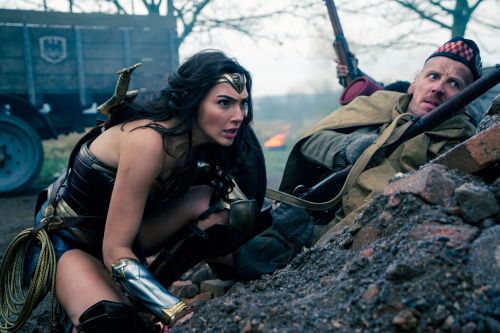 The fact that I remain grumpily unsentimental towards the superhero genre I think is a good thing. If anything, it allows me to offer an unflinching opinion of the film on its own merits. And the merits of DC’s cinematic universe has been fairly uninspiring to date. I was genuinely hoping Wonder Woman might be the exception.
 Having sold over ten million copies, William P. Young’s best-selling novel, The Shack, has a reader fanbase that unsurprisingly, has now been tapped into by the movie industry. It is an interesting story of one man’s very personal journey through great loss, depression and redemption. But does the film handle this story with the gravity it deserves?
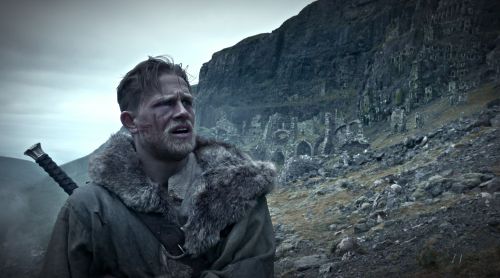 Nothing stirs me less than a film about King Arthur. In the current scape of entertainment the legend plants itself firmly within the fantasy fraternity of Game of Thrones, Lord of the Rings and the like. It’s a well trodden path that offers a bland and dreamy world of kings, wizards, and swords. And the title “King Arthur: Legend of the Sword” really doesn’t do the film any favours. On the flip-side nothing gets me more excited than a film by Guy Ritchie (Lock, Stock and Two Smoking Barrels, Snatch). He successfully breathed life into the Sherlock Holmes franchise with Robert Downey Jr. So, just maybe, Ritchie could do the same here with Charlie Hunnam who plays the titular Arthur.
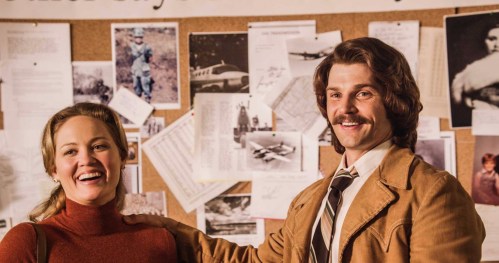 My reticence towards films that champion fundamental Christianity in contemporary society is that they tend to be preachy and often err on the side of sentimentality and over simplification. I’m sure there are exceptions but I’ve yet to see any. The Case for Christ, thankfully, is not one of those films … at least not entirely.
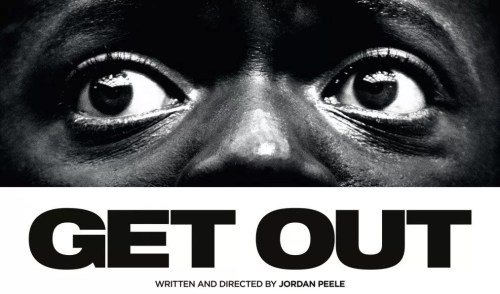 So, what’s your “thang”, Chris? — a question posed to the black protagonist of Get Out. The seemingly innocuous question by his girlfriend’s white dad highlights the reductive stereotypes tackled in Get Out. Jordan Peele has boldly stepped into the director’s chair for the first time and delivered a scathing social critique that is dressed up as a horror film. It’s nothing new for the horror genre to be a vehicle for social commentary — Zombies as metaphor for consumerism, misogyny equating to pathological fear of feminism, yada yada yada. However, it is rare for horror to comment so vehemently on race, as is the case in Get Out. It’s a subtext that the film wears proudly on it sleeve for all to see, in fact it’s barely a subtext at all. It’s so assertive about racism, in comparison it makes American History X feel like a film about cheese making. Forget about your clichéd southern hillbilly racism, this is the benevolent but sinister brand of racism that is firmly ensconced in the underbelly of liberal America.
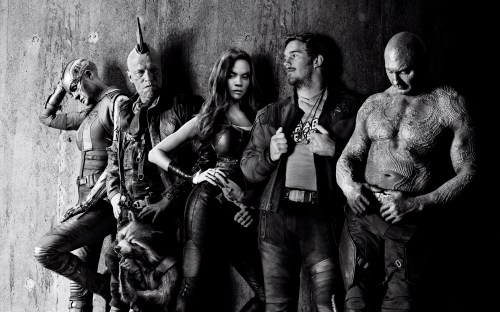 “I have famously huge turds!” is a line that you might find irksome rather than funny, but when it’s delivered with the understated clarity and bombastic bluster of Guardians of the Galaxy Vol. 2, you’ll be all aboard that laughing gig.
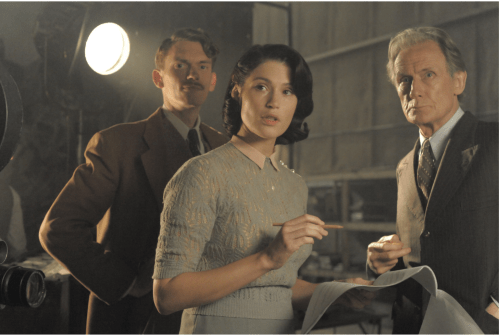 Danish director Lone Scherfig has certainly taken a shine to English stories. She piggy-backed on Nick Hornby’s screenplay with her 2009 surprise hit, An Education, which brought the wonderful Carey Mulligan to a wider audience; then in 2011 adapted David Nichols’ best selling novel in One Day. Now Scherfig has Gemma Arterton putting on an awkward Welsh accent in a war-time film that has equal measures of romance, drama, and comedy.
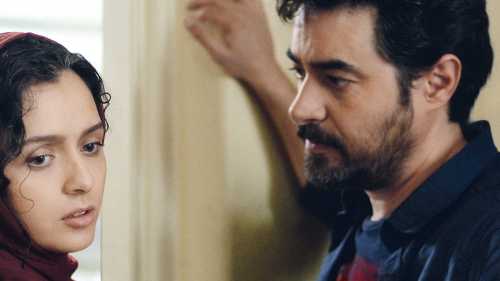 Much was made of The Salesman’s nomination for the Best Foreign Language Film at the Oscars this year. The film’s Iranian director, Asghar Farhadi (A Separation), stated that he would not attend the ceremony due to Donald Trump’s executive order barring Iranians from entering in U.S., and upon winning, his prepared speech was instead read by proxy. Unfortunately, much of its sting was deflated due to the best picture announcement debacle, but it still raises questions over Farhadi’s Oscar nod being a protest vote. Some anti Trump sentiment by the voting Academy perhaps? We’ll never know, and all I can offer is a critique of the film on it own merits.
 tobywoollaston.com